Safety note: Admin approval is an initial review, not a guarantee that every detail is correct. Check important or urgent claims with official sources and report anything inaccurate or unsafe.
Source and credit: Contributor's own report
New seafood origin labels become mandatory at Australian restaurants and takeaways - Canberra, ACT
Smart summary
From 1 July 2026, hospitality venues across Australia must tell customers whether the seafood they serve is Australian, imported or mixed origin, giving diners greater transparency about where their meals come from.
Australians ordering seafood at restaurants, cafés, pubs, clubs and takeaway outlets will now be able to see where their seafood comes from under new country-of-origin labelling laws that came into effect on 1 July 2026.
The new national rules require hospitality businesses serving ready-to-eat seafood to clearly indicate whether the seafood is Australian (A), Imported (I) or Mixed origin (M). The information must be displayed where customers make purchasing decisions, including on printed menus, menu boards and online ordering platforms. The changes apply to dine-in meals, takeaway orders and food deliveries.
The reform is designed to provide consumers with greater transparency while supporting Australia's seafood industry. Until now, country-of-origin labelling was generally required for seafood sold in supermarkets and retail stores but not for seafood served in hospitality venues. As a result, many diners had little way of knowing whether they were eating locally caught seafood or imported products.
Industry groups have welcomed the changes, saying they will help Australian seafood producers compete more fairly. According to Seafood Industry Australia, around 64 per cent of seafood consumed in Australia is imported, making it difficult for consumers who want to support local fishing industries to identify Australian products. The new labels are expected to encourage more businesses to promote locally sourced seafood.
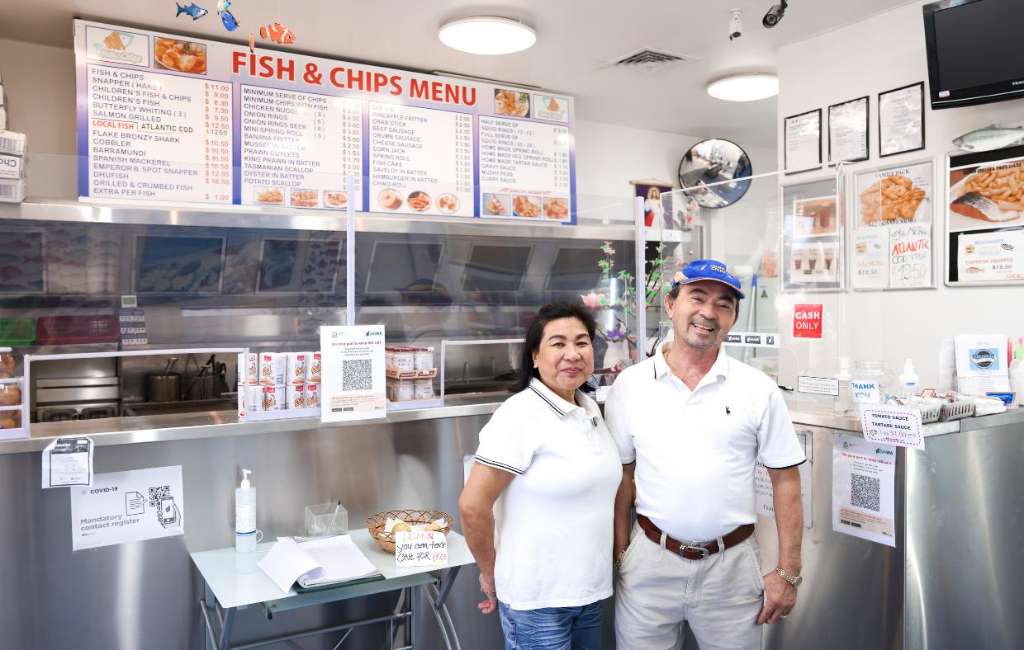
Seafood retailers have also expressed support. Phil and Penny Dean, owners of Sea Salt Fish and Chips in Coffs Harbour, told ABC News they have long promoted locally caught seafood and believe the mandatory labels give Australian seafood "its chance to shine." They say customers are increasingly interested in knowing where their food comes from and are often willing to try lesser-known local species when provided with information about their origin.
However, not everyone believes the reforms go far enough. The Australian Marine Conservation Society argues that while country-of-origin labels improve transparency, they do not provide enough information for consumers to make informed sustainability choices. The organisation would like menus to include the fish species, the Australian state or overseas country of origin, and details about whether the seafood was wild-caught or farmed.
Some hospitality operators have also raised concerns about implementation. Restaurant & Catering Australia says businesses may face difficulties where suppliers do not consistently provide origin information, particularly for imported seafood. Even so, many restaurants have already updated menus and signage to comply with the new requirements before the deadline.
The rules apply broadly across the hospitality industry, including restaurants, cafés, pubs, clubs, food trucks and takeaway outlets. Some exemptions exist for institutions such as schools, hospitals and prisons, as well as certain shelf-stable seafood products. Businesses are also required to keep records supporting their country-of-origin claims in case regulators request evidence.
Supporters say the new system empowers consumers to make more informed purchasing decisions while strengthening Australia's seafood sector by making locally sourced products easier to identify. The reform represents one of the most significant changes to seafood labelling in Australia's hospitality industry in recent years.
SeafoodHospitalityIndustryOriginThey
Australians ordering seafood at restaurants, cafés, pubs, clubs and takeaway outlets will now be able to see where their seafood comes from under new country-of-origin labelling laws that came into effect on 1 July 2026.
The new national rules require hospitality businesses serving ready-to-eat seafood to clearly indicate whether the seafood is Australian (A), Imported (I) or Mixed origin (M). The information must be displayed where customers make purchasing decisions, including on printed menus, menu boards and online ordering platforms. The changes apply to dine-in meals, takeaway orders and food deliveries.
The reform is designed to provide consumers with greater transparency while supporting Australia's seafood industry. Until now, country-of-origin labelling was generally required for seafood sold in supermarkets and retail stores but not for seafood served in hospitality venues. As a result, many diners had little way of knowing whether they were eating locally caught seafood or imported products.
Industry groups have welcomed the changes, saying they will help Australian seafood producers compete more fairly. According to Seafood Industry Australia, around 64 per cent of seafood consumed in Australia is imported, making it difficult for consumers who want to support local fishing industries to identify Australian products. The new labels are expected to encourage more businesses to promote locally sourced seafood.
Seafood retailers have also expressed support. Phil and Penny Dean, owners of Sea Salt Fish and Chips in Coffs Harbour, told ABC News they have long promoted locally caught seafood and believe the mandatory labels give Australian seafood "its chance to shine." They say customers are increasingly interested in knowing where their food comes from and are often willing to try lesser-known local species when provided with information about their origin.
However, not everyone believes the reforms go far enough. The Australian Marine Conservation Society argues that while country-of-origin labels improve transparency, they do not provide enough information for consumers to make informed sustainability choices. The organisation would like menus to include the fish species, the Australian state or overseas country of origin, and details about whether the seafood was wild-caught or farmed.
Some hospitality operators have also raised concerns about implementation. Restaurant & Catering Australia says businesses may face difficulties where suppliers do not consistently provide origin information, particularly for imported seafood. Even so, many restaurants have already updated menus and signage to comply with the new requirements before the deadline.
The rules apply broadly across the hospitality industry, including restaurants, cafés, pubs, clubs, food trucks and takeaway outlets. Some exemptions exist for institutions such as schools, hospitals and prisons, as well as certain shelf-stable seafood products. Businesses are also required to keep records supporting their country-of-origin claims in case regulators request evidence.
Supporters say the new system empowers consumers to make more informed purchasing decisions while strengthening Australia's seafood sector by making locally sourced products easier to identify. The reform represents one of the most significant changes to seafood labelling in Australia's hospitality industry in recent years.
Geelong's historic Botanic Gardens are preparing for their 175th anniversary, with volunteers and horticultural staff working to preserve a living colle...
Three high-school students have joined the Carnarvon Volunteer Fire and Rescue Service as the regional organisation works to strengthen its volunteer nu...
Around 300 people walked through Morwell to remember Kaiden Morgan-Johnston one year after his death and call for safer streets across the Latrobe Valley.
A four-metre-high 3D-printed sculpture celebrating Australian children's author Andy Griffiths has gone on display at Canberra's National Portrait Gallery.
The Reserve Bank of Australia has increased the cash rate by 25 basis points to 4.6 per cent, while the federal government and opposition debate the cau...
Treasurer Jim Chalmers says the federal budget bottom line has improved by $6 billion compared with the May forecast, while the government faces pressur...
New evidence indicates autonomous Open AI agents attempted to access information from several Australian government and public-sector websites, expanding...
A four-metre-high 3D-printed sculpture celebrating Australian children's author Andy Griffiths has gone on display at Canberra's National Portrait Gallery.
A 22-year-old Elimbah man has been charged after a two-car crash at Baringa on the Sunshine Coast, with police alleging he fled into nearby bushland bef...
A new proposal for factory-built ecohomes in Orange aims to speed up construction while reducing household energy costs as local property prices remain...
Geelong's historic Botanic Gardens are preparing for their 175th anniversary, with volunteers and horticultural staff working to preserve a living colle...