Safety note: Admin approval is an initial review, not a guarantee that every detail is correct. Check important or urgent claims with official sources and report anything inaccurate or unsafe.
Source and credit: Contributor's own report
Northern Australian Sea Culture wins $1 million Darwin innovation prize - Darwin, NT
Smart summary
Darwin-based startup Northern Australian Sea Culture has won a $1 million innovation prize for developing native tropical seaweed products aimed at improving soil rehabilitation and creating new sustainable markets.
Darwin-based startup Northern Australian Sea Culture (NASC) has won a $1 million innovation prize after being selected as the winner of a major Darwin business competition recognising promising Territory-based ideas and technologies. Founder and chief executive Alison Duguid accepted the prize after NASC emerged as the successful finalist from a field that also included projects focused on biodiversity mapping and agricultural drones.
The company is developing products from native tropical seaweed, particularly Gracilaria, a type of macroalgae already used commercially for products such as agar gel and other gelling applications. NASC is working to develop additional markets for the seaweed, including products designed to support soil rehabilitation and help improve the performance of land undergoing environmental restoration.
Duguid told the competition audience that the company grows and processes native seaweed and is investigating ways to turn the resource into useful products for industries seeking more environmentally friendly alternatives to synthetic chemicals. One of the company's key areas of interest is mine-site rehabilitation, where restoring soil conditions and establishing vegetation can be challenging.
NASC has reported promising results from laboratory trials. The company said testing has produced seed-germination rates of up to 75 per cent, compared with a regulatory benchmark of 50 per cent. The results are being used to support further development and commercial trials of the company's products.
The startup has also moved beyond laboratory development. Its first cultivation site is operating at the Darwin Waterfront lagoon, providing the company with a local base for growing and studying the tropical seaweed. NASC is also undertaking paid trials with a major mining company as it investigates whether its products can be applied commercially to soil rehabilitation.
The $1 million prize is expected to provide important capital for the next stage of the company's development. The funding will be used for product development and to help NASC expand its venture as it works towards establishing commercially viable markets for its seaweed-based products.
Duguid is a fifth-generation Territorian and comes from Darwin's Fong Lim family. She has spoken about her interest in developing new economic opportunities in the Northern Territory and creating pathways for education, training and employment in remote communities.
For Duguid, the business is about more than developing a new commercial product. She has highlighted the importance of creating opportunities in a large jurisdiction with a relatively small population and believes successful Territory businesses can contribute to economic development beyond Darwin itself.
The competition also recognised two other finalists. Nature Helm, which is working in biodiversity mapping, and Drone-Hand, focused on agricultural drone technology, were also supported by the competition judges, subject to due diligence. Their recognition highlights the growing range of technology and innovation projects emerging from the Northern Territory.
NASC's use of Gracilaria is particularly significant because the seaweed already has established commercial applications. The company is attempting to build on those existing markets while developing new uses, including soil rehabilitation. Its approach involves processing the seaweed to produce different product streams rather than relying on a single commercial application.
The project could eventually provide benefits across several industries if the commercial trials prove successful. Mining companies, agricultural businesses and environmental restoration projects are among the potential users of products designed to improve soil conditions and support vegetation growth.
The award provides NASC with an opportunity to move from research and early-stage trials towards larger-scale development. Further testing will be important to establish how the products perform in different environments and whether the reported laboratory results can be replicated consistently in commercial settings.
For Darwin and the wider Northern Territory, the success represents another example of locally developed innovation receiving significant investment. The focus on native resources, environmental rehabilitation and regional economic development also gives the project a distinctly Territory-based character.
With its first cultivation site already operating and commercial trials underway, NASC now has the opportunity to use the $1 million prize to accelerate development and determine whether native tropical seaweed can become a viable sustainable industry for the Northern Territory.
CompanyNascProductsDevelopmentCommercial
Darwin-based startup Northern Australian Sea Culture (NASC) has won a $1 million innovation prize after being selected as the winner of a major Darwin business competition recognising promising Territory-based ideas and technologies. Founder and chief executive Alison Duguid accepted the prize after NASC emerged as the successful finalist from a field that also included projects focused on biodiversity mapping and agricultural drones.
The company is developing products from native tropical seaweed, particularly Gracilaria, a type of macroalgae already used commercially for products such as agar gel and other gelling applications. NASC is working to develop additional markets for the seaweed, including products designed to support soil rehabilitation and help improve the performance of land undergoing environmental restoration.
Duguid told the competition audience that the company grows and processes native seaweed and is investigating ways to turn the resource into useful products for industries seeking more environmentally friendly alternatives to synthetic chemicals. One of the company's key areas of interest is mine-site rehabilitation, where restoring soil conditions and establishing vegetation can be challenging.
NASC has reported promising results from laboratory trials. The company said testing has produced seed-germination rates of up to 75 per cent, compared with a regulatory benchmark of 50 per cent. The results are being used to support further development and commercial trials of the company's products.
The startup has also moved beyond laboratory development. Its first cultivation site is operating at the Darwin Waterfront lagoon, providing the company with a local base for growing and studying the tropical seaweed. NASC is also undertaking paid trials with a major mining company as it investigates whether its products can be applied commercially to soil rehabilitation.
The $1 million prize is expected to provide important capital for the next stage of the company's development. The funding will be used for product development and to help NASC expand its venture as it works towards establishing commercially viable markets for its seaweed-based products.
Duguid is a fifth-generation Territorian and comes from Darwin's Fong Lim family. She has spoken about her interest in developing new economic opportunities in the Northern Territory and creating pathways for education, training and employment in remote communities.
For Duguid, the business is about more than developing a new commercial product. She has highlighted the importance of creating opportunities in a large jurisdiction with a relatively small population and believes successful Territory businesses can contribute to economic development beyond Darwin itself.
The competition also recognised two other finalists. Nature Helm, which is working in biodiversity mapping, and Drone-Hand, focused on agricultural drone technology, were also supported by the competition judges, subject to due diligence. Their recognition highlights the growing range of technology and innovation projects emerging from the Northern Territory.
NASC's use of Gracilaria is particularly significant because the seaweed already has established commercial applications. The company is attempting to build on those existing markets while developing new uses, including soil rehabilitation. Its approach involves processing the seaweed to produce different product streams rather than relying on a single commercial application.
The project could eventually provide benefits across several industries if the commercial trials prove successful. Mining companies, agricultural businesses and environmental restoration projects are among the potential users of products designed to improve soil conditions and support vegetation growth.
The award provides NASC with an opportunity to move from research and early-stage trials towards larger-scale development. Further testing will be important to establish how the products perform in different environments and whether the reported laboratory results can be replicated consistently in commercial settings.
For Darwin and the wider Northern Territory, the success represents another example of locally developed innovation receiving significant investment. The focus on native resources, environmental rehabilitation and regional economic development also gives the project a distinctly Territory-based character.
With its first cultivation site already operating and commercial trials underway, NASC now has the opportunity to use the $1 million prize to accelerate development and determine whether native tropical seaweed can become a viable sustainable industry for the Northern Territory.
Cairns Regional Council has unanimously voted to seek $400,000 in Queensland Government funding for a program designed to connect local businesses with the region’s growing film...
Albury New South Wales · Business News · 17 Sep 2026
An Australian artificial intelligence company has purchased the former Visy paper mill site at Ettamogah, north of Albury, in a significant local business The company, Sharon AI...
A new multi-million-dollar poultry-processing facility has officially opened near Tamworth, bringing major investment and new employment opportunities t...
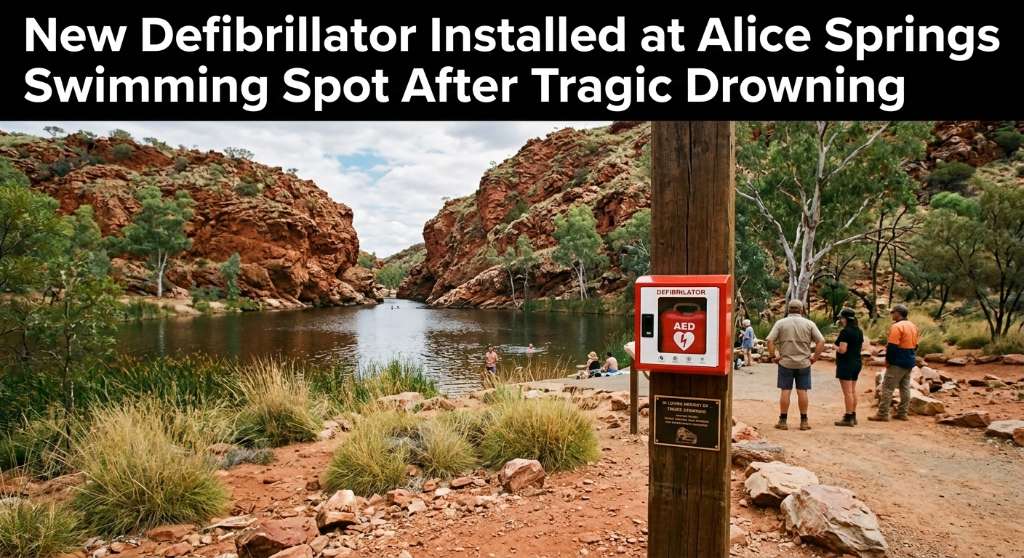
An automated external defibrillator and memorial plaque have been installed at Ellery Creek Big Hole following the death of disability advocate Ellen Fr...
Paramedics responding to an emergency in Alice Springs were forced to use a stretcher as a barricade after an armed and allegedly intoxicated group beca...
Cairns Regional Council has unanimously voted to seek $400,000 in Queensland Government funding for a program designed to connect local businesses with the region’s growing film...
An automated external defibrillator and memorial plaque have been installed at Ellery Creek Big Hole following the death of disability advocate Ellen Fr...
Queensland firefighters spent several hours monitoring a significant grass fire at Mary Kinross Park in Bargara, near Bundaberg, after the blaze broke out on Wednesday evening....