Safety note: Admin approval is an initial review, not a guarantee that every detail is correct. Check important or urgent claims with official sources and report anything inaccurate or unsafe.
Source and credit: Contributor's own report
Pauline Hanson Faces Backlash After Controversial Tommy Robinson Podcast Interview - Canberra, ACT
Smart summary
One Nation leader Pauline Hanson has faced criticism after appearing on a podcast with UK activist Tommy Robinson, where she discussed migration, the White Australia policy, NDIS claims and her daughter’s political fu...
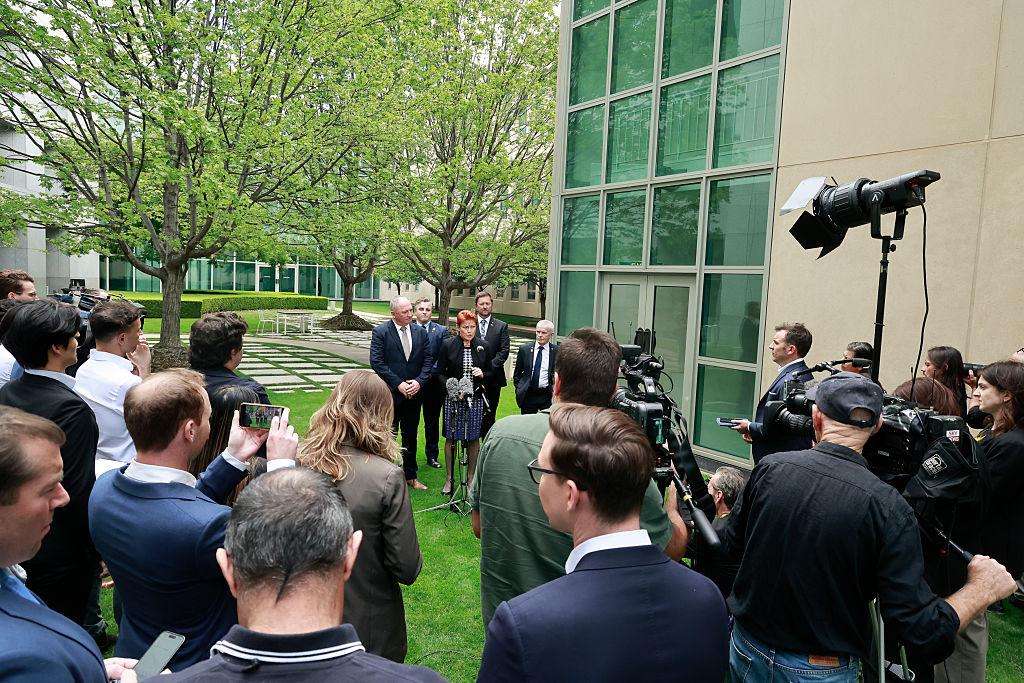
One Nation leader Pauline Hanson has attracted widespread attention after appearing on a podcast hosted by UK far-right activist Tommy Robinson, where she made controversial comments about migration, multiculturalism and Australia’s social policies. The interview, recorded during Hanson’s recent visit to the United Kingdom, has triggered criticism from political opponents and community groups.
During the podcast discussion, Hanson linked Australia’s migration changes to the removal of the White Australia policy, claiming this period marked the beginning of migration issues. The White Australia policy was a historic set of laws and practices designed to restrict non-European immigration and was gradually dismantled after World War II, with remaining discriminatory elements removed in 1973.
Hanson also discussed immigration, welfare programs and the National Disability Insurance Scheme (NDIS) during the interview. She made claims about certain communities and alleged misuse of government services, comments that have been criticised as targeting specific groups and lacking evidence.
The podcast appearance occurred while Hanson was travelling through the UK, where she met with Tommy Robinson, whose real name is Stephen Yaxley-Lennon. Robinson is a controversial political activist who has faced legal issues and has been convicted of offences including assault, fraud and contempt of court.
Hanson defended her decision to appear with Robinson, saying she wanted to discuss concerns about migration and social change. She later said she would not apologise for meeting him, arguing that the conversation allowed her to raise issues important to her supporters.
The interview also included discussion about the future of One Nation. Hanson said her daughter Lee Hanson had the potential to become a future leader of the party, while adding that she would need to prove herself to party members and the public.
Lee Hanson has previously worked in politics as an adviser and has been involved with One Nation activities. Pauline Hanson said her daughter had a different approach to politics but had the qualities needed to potentially take on a leadership role in the future.
The comments have intensified debate about One Nation’s political direction and Hanson’s approach to issues such as migration, national identity and government services. Critics argue that some statements made during the podcast risk increasing division within Australian communities, while supporters say Hanson is raising concerns that some voters share.
The controversy comes at a time when political parties are increasingly focused on migration, housing pressures, cost of living concerns and public confidence in government programs. Discussions around immigration and social policy continue to be major issues in Australian politics.
Hanson’s podcast appearance has also drawn attention because of her international engagement with conservative and nationalist figures. Her visit included meetings and appearances that have generated debate about Australia’s role in broader global political movements.
The One Nation leader remains a prominent figure in Australian politics, having first entered federal politics in the 1990s and later returning to Parliament as a senator. Her outspoken views on immigration and national issues have regularly attracted both strong support and criticism.
The comments made during the podcast remain part of a wider political debate about free speech, multiculturalism, migration policy and how elected representatives discuss sensitive social issues.
HansonIssuesMigrationPodcastPolitical
One Nation leader Pauline Hanson has attracted widespread attention after appearing on a podcast hosted by UK far-right activist Tommy Robinson, where she made controversial comments about migration, multiculturalism and Australia’s social policies. The interview, recorded during Hanson’s recent visit to the United Kingdom, has triggered criticism from political opponents and community groups.
During the podcast discussion, Hanson linked Australia’s migration changes to the removal of the White Australia policy, claiming this period marked the beginning of migration issues. The White Australia policy was a historic set of laws and practices designed to restrict non-European immigration and was gradually dismantled after World War II, with remaining discriminatory elements removed in 1973.
Hanson also discussed immigration, welfare programs and the National Disability Insurance Scheme (NDIS) during the interview. She made claims about certain communities and alleged misuse of government services, comments that have been criticised as targeting specific groups and lacking evidence.
The podcast appearance occurred while Hanson was travelling through the UK, where she met with Tommy Robinson, whose real name is Stephen Yaxley-Lennon. Robinson is a controversial political activist who has faced legal issues and has been convicted of offences including assault, fraud and contempt of court.
Hanson defended her decision to appear with Robinson, saying she wanted to discuss concerns about migration and social change. She later said she would not apologise for meeting him, arguing that the conversation allowed her to raise issues important to her supporters.
The interview also included discussion about the future of One Nation. Hanson said her daughter Lee Hanson had the potential to become a future leader of the party, while adding that she would need to prove herself to party members and the public.
Lee Hanson has previously worked in politics as an adviser and has been involved with One Nation activities. Pauline Hanson said her daughter had a different approach to politics but had the qualities needed to potentially take on a leadership role in the future.
The comments have intensified debate about One Nation’s political direction and Hanson’s approach to issues such as migration, national identity and government services. Critics argue that some statements made during the podcast risk increasing division within Australian communities, while supporters say Hanson is raising concerns that some voters share.
The controversy comes at a time when political parties are increasingly focused on migration, housing pressures, cost of living concerns and public confidence in government programs. Discussions around immigration and social policy continue to be major issues in Australian politics.
Hanson’s podcast appearance has also drawn attention because of her international engagement with conservative and nationalist figures. Her visit included meetings and appearances that have generated debate about Australia’s role in broader global political movements.
The One Nation leader remains a prominent figure in Australian politics, having first entered federal politics in the 1990s and later returning to Parliament as a senator. Her outspoken views on immigration and national issues have regularly attracted both strong support and criticism.
The comments made during the podcast remain part of a wider political debate about free speech, multiculturalism, migration policy and how elected representatives discuss sensitive social issues.
The Federal Government is preparing new measures targeting temporary visas, visa overstayers, international students and visa-hopping, while maintaining...
One Nation’s proposed major reduction in migration has triggered warnings that a sharp cut to population growth could weaken Australia’s economy and cre...
The Federal Government is preparing new measures targeting temporary visas, visa overstayers, international students and visa-hopping, while maintaining...
One Nation’s proposed major reduction in migration has triggered warnings that a sharp cut to population growth could weaken Australia’s economy and cre...
A Canberra woman has become the first person in the ACT whose death has been linked to a highly potent synthetic opioid, prompting renewed concern about...
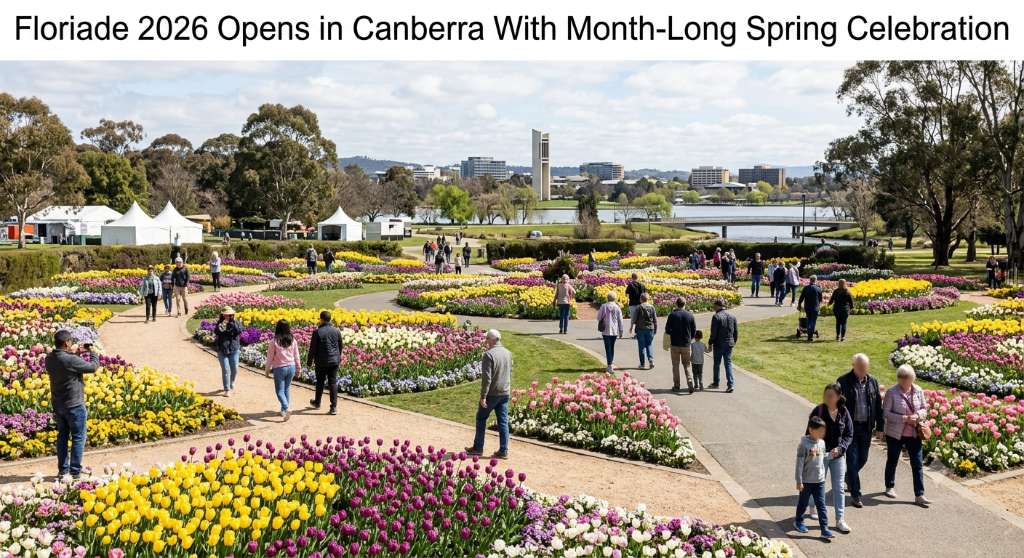
Canberra’s Commonwealth Park has welcomed visitors for the annual Floriade festival, bringing flowers, entertainment and spring activities to the city.
Cairns Regional Council has unanimously voted to seek $400,000 in Queensland Government funding for a program designed to connect local businesses with the region’s growing film...
An automated external defibrillator and memorial plaque have been installed at Ellery Creek Big Hole following the death of disability advocate Ellen Fr...
Queensland firefighters spent several hours monitoring a significant grass fire at Mary Kinross Park in Bargara, near Bundaberg, after the blaze broke out on Wednesday evening....