Pregnant AFLW Player’s Delisting Raises Questions About Maternity Protections
By Chloe · Published 11 Nov 2026 · Updated 11 Nov 2026
Gold Coast, QLD · Queensland News
Safety note: Admin approval is an initial review, not a guarantee that every detail is correct. Check important or urgent claims with official sources and report anything inaccurate or unsafe.
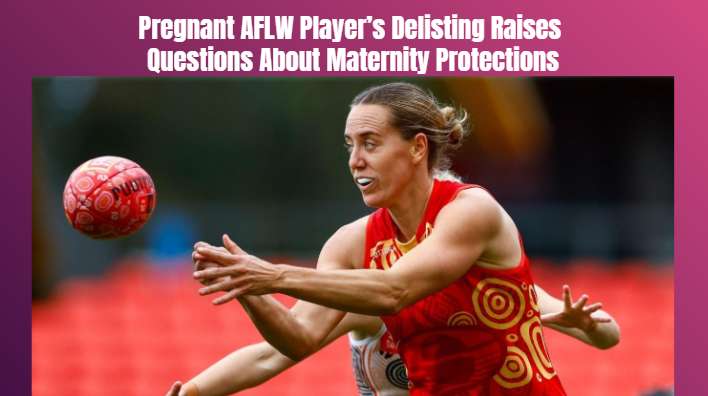
Gold Coast Suns player Georgia Clayden has not been offered a contract for the 2027 season, just weeks before giving birth. The decision has renewed calls for stronger maternity protections in women's professional sport.
A decision by the Gold Coast Suns not to offer AFLW player Georgia Clayden a contract for the 2027 season has sparked debate about maternity protections and career security for women in professional Australian football.
Clayden, 31, is expecting her first child and is due to give birth within the coming weeks. She spent the 2026 AFLW season on the club's inactive list because of her pregnancy, remaining involved with the team through modified training and other activities.
The Gold Coast Suns announced on 10 November that Clayden and teammate Sienna McMullen would not be offered contracts for the 2027 season. The announcement followed the club's conclusion of its 2026 campaign.
Clayden joined the Suns in 2022 and played 44 matches for the club. She also served in the team's leadership group during the 2024 and 2025 seasons and received the club's Players' Player award in Season 7.
Her departure has prompted questions about how professional sporting organisations support athletes who take time away from competition to have children.
Former AFLW player and commentator Kate McCarthy publicly called for stronger protections for athletes who choose to become mothers during their playing careers. She argued that players should have greater security and a genuine opportunity to return to professional football after childbirth.
North Melbourne premiership player Eilish Sheerin also supported the concerns raised about the current arrangements.
Under the AFLW's collective bargaining agreement, players returning after pregnancy can come off the inactive list at any point, provided they are medically assessed as fit by a club doctor or an AFL medical officer.
Clubs can also sign replacement players while an athlete is unavailable. Those replacement players may complete their one-season contracts even if the original player becomes available to return.
However, the rules do not automatically guarantee a new contract when a player's existing agreement expires during pregnancy or parental leave. This can leave athletes uncertain about their future with a club while they are preparing for childbirth and recovery.
McCarthy has suggested that clubs should be able to retain players returning from maternity leave without those athletes immediately occupying one of the team's limited list positions. Such a change, she argues, could provide more time for recovery while allowing clubs to manage their playing squads.
Clayden's situation has also drawn attention to the experiences of other AFLW players who have faced contract uncertainty around pregnancy. Former Carlton captain Kerryn Peterson experienced a similar situation after giving birth in 2025, while Essendon's Bess Keaney returned to her club's primary list after having a child.
The discussion is now focused on whether existing arrangements provide enough security for athletes balancing motherhood and professional sport. Any changes would require consideration by the AFL, clubs and player representatives.
The issue has become an important conversation for women's sport in Australia, particularly as professional competitions continue to develop pathways for athletes to build long-term careers while starting families.
PlayerClubPlayersAflwAthletes
A decision by the Gold Coast Suns not to offer AFLW player Georgia Clayden a contract for the 2027 season has sparked debate about maternity protections and career security for women in professional Australian football.
Clayden, 31, is expecting her first child and is due to give birth within the coming weeks. She spent the 2026 AFLW season on the club's inactive list because of her pregnancy, remaining involved with the team through modified training and other activities.
The Gold Coast Suns announced on 10 November that Clayden and teammate Sienna McMullen would not be offered contracts for the 2027 season. The announcement followed the club's conclusion of its 2026 campaign.
Clayden joined the Suns in 2022 and played 44 matches for the club. She also served in the team's leadership group during the 2024 and 2025 seasons and received the club's Players' Player award in Season 7.
Her departure has prompted questions about how professional sporting organisations support athletes who take time away from competition to have children.
Former AFLW player and commentator Kate McCarthy publicly called for stronger protections for athletes who choose to become mothers during their playing careers. She argued that players should have greater security and a genuine opportunity to return to professional football after childbirth.
North Melbourne premiership player Eilish Sheerin also supported the concerns raised about the current arrangements.
Under the AFLW's collective bargaining agreement, players returning after pregnancy can come off the inactive list at any point, provided they are medically assessed as fit by a club doctor or an AFL medical officer.
Clubs can also sign replacement players while an athlete is unavailable. Those replacement players may complete their one-season contracts even if the original player becomes available to return.
However, the rules do not automatically guarantee a new contract when a player's existing agreement expires during pregnancy or parental leave. This can leave athletes uncertain about their future with a club while they are preparing for childbirth and recovery.
McCarthy has suggested that clubs should be able to retain players returning from maternity leave without those athletes immediately occupying one of the team's limited list positions. Such a change, she argues, could provide more time for recovery while allowing clubs to manage their playing squads.
Clayden's situation has also drawn attention to the experiences of other AFLW players who have faced contract uncertainty around pregnancy. Former Carlton captain Kerryn Peterson experienced a similar situation after giving birth in 2025, while Essendon's Bess Keaney returned to her club's primary list after having a child.
The discussion is now focused on whether existing arrangements provide enough security for athletes balancing motherhood and professional sport. Any changes would require consideration by the AFL, clubs and player representatives.
The issue has become an important conversation for women's sport in Australia, particularly as professional competitions continue to develop pathways for athletes to build long-term careers while starting families.
Australia fell three points short at Murrayfield after a late comeback attempt, with Scotland holding on to secure an important home victory in the inte...
Australia delivers a dominant performance against Asian Cup champions Qatar in Doha, with Riley McGree, Tete Yengi and Nestory Irankunda scoring three f...
England's Kipp Popert and South Korea's Jeongwon Han secure impressive victories at Australia's major disability golf championship in Victoria, highligh...
A proposed night-surfing event at Snapper Rocks has received council approval, but local surfers have raised concerns about artificial lighting and poss...
The Australian Government is considering moving the major Great Barrier Reef aquarium to Townsville's Strand after an engineering report raised concerns...
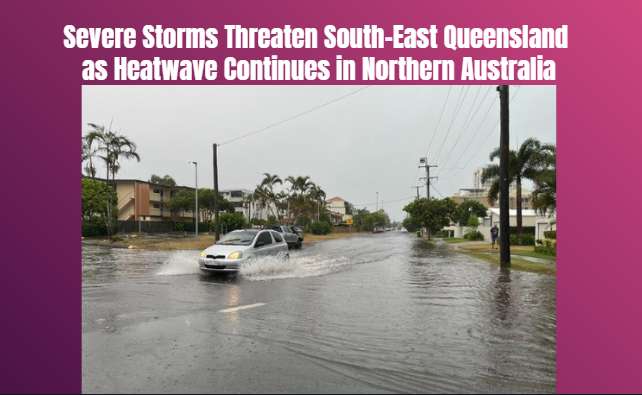
Meteorologists warn of giant hail, destructive winds and intense rainfall across parts of Queensland, while northern districts remain under severe heatw...
A special soybean planting strategy is helping Australia move closer to eradicating red witchweed, an invasive parasite that has damaged agricultural cr...
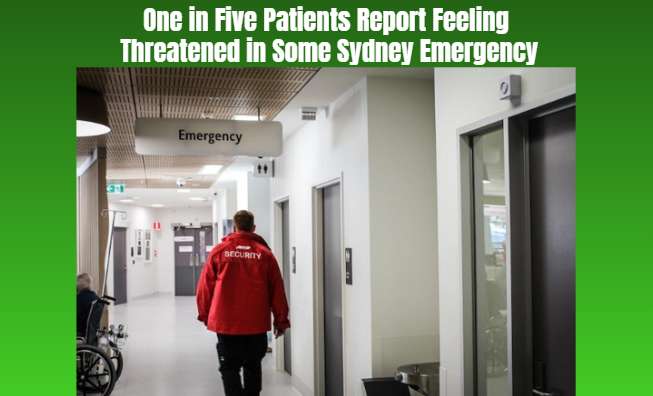
NSW patient survey findings highlight safety concerns in several major hospitals, as the state government commits additional security staff to emergency...
Police are investigating a daylight theft after three valuable trophies belonging to Australia's legendary racehorse were taken from an exhibition displ...
Operation Amarok 15 resulted in 1,594 charges, hundreds of apprehended domestic violence order breaches identified and dozens of firearms seized across...