WA Musician Uses 3D Printing to Reinvent Traditional Instruments
By Neha · Published 13 Jun 2026 · Updated 13 Jun 2026
Albany Western Australia · Western Australia News
Safety note: Admin approval is an initial review, not a guarantee that every detail is correct. Check important or urgent claims with official sources and report anything inaccurate or unsafe.
Source and credit: Contributor's own report
WA Musician Uses 3D Printing to Reinvent Traditional Instruments - Albany Western Australia
Smart summary
Albany musician Eddy Jay is blending old-world craftsmanship with modern technology, creating 3D-printed concertinas and violins that are attracting interest from musicians around the globe.
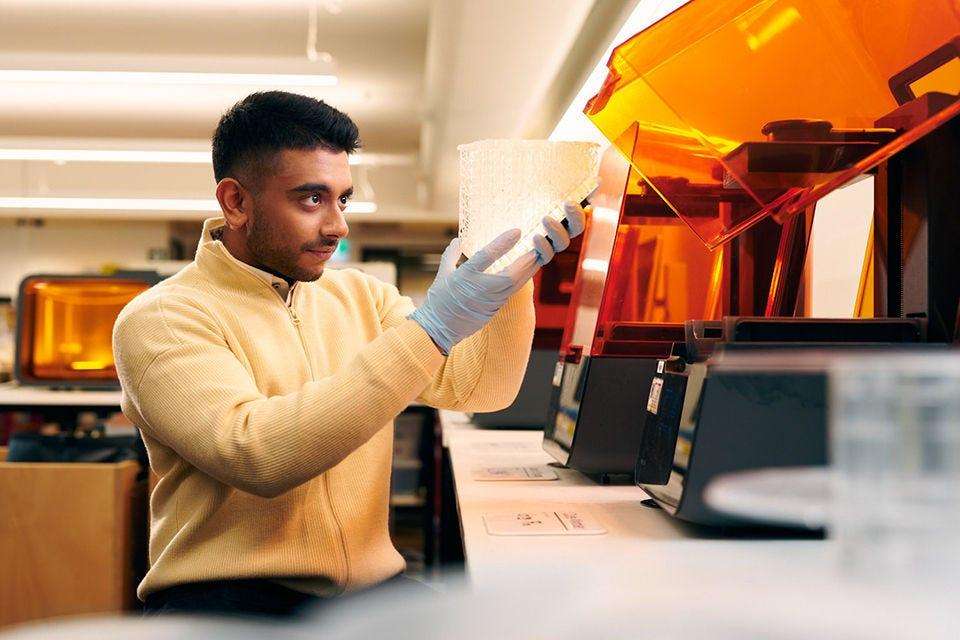
What began as a challenge from his father has evolved into an innovative fusion of music, engineering and creativity, with Albany musician Eddy Jay using 3D printing technology to build unique musical instruments from his Western Australian workshop.
A professional accordionist and instrument tuner, Jay has spent decades immersed in music. His career has taken him across the world, including performances on Broadway in New York and tours throughout the United Kingdom. Yet one of his most ambitious projects started much closer to home.
The inspiration came when Jay's father, a concertina teacher and workshop leader in the UK, wondered whether it was possible to build a concertina from scratch. Rather than relying on traditional woodworking techniques, Jay decided to approach the challenge differently.
"I wasn't very good at woodwork, so I bought a 3D printer and re-engineered it on a computer," Jay explained.
Using his extensive understanding of how accordions and concertinas function internally, Jay redesigned many of the instrument's components. The result was a modern interpretation of a centuries-old instrument, featuring entirely new mechanical systems.
The process was far from straightforward.
Jay produced numerous prototypes before perfecting the design. Even his father initially doubted the project would succeed. However, once the first instruments found buyers, attitudes quickly changed.
Over the past six years, Jay has created dozens of 3D-printed concertinas, shipping them to customers around the world. Each instrument requires approximately one month to complete, reflecting the precision and experimentation involved in the manufacturing process.
The technology has also influenced his personal life.
Jay met his wife, Josephine, through his musical pursuits. He later crafted a distinctive 3D-printed violin specifically for her, even matching its blue colouring to the shade of her eyes. The instrument includes an additional string and has become part of the couple's performances together.
Josephine describes the violin's sound as unlike anything she had encountered before.
"It's very smooth, velvety smooth," she said, noting its distinctive tonal qualities compared with traditional wooden violins.
Jay has experimented extensively with materials, discovering that carbon fibre-infused printing materials produced the strongest acoustic results. Although the material lacks the colourful appearance of earlier creations, he believes it delivers superior sound quality.
The project reflects broader trends emerging within the musical instrument industry, where advances in 3D printing are expanding creative possibilities. Similar technologies have already been explored in the production of guitars, flutes and other instruments.
Despite embracing innovation, Jay's work remains rooted in traditional values of craftsmanship and knowledge-sharing.
He now conducts workshops to teach others about the design process and plans to incorporate computer numerical control (CNC) technology into future projects. Interestingly, those ambitions include returning to more conventional materials.
Jay hopes to use modern manufacturing techniques to produce wooden concertinas and violins, combining digital precision with the timeless appeal of handcrafted instruments.
His journey demonstrates that innovation does not always mean abandoning tradition.
Instead, Eddy Jay's work highlights how emerging technologies can breathe new life into historic art forms, ensuring they continue evolving for future generations.
From a small workshop in Albany to stages around the world, his creations represent a remarkable meeting point between music, engineering and imagination.
The Northern Territory government has admitted that its initial $500,000 school upgrade budget is insufficient, promising additional funding as two Alic...
Restoration work on one of Tasmania’s oldest theatres is underway, but difficult site conditions have pushed costs more than $13 million above the origi...
A specialist stonemason is carefully recreating an eroded sandstone lion on a historic Darlinghurst building in Sydney, using archival photographs and t...
A new flight from Sydney to the Gold Coast is drawing attention to a journey that began eight decades ago, connecting Australia’s aviation history with...
A 59-year-old convicted sex offender is scheduled for release in December despite remaining classified as a high-risk offender. The Supreme Court has im...
Around 8,000 customers in Western Australia's coastal city of Albany will need to replace gas appliances with electric alternatives or switch to bottled...
Fremantle's new bridge will open to the public on Sunday, 1 November, replacing the ageing crossing and providing wider shared paths for pedestrians and...
Western Australia's Joint Counter Terrorism Team has upgraded charges against a 22-year-old Perth man following further investigations into alleged prep...
Police are investigating after a one-year-old child died following a house fire in Collie, while several other people inside the property escaped safely.
A psychiatric report presented to South Australia's Supreme Court has raised questions about Tamika Chesser's mental competence in the case involving th...
A freedom of information request has revealed that Gold Coast Council does not hold a copy of the invoice for Mayor Tom Tate's three-day stay at Donald...