Safety note: Admin approval is an initial review, not a guarantee that every detail is correct. Check important or urgent claims with official sources and report anything inaccurate or unsafe.
Source and credit: Contributor's own report
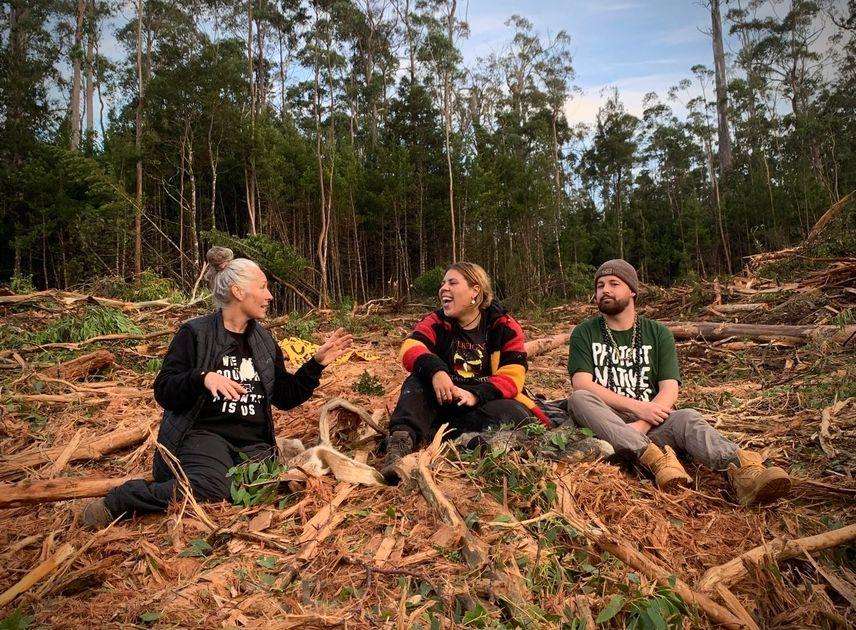
Aboriginal activist Ruth Langford defends logging protest trespass charge in Tasmanian court - Hobart, TAS
Smart summary
irst Nations activist Ruth Langford (Tipruthanna) has told a Hobart court she had a cultural obligation to protect Country while defending herself against a trespass charge linked to an anti-logging protest in Tasmania.
Aboriginal activist Ruth Langford, also known as Tipruthanna, has appeared in the Hobart Magistrates Court to defend a trespass charge arising from an anti-logging protest at a Tasmanian forest site in January 2025.
Ms Langford, a Yorta Yorta/Dja Dja Wurrung woman born in Tasmania, is representing herself in the case and has pleaded not guilty. She told the court that she remained at the logging site because she believed she had a cultural responsibility to protect Country from destruction.
The charge relates to a protest at a logging coupe known as SH067C at Snow Hill in Tasmania’s northern midlands. Ms Langford was among activists who attended the site to oppose native forest logging. Police allege she refused requests to leave the area, leading to her arrest and a trespass charge.
During her evidence, Ms Langford told the court her actions were connected to her cultural law and relationship with land. She said her understanding of protecting Country was shaped by Aboriginal elders, activists and her family, including her mother, Rosalind Langford, who influenced her views on land rights and cultural responsibility.
She argued that her connection to land was not defined by logging boundaries or government-managed areas, saying she had a responsibility to stand up when places of cultural and environmental importance were threatened.
The court also heard evidence relating to police directions given at the protest site. Body camera footage was shown during proceedings, with prosecutors arguing the footage demonstrated Ms Langford had been asked to leave. Ms Langford said she did not hear the request because she was singing as part of a cultural ceremony at the site.
Earlier in the hearing, representatives from Sustainable Timber Tasmania (STT) gave evidence about the logging area and cultural heritage assessments conducted before forestry operations began. Ms Langford questioned witnesses about their knowledge of Aboriginal cultural heritage and whether appropriate cultural considerations had been taken into account.
The case has also involved debate over whether the hearing should take place “on Country” at Piyura Kitina/Risdon Cove, a culturally significant location for Tasmanian Aboriginal people. Ms Langford had requested the court proceedings be held there, but the request was refused by the court.
Supporters of Ms Langford have argued that hearing evidence on Country would allow the court to better understand Aboriginal connection to land, cultural obligations and historical experiences. The court instead allowed some witnesses to provide evidence remotely from culturally significant locations.
The prosecution maintains that the matter concerns alleged breaches of trespass laws, while Ms Langford’s defence focuses on cultural obligation and her reasons for remaining at the site.
The hearing has been adjourned, with a further court date scheduled for 24 September 2026.
The case has attracted attention because it sits at the intersection of Indigenous cultural rights, environmental activism, forestry regulation and the legal system’s approach to Aboriginal perspectives on Country.
LangfordCulturalCourtAboriginalLogging
Aboriginal activist Ruth Langford, also known as Tipruthanna, has appeared in the Hobart Magistrates Court to defend a trespass charge arising from an anti-logging protest at a Tasmanian forest site in January 2025.
Ms Langford, a Yorta Yorta/Dja Dja Wurrung woman born in Tasmania, is representing herself in the case and has pleaded not guilty. She told the court that she remained at the logging site because she believed she had a cultural responsibility to protect Country from destruction.
The charge relates to a protest at a logging coupe known as SH067C at Snow Hill in Tasmania’s northern midlands. Ms Langford was among activists who attended the site to oppose native forest logging. Police allege she refused requests to leave the area, leading to her arrest and a trespass charge.
During her evidence, Ms Langford told the court her actions were connected to her cultural law and relationship with land. She said her understanding of protecting Country was shaped by Aboriginal elders, activists and her family, including her mother, Rosalind Langford, who influenced her views on land rights and cultural responsibility.
She argued that her connection to land was not defined by logging boundaries or government-managed areas, saying she had a responsibility to stand up when places of cultural and environmental importance were threatened.
The court also heard evidence relating to police directions given at the protest site. Body camera footage was shown during proceedings, with prosecutors arguing the footage demonstrated Ms Langford had been asked to leave. Ms Langford said she did not hear the request because she was singing as part of a cultural ceremony at the site.
Earlier in the hearing, representatives from Sustainable Timber Tasmania (STT) gave evidence about the logging area and cultural heritage assessments conducted before forestry operations began. Ms Langford questioned witnesses about their knowledge of Aboriginal cultural heritage and whether appropriate cultural considerations had been taken into account.
The case has also involved debate over whether the hearing should take place “on Country” at Piyura Kitina/Risdon Cove, a culturally significant location for Tasmanian Aboriginal people. Ms Langford had requested the court proceedings be held there, but the request was refused by the court.
Supporters of Ms Langford have argued that hearing evidence on Country would allow the court to better understand Aboriginal connection to land, cultural obligations and historical experiences. The court instead allowed some witnesses to provide evidence remotely from culturally significant locations.
The prosecution maintains that the matter concerns alleged breaches of trespass laws, while Ms Langford’s defence focuses on cultural obligation and her reasons for remaining at the site.
The hearing has been adjourned, with a further court date scheduled for 24 September 2026.
The case has attracted attention because it sits at the intersection of Indigenous cultural rights, environmental activism, forestry regulation and the legal system’s approach to Aboriginal perspectives on Country.
Darwin Northern Territory · Other News · 01 Sep 2026
A scenic hike through Butterfly Gorge in the Northern Territory turned into a frightening experience when a buffalo charged at two hikers. ABC Darwin reported the story today, 1...
Coffs Harbour New South Wales · Other News · 01 Sep 2026
A Safe Work NSW inspection blitz across the Coffs Harbour region has uncovered dozens of workplace-safety issues in the horticulture industry. The operation followed concerns ab...
A major Queensland Government infrastructure investment is set to unlock thousands of new homes across the Fraser Coast, including projects in Maryborough.
New figures have renewed concerns about emergency department delays at Royal Hobart Hospital, with the health system facing questions over patient waiti...
Cairns Regional Council has unanimously voted to seek $400,000 in Queensland Government funding for a program designed to connect local businesses with the region’s growing film...
An automated external defibrillator and memorial plaque have been installed at Ellery Creek Big Hole following the death of disability advocate Ellen Fr...
Queensland firefighters spent several hours monitoring a significant grass fire at Mary Kinross Park in Bargara, near Bundaberg, after the blaze broke out on Wednesday evening....