Safety note: Admin approval is an initial review, not a guarantee that every detail is correct. Check important or urgent claims with official sources and report anything inaccurate or unsafe.
Work Safe Victoria is investigating safety concerns surrounding the Country Fire Authority’s ageing fleet of firefighting tankers after the CFA Volunteers Group called for independent scrutiny of the vehicles. The inv...
Work Safe Victoria is investigating safety concerns surrounding the Country Fire Authority’s ageing fleet of firefighting tankers after the CFA Volunteers Group called for independent scrutiny of the vehicles. The investigation comes as Victoria prepares for another bushfire season, with volunteers warning that some older tankers may no longer provide the level of safety and capability required for modern firefighting operations.
The CFA Volunteers Group contacted Work Safe in May requesting an investigation into the safety of single-cab tankers used by volunteer brigades across Victoria. Work Safe has confirmed that inspectors are making ongoing inquiries to determine whether health and safety risks associated with the fleet are being adequately addressed.
As part of the investigation, Work Safe inspectors have already met with CFA representatives at the organisation’s Melbourne headquarters and visited several regional fire brigades. The CFA is providing information to the regulator and facilitating access to firefighting appliances and relevant documentation.
The concerns centre particularly on older single-cab tankers. These vehicles can carry three firefighters inside the cab, while newer dual-cab tankers can accommodate up to six crew members. Volunteers have raised concerns about the conditions experienced by crews travelling in and on some of the older vehicles.
CFA Volunteers Group president John Houston said the organisation had repeatedly raised concerns about funding and equipment before approaching Work Safe. The group believes some older tankers are no longer fit for purpose and wants an independent assessment of their safety.
One of the clearest examples is the tanker operated by the Muckatah Brigade. The vehicle was built in July 1989 and is now 37 years old, making it 17 years beyond its nominal use-by date. Brigade captain Glen Hamson said the reliability of the tanker was a concern. The vehicle experienced a major pump problem late last year and was unavailable for approximately four to five months while repairs were carried out.
The Muckatah tanker is not used for strike-team duties, limiting the brigade’s ability to participate in wider firefighting operations. Volunteers have also said there is no clearly specified timeframe for when the ageing vehicle will be replaced.
The Victorian government has defended its record on CFA funding, saying the organisation is better funded and equipped than previously. The government says funding has increased each year and that a new truck is being delivered approximately every four days. It also says CFA regions have received new infrastructure funding under the latest state budget.
However, figures supplied by the CFA Volunteers Group indicate that the number of new primary tankers delivered to regional brigades has declined compared with the previous decade. About 1,400 primary tankers are distributed across 1,209 regional and peri-urban brigades.
The issue is particularly important as Victoria approaches the bushfire season, when CFA volunteers can face extreme conditions and rely heavily on their vehicles to transport crews, water and firefighting equipment.
Work Safe’s investigation will examine whether existing safety risks are being appropriately managed and whether further action is required. The regulator’s inquiries are continuing, while the CFA is cooperating with inspectors.
The debate over ageing firefighting vehicles also forms part of wider concerns raised by volunteers about equipment, funding, communications, volunteer retention and bushfire preparedness.
For CFA volunteers, the condition and reliability of firefighting tankers can directly affect their ability to respond quickly and safely during emergencies. The Work Safe investigation is therefore being closely watched as Victoria moves towards another potentially challenging fire season.
No final findings have yet been announced by Work Safe. The investigation remains ongoing, and further recommendations or actions could follow once inspectors have completed their inquiries.
VolunteersSafeTankersWorkFirefighting
Work Safe Victoria is investigating safety concerns surrounding the Country Fire Authority’s ageing fleet of firefighting tankers after the CFA Volunteers Group called for independent scrutiny of the vehicles. The investigation comes as Victoria prepares for another bushfire season, with volunteers warning that some older tankers may no longer provide the level of safety and capability required for modern firefighting operations.
The CFA Volunteers Group contacted Work Safe in May requesting an investigation into the safety of single-cab tankers used by volunteer brigades across Victoria. Work Safe has confirmed that inspectors are making ongoing inquiries to determine whether health and safety risks associated with the fleet are being adequately addressed.
As part of the investigation, Work Safe inspectors have already met with CFA representatives at the organisation’s Melbourne headquarters and visited several regional fire brigades. The CFA is providing information to the regulator and facilitating access to firefighting appliances and relevant documentation.
The concerns centre particularly on older single-cab tankers. These vehicles can carry three firefighters inside the cab, while newer dual-cab tankers can accommodate up to six crew members. Volunteers have raised concerns about the conditions experienced by crews travelling in and on some of the older vehicles.
CFA Volunteers Group president John Houston said the organisation had repeatedly raised concerns about funding and equipment before approaching Work Safe. The group believes some older tankers are no longer fit for purpose and wants an independent assessment of their safety.
One of the clearest examples is the tanker operated by the Muckatah Brigade. The vehicle was built in July 1989 and is now 37 years old, making it 17 years beyond its nominal use-by date. Brigade captain Glen Hamson said the reliability of the tanker was a concern. The vehicle experienced a major pump problem late last year and was unavailable for approximately four to five months while repairs were carried out.
The Muckatah tanker is not used for strike-team duties, limiting the brigade’s ability to participate in wider firefighting operations. Volunteers have also said there is no clearly specified timeframe for when the ageing vehicle will be replaced.
The Victorian government has defended its record on CFA funding, saying the organisation is better funded and equipped than previously. The government says funding has increased each year and that a new truck is being delivered approximately every four days. It also says CFA regions have received new infrastructure funding under the latest state budget.
However, figures supplied by the CFA Volunteers Group indicate that the number of new primary tankers delivered to regional brigades has declined compared with the previous decade. About 1,400 primary tankers are distributed across 1,209 regional and peri-urban brigades.
The issue is particularly important as Victoria approaches the bushfire season, when CFA volunteers can face extreme conditions and rely heavily on their vehicles to transport crews, water and firefighting equipment.
Work Safe’s investigation will examine whether existing safety risks are being appropriately managed and whether further action is required. The regulator’s inquiries are continuing, while the CFA is cooperating with inspectors.
The debate over ageing firefighting vehicles also forms part of wider concerns raised by volunteers about equipment, funding, communications, volunteer retention and bushfire preparedness.
For CFA volunteers, the condition and reliability of firefighting tankers can directly affect their ability to respond quickly and safely during emergencies. The Work Safe investigation is therefore being closely watched as Victoria moves towards another potentially challenging fire season.
No final findings have yet been announced by Work Safe. The investigation remains ongoing, and further recommendations or actions could follow once inspectors have completed their inquiries.
Queensland firefighters spent several hours monitoring a significant grass fire at Mary Kinross Park in Bargara, near Bundaberg, after the blaze broke out on Wednesday evening....
Paramedics responding to an emergency in Alice Springs were forced to use a stretcher as a barricade after an armed and allegedly intoxicated group beca...
A Melbourne doctor facing serious criminal charges has had his court case adjourned while investigators continue examining a large amount of digital material seized during a pol...
Victoria Police have arrested two men and a woman as part of an ongoing investigation into the fatal shooting of a 22-year-old man in Thomastown, in Melbourne’s north. The incid...
Victoria Police have charged a 17-year-old boy with arson and endangering life following an investigation into an alleged firebombing at a gym in Maidstone, Melbourne. The inves...
Police say Port Phillip Crime Investigation Unit detectives arrested a man on Monday following a prolonged investigation into a series of alleged violent assaults and thefts acr...
A 21-year-old Bendigo man, Adrian Turnbull, has been sentenced to a maximum of four years and eight months in prison after pleading guilty to a series of offences committed acro...
A new specialist family-violence support model has been introduced in Ballarat, with dedicated workers now embedded alongside Victoria Police to help people experiencing family...
A Coroners Court hearing is being held in Victoria today to examine the circumstances surrounding the death of a 56-year-old man from Bendigo. The case is one of the local matte...
Bendigo is marking a major milestone this year as the city celebrates 175 years since the discovery of gold in the region. On Tuesday, September 15, 2026, residents and visitors...
Cairns Regional Council has unanimously voted to seek $400,000 in Queensland Government funding for a program designed to connect local businesses with the region’s growing film...
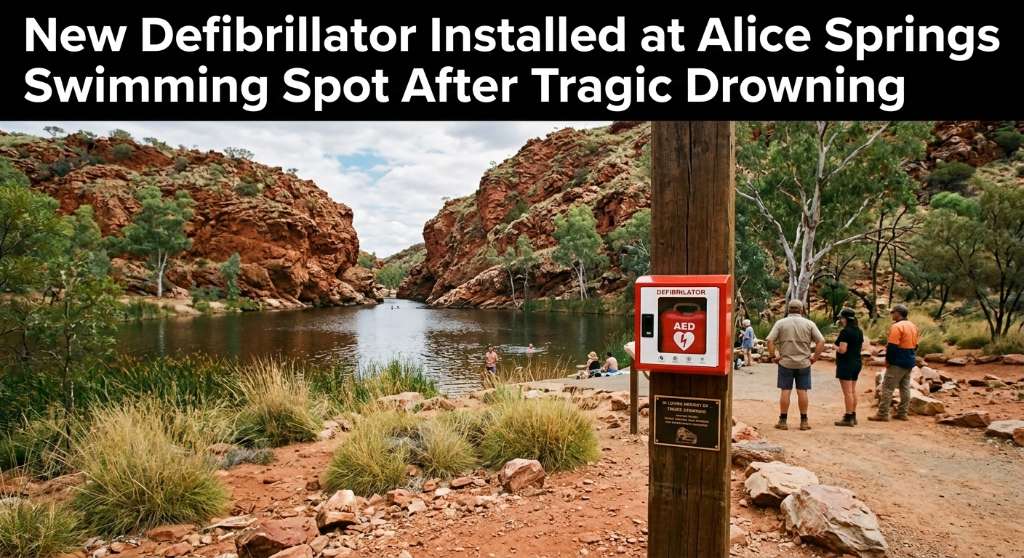
An automated external defibrillator and memorial plaque have been installed at Ellery Creek Big Hole following the death of disability advocate Ellen Fr...
Queensland firefighters spent several hours monitoring a significant grass fire at Mary Kinross Park in Bargara, near Bundaberg, after the blaze broke out on Wednesday evening....