Safety note: Admin approval is an initial review, not a guarantee that every detail is correct. Check important or urgent claims with official sources and report anything inaccurate or unsafe.
Source and credit: Contributor's own report
Australia’s top rugby schools revealed, with Brisbane’s Churchie emerging as a powerhouse - Brisbane, QLD
Smart summary
Some of Australia’s strongest rugby schools continue to produce future professional players and Wallabies, with Brisbane’s Anglican Church Grammar School (Churchie) recognised as one of the nation’s leading rugby tale...
Australia’s elite school rugby programs are continuing to play a major role in developing the next generation of professional players, with several historic schools producing large numbers of athletes who go on to represent state and national teams.
Among the standout programs is Anglican Church Grammar School (Churchie) in Brisbane, which has built a reputation as a major producer of rugby talent. The school has developed numerous players who have progressed to professional rugby, including representatives for the Queensland Reds and players pushing towards future Wallabies selection.
Churchie’s rugby program has been described as a major strength of the school, with hundreds of students involved across different age groups. The program focuses not only on developing playing ability but also on building leadership, discipline and teamwork among young athletes.
The school’s rugby success has been supported by an experienced coaching structure, including former professional players who contribute knowledge from international and elite-level competitions. Coaches say the focus is on creating a consistent rugby system across all age groups rather than relying only on individual talent.
Other Brisbane schools also remain major contributors to Australian rugby. Schools such as St Joseph’s Nudgee College, Brisbane State High School, and Brisbane Boys’ College have produced significant numbers of professional rugby players and continue to provide strong pathways for young athletes.
Queensland’s school rugby landscape has historically been one of the strongest in Australia, with the state’s GPS competitions producing many players who later represent professional teams. Brisbane schools have supplied talent to the Queensland Reds, while also contributing players to international rugby programs.
The article also highlights a broader challenge facing Australian rugby — retaining talented young players in a highly competitive sporting environment. Rugby union competes with other major Australian football codes, particularly rugby league and AFL, for talented junior athletes.
Experts have called for stronger regional pathways to ensure talented players outside major cities have equal opportunities to develop. While many rural players eventually move to metropolitan schools through scholarships and development programs, improving local pathways remains a key focus for Australian rugby.
The importance of school rugby pathways is expected to increase as Australia prepares for future international competitions, including the 2027 Rugby World Cup. Developing strong junior systems will be essential for creating a deeper pool of professional players and strengthening the national team.
For schools like Churchie and other rugby powerhouses, the goal remains the same — developing talented players while creating well-rounded young people who can succeed both on and off the field.
RugbyPlayersSchoolSchoolsBrisbane
Australia’s elite school rugby programs are continuing to play a major role in developing the next generation of professional players, with several historic schools producing large numbers of athletes who go on to represent state and national teams.
Among the standout programs is Anglican Church Grammar School (Churchie) in Brisbane, which has built a reputation as a major producer of rugby talent. The school has developed numerous players who have progressed to professional rugby, including representatives for the Queensland Reds and players pushing towards future Wallabies selection.
Churchie’s rugby program has been described as a major strength of the school, with hundreds of students involved across different age groups. The program focuses not only on developing playing ability but also on building leadership, discipline and teamwork among young athletes.
The school’s rugby success has been supported by an experienced coaching structure, including former professional players who contribute knowledge from international and elite-level competitions. Coaches say the focus is on creating a consistent rugby system across all age groups rather than relying only on individual talent.
Other Brisbane schools also remain major contributors to Australian rugby. Schools such as St Joseph’s Nudgee College, Brisbane State High School, and Brisbane Boys’ College have produced significant numbers of professional rugby players and continue to provide strong pathways for young athletes.
Queensland’s school rugby landscape has historically been one of the strongest in Australia, with the state’s GPS competitions producing many players who later represent professional teams. Brisbane schools have supplied talent to the Queensland Reds, while also contributing players to international rugby programs.
The article also highlights a broader challenge facing Australian rugby — retaining talented young players in a highly competitive sporting environment. Rugby union competes with other major Australian football codes, particularly rugby league and AFL, for talented junior athletes.
Experts have called for stronger regional pathways to ensure talented players outside major cities have equal opportunities to develop. While many rural players eventually move to metropolitan schools through scholarships and development programs, improving local pathways remains a key focus for Australian rugby.
The importance of school rugby pathways is expected to increase as Australia prepares for future international competitions, including the 2027 Rugby World Cup. Developing strong junior systems will be essential for creating a deeper pool of professional players and strengthening the national team.
For schools like Churchie and other rugby powerhouses, the goal remains the same — developing talented players while creating well-rounded young people who can succeed both on and off the field.
After suffering permanent nerve damage and paralysis in one arm following a rugby league tackle, Bryce Crane has returned to the sport and is preparing...
Maya Joint has defeated Romania’s Sorana Cirstea at the Pan Pacific Open, advancing to the round of 16 despite a substantial gap between the players’ wo...
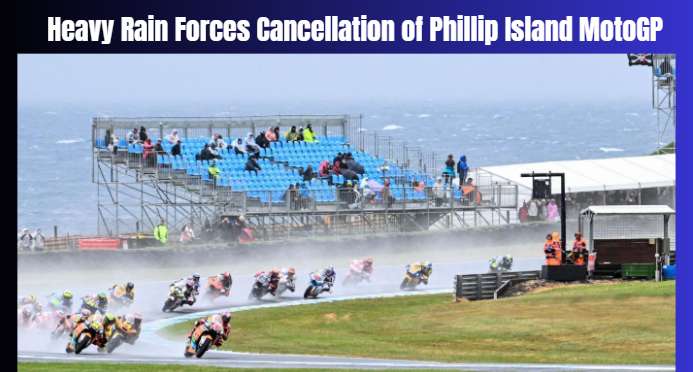
Fans were left disappointed after rain forced organisers to cancel the Australian Moto GP race at Phillip Island, with the event scheduled to move to Ade...
A freedom of information request has revealed that Gold Coast Council does not hold a copy of the invoice for Mayor Tom Tate's three-day stay at Donald...
Eight people have died in separate road crashes across Victoria during the Melbourne Cup long weekend, with four of the fatal incidents involving motorc...
Police are investigating after a one-year-old child died following a house fire in Collie, while several other people inside the property escaped safely.
A psychiatric report presented to South Australia's Supreme Court has raised questions about Tamika Chesser's mental competence in the case involving th...
A freedom of information request has revealed that Gold Coast Council does not hold a copy of the invoice for Mayor Tom Tate's three-day stay at Donald...