Australia to Overhaul Student Visa Rules After Universities Face $2 Billion Revenue Loss
By Chloe · Published 30 Oct 2026 · Updated 30 Oct 2026
Sydney, NSW · New South Wales News
Safety note: Admin approval is an initial review, not a guarantee that every detail is correct. Check important or urgent claims with official sources and report anything inaccurate or unsafe.
Source and credit: Contributor's own report
Australia to Overhaul Student Visa Rules After Universities Face $2 Billion Revenue Loss - Sydney, NSW
Smart summary
The federal government plans to review international student visa requirements after stricter immigration checks discouraged genuine applicants and contributed to falling university enrolments.
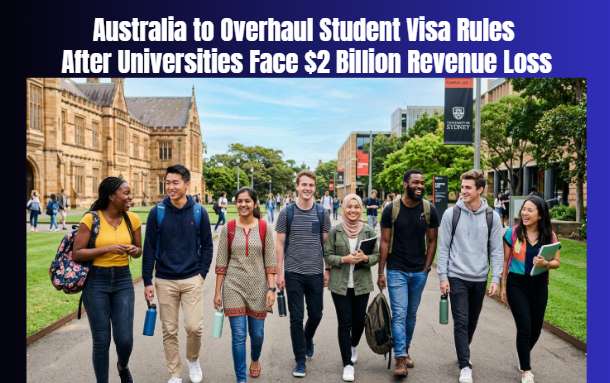
Australia's federal government is preparing to overhaul its international student visa requirements after concerns that stricter immigration policies are discouraging genuine overseas students from choosing Australian universities. The development was reported on 30 October 2026, highlighting growing pressure on the country's international education sector.
The Labor government has acknowledged that its efforts to control international student migration have created unintended consequences. Although the government maintains that stronger visa checks are necessary to protect the integrity of Australia's education system, officials are now considering changes to make the application process clearer and more predictable.
One of the major concerns is the financial impact on Australian universities. New international student commencements at public universities are projected to decline by approximately 18 per cent this year. This could result in an estimated $2 billion reduction in university revenue over three years.
International education is an important part of Australia's economy. It is the country's fifth-largest export sector and supports approximately 250,000 jobs. Universities depend on international enrolments to support teaching, research, campus facilities and other educational services.
Assistant Minister for International Education Julian Hill is expected to defend the government's reforms while warning against excessive restrictions that could damage Australia's reputation as a destination for overseas students.
A significant part of the proposed review concerns financial requirements for applicants from South Asian countries, including India and Nepal. Authorities are examining whether existing financial assessment procedures are too difficult to understand or are resulting in unnecessary visa refusals.
According to figures discussed in the report, more than 24.2 per cent of student visa applicants were rejected during the previous financial year. The refusal rate was particularly high for applicants from Nepal, where more than 51 per cent of applications were unsuccessful. More than 40 per cent of applications from India were also rejected.
These figures have raised concerns among education providers because genuine students may decide to study in other countries rather than risk receiving a visa refusal that could affect future applications elsewhere.
The government is now developing new financial standards for South Asian applicants and considering replacing Ministerial Direction 106, which was introduced in 2024 to strengthen checks on whether applicants genuinely intended to study in Australia.
Universities and education agents are expected to be consulted during November as officials work on the proposed changes.
Another possibility being considered is a system similar to New Zealand's approach, allowing international students to deposit money covering their tuition fees and living expenses to demonstrate that they can financially support their studies. However, officials have indicated that this would require longer-term planning.
The government is also examining education providers suspected of enrolling students in courses that may not represent genuine study intentions. Restrictions on certain course enrolments are part of its wider effort to prevent misuse of student visas.
For international students, particularly those from India and other South Asian countries, the proposed review could be important because clearer financial requirements may make the application process easier to understand.
However, the government has not announced that visa approvals will automatically increase. Applicants will still need to satisfy the applicable immigration requirements.
The proposed changes demonstrate Australia's challenge in balancing immigration controls with the economic importance of international education. The outcome of the review could influence universities, education providers and thousands of prospective students considering Australia for higher education.
A freedom of information request has revealed that Gold Coast Council does not hold a copy of the invoice for Mayor Tom Tate's three-day stay at Donald...
A nationwide survey of 4,000 Australians reveals declining confidence in politicians, growing dissatisfaction with democracy and significant differences...
New figures reveal more than $3 million in government spending on promotional merchandise, including unusual items such as condoms and lollies, raising...
Australia's antisemitism envoy has recommended stronger protest rules, additional visa checks and independent oversight of public broadcasters as part o...
New South Wales has begun accepting firearms under the national gun buyback scheme, but limited appointment availability has created an early challenge...
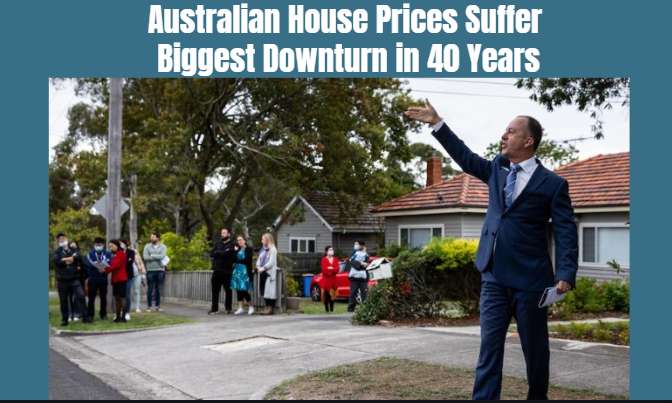
Australian property values have fallen for seven consecutive months, with the national median home value dropping approximately $63,400 since March as h...
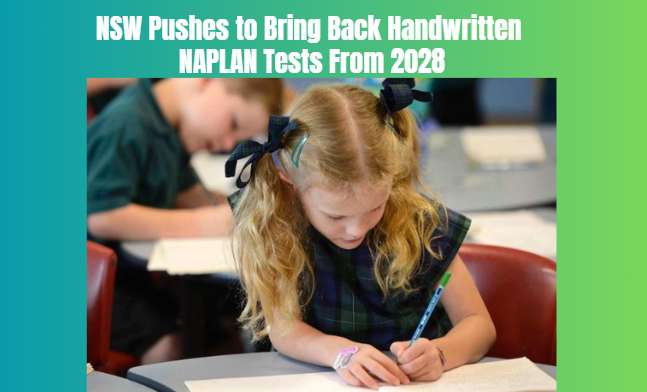
Education experts support New South Wales' proposal to replace computer-based NAPLAN writing tests with traditional pen-and-paper examinations for stude...
A psychiatric report presented to South Australia's Supreme Court has raised questions about Tamika Chesser's mental competence in the case involving th...
A freedom of information request has revealed that Gold Coast Council does not hold a copy of the invoice for Mayor Tom Tate's three-day stay at Donald...