Safety note: Admin approval is an initial review, not a guarantee that every detail is correct. Check important or urgent claims with official sources and report anything inaccurate or unsafe.
Source and credit: Contributor's own report
Bulli couple’s modular housing dream stuck in planning limbo after council rejection - Wollongong, NSW
Smart summary
A NSW couple hoping to build a second modular home on their family block say their housing dream has been delayed after council classified the proposal as a manufactured housing estate.
A couple in Bulli, New South Wales, have been left unable to proceed with their modular housing plans after their proposal was rejected by Wollongong City Council, creating uncertainty around the future of their family housing dream.
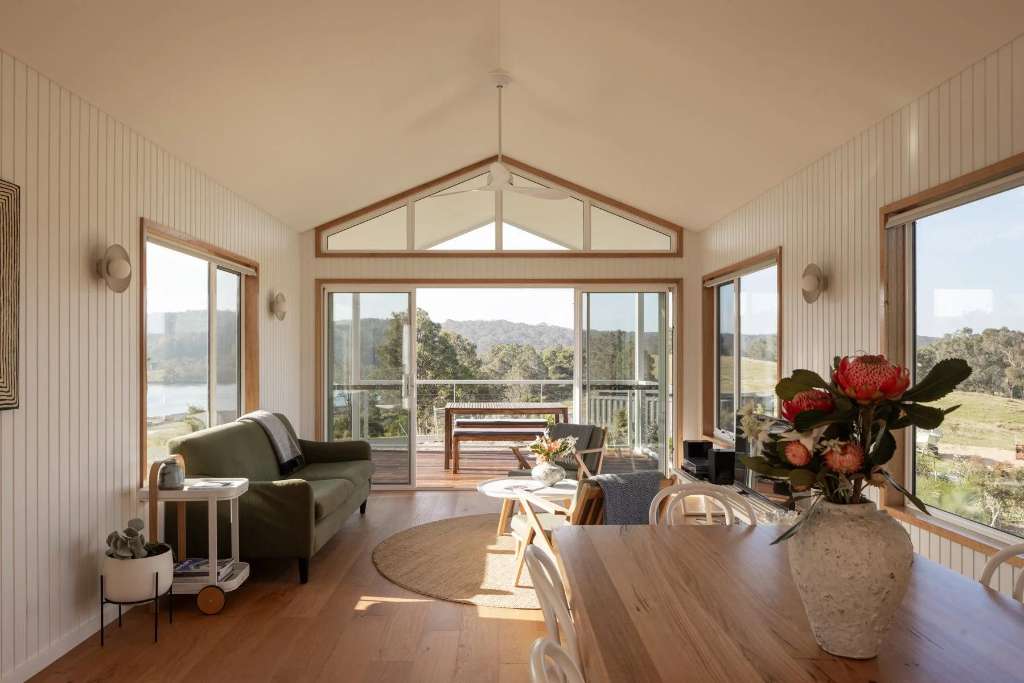
Caitlin Holme and Chris Robinson wanted to build a second modular home on a large subdivided block they purchased with Ms Holme’s sister. The plan was designed to allow both families to live close together while maintaining separate homes and sharing the same property.
The couple’s difficulty began because Ms Holme’s sister had already placed a modular home on the rear section of the block. When the couple applied to build another modular home at the front of the property, Wollongong City Council determined that having two modular homes on one site met the definition of a manufactured housing estate under current planning rules.
The couple argued that their proposal was simply two family homes on one block and not comparable to a caravan park or large-scale manufactured housing development. They said the classification created an unexpected barrier that prevented them from achieving a practical and affordable housing solution.
Ms Holme said the family had spent years working towards the idea, which was motivated by rising property prices and the difficulty many younger Australians face trying to enter the housing market. The plan would have allowed the two families to share a location while reducing living costs.
The couple purchased the 1,840-square-metre block in 2024, believing it would provide enough space for both homes. After the initial rejection, they consulted a town planner and made changes, including subdividing the block, before submitting another application. However, the proposal was rejected again for the same planning reason.
Wollongong City Council said current planning rules allow one modern method of construction home per allotment in the relevant zoning area. The council said multiple modular homes on the same site were considered a manufactured housing estate, which was not permitted under existing legislation.
The dispute comes as governments across Australia promote modular and prefabricated housing as a potential way to increase housing supply, reduce construction times and improve affordability. These homes are built in factories before being transported and assembled on site.
The NSW government has proposed reforms aimed at removing differences between modular homes and traditionally built houses in planning approvals. The proposed changes would create a single pathway where a home is assessed based on its use rather than how it was constructed.
NSW Building Minister Anoulack Chanthivong said the reforms would help reduce red tape, speed up approvals and support more housing delivery. Planning Minister Paul Scully said cases like the Bulli family’s highlighted inconsistencies that needed to be addressed.
Industry experts have previously argued that modular housing could help address Australia’s housing shortage because factory construction can improve efficiency and reduce delays. However, planning rules, financing challenges and approval processes remain major barriers to wider adoption.
For the Bulli family, the future of their project depends on whether proposed planning reforms are passed and whether those changes resolve the uncertainty around multiple modular homes on one property. Until then, their plan remains on hold.
HousingModularHomesPlanningCouple
A couple in Bulli, New South Wales, have been left unable to proceed with their modular housing plans after their proposal was rejected by Wollongong City Council, creating uncertainty around the future of their family housing dream.
Caitlin Holme and Chris Robinson wanted to build a second modular home on a large subdivided block they purchased with Ms Holme’s sister. The plan was designed to allow both families to live close together while maintaining separate homes and sharing the same property.
The couple’s difficulty began because Ms Holme’s sister had already placed a modular home on the rear section of the block. When the couple applied to build another modular home at the front of the property, Wollongong City Council determined that having two modular homes on one site met the definition of a manufactured housing estate under current planning rules.
The couple argued that their proposal was simply two family homes on one block and not comparable to a caravan park or large-scale manufactured housing development. They said the classification created an unexpected barrier that prevented them from achieving a practical and affordable housing solution.
Ms Holme said the family had spent years working towards the idea, which was motivated by rising property prices and the difficulty many younger Australians face trying to enter the housing market. The plan would have allowed the two families to share a location while reducing living costs.
The couple purchased the 1,840-square-metre block in 2024, believing it would provide enough space for both homes. After the initial rejection, they consulted a town planner and made changes, including subdividing the block, before submitting another application. However, the proposal was rejected again for the same planning reason.
Wollongong City Council said current planning rules allow one modern method of construction home per allotment in the relevant zoning area. The council said multiple modular homes on the same site were considered a manufactured housing estate, which was not permitted under existing legislation.
The dispute comes as governments across Australia promote modular and prefabricated housing as a potential way to increase housing supply, reduce construction times and improve affordability. These homes are built in factories before being transported and assembled on site.
The NSW government has proposed reforms aimed at removing differences between modular homes and traditionally built houses in planning approvals. The proposed changes would create a single pathway where a home is assessed based on its use rather than how it was constructed.
NSW Building Minister Anoulack Chanthivong said the reforms would help reduce red tape, speed up approvals and support more housing delivery. Planning Minister Paul Scully said cases like the Bulli family’s highlighted inconsistencies that needed to be addressed.
Industry experts have previously argued that modular housing could help address Australia’s housing shortage because factory construction can improve efficiency and reduce delays. However, planning rules, financing challenges and approval processes remain major barriers to wider adoption.
For the Bulli family, the future of their project depends on whether proposed planning reforms are passed and whether those changes resolve the uncertainty around multiple modular homes on one property. Until then, their plan remains on hold.
A vehicle has crashed into a house in Albury, prompting police attendance at a residential property near the intersection of Mate and North streets. The incident was reported to...
A high-profile athlete has returned to court and told the hearing that an alleged unwanted kiss by former broadcaster Alan Jones remained difficult to f...
Work on the $150 million Sydney Town Hall Square project has been paused after the NSW Planning Minister referred the development for review by the Inde...
A 36-year-old man has been charged after investigators allegedly found fraudulent identification documents, cloned number plates, cash and drug-manufact...
A Sydney court has heard that a man sent 249 messages to a former partner within 24 hours, with the messages treated as a single alleged breach of an ap...
A high-profile athlete has returned to court and told the hearing that an alleged unwanted kiss by former broadcaster Alan Jones remained difficult to f...
Work on the $150 million Sydney Town Hall Square project has been paused after the NSW Planning Minister referred the development for review by the Inde...
Cairns Regional Council has unanimously voted to seek $400,000 in Queensland Government funding for a program designed to connect local businesses with the region’s growing film...
An automated external defibrillator and memorial plaque have been installed at Ellery Creek Big Hole following the death of disability advocate Ellen Fr...
Queensland firefighters spent several hours monitoring a significant grass fire at Mary Kinross Park in Bargara, near Bundaberg, after the blaze broke out on Wednesday evening....