Safety note: Admin approval is an initial review, not a guarantee that every detail is correct. Check important or urgent claims with official sources and report anything inaccurate or unsafe.
Source and credit: Contributor's own report
Conservation groups call for review of NSW land-clearing rules over native vegetation concerns - Sydney, NSW
Smart summary
The Nature Conservation Council of NSW is calling for changes to the state’s invasive native species land-clearing rules, warning they could allow widespread removal of important native vegetation.
A major debate over land management and conservation has emerged in New South Wales after the Nature Conservation Council of NSW (NCC) called for the state’s Invasive Native Species (INS) land-clearing code to be scrapped. The conservation group says the policy allows large-scale removal of native vegetation and could threaten important habitats for wildlife.
According to the NCC, more than 3.2 million hectares of native vegetation in NSW have received approval for clearing under INS provisions. The organisation argues that many of the plants classified under the code are native species that naturally occur in their environments and should not be treated as invasive.
The group’s report highlights concerns about vegetation including coolabah trees, river red gums and mulga wattle, which conservationists say provide essential habitat for native animals. The NCC claims that some approved clearing areas overlap with habitats supporting threatened plant and animal species, creating risks for biodiversity.
Conservation advocates argue that the term “invasive native species” creates a pathway for broad-scale land clearing and may encourage removal of ecosystems that have environmental value. They are calling for stronger scientific assessment and updated rules to ensure land management decisions protect biodiversity while supporting farmers.
However, farming organisations have defended the existing framework, saying dense native vegetation growth can create serious challenges for agricultural operations. Farmers argue that thick regeneration of trees and shrubs can reduce grazing areas, affect productivity and change ecosystems by limiting grass growth needed by livestock and native animals.
The NSW Farmers Association said removing the INS code could have significant impacts on rural communities. Representatives argue that landholders need practical tools to manage vegetation density and maintain productive agricultural landscapes. They say controlled clearing can sometimes improve ground cover, reduce erosion risks and support healthier ecosystems.
Environmental scientists have also weighed into the debate, with some researchers saying scientific understanding of native vegetation management has changed over time. They argue that historical land-use practices, including grazing pressure and changes to fire patterns, have influenced vegetation growth across western NSW.
The NSW Government has commissioned an expert panel to examine the invasive native species framework and provide advice on possible reforms. Authorities say future decisions will consider both environmental protection and the needs of farmers managing rural properties.
The issue highlights the ongoing challenge of balancing conservation with agricultural needs. While environmental groups want stronger protection for native ecosystems, farmers say responsible vegetation management is necessary for sustainable land use. The government review is expected to guide future changes to NSW land management policies.
NativeVegetationConservationFarmersLand
A major debate over land management and conservation has emerged in New South Wales after the Nature Conservation Council of NSW (NCC) called for the state’s Invasive Native Species (INS) land-clearing code to be scrapped. The conservation group says the policy allows large-scale removal of native vegetation and could threaten important habitats for wildlife.
According to the NCC, more than 3.2 million hectares of native vegetation in NSW have received approval for clearing under INS provisions. The organisation argues that many of the plants classified under the code are native species that naturally occur in their environments and should not be treated as invasive.
The group’s report highlights concerns about vegetation including coolabah trees, river red gums and mulga wattle, which conservationists say provide essential habitat for native animals. The NCC claims that some approved clearing areas overlap with habitats supporting threatened plant and animal species, creating risks for biodiversity.
Conservation advocates argue that the term “invasive native species” creates a pathway for broad-scale land clearing and may encourage removal of ecosystems that have environmental value. They are calling for stronger scientific assessment and updated rules to ensure land management decisions protect biodiversity while supporting farmers.
However, farming organisations have defended the existing framework, saying dense native vegetation growth can create serious challenges for agricultural operations. Farmers argue that thick regeneration of trees and shrubs can reduce grazing areas, affect productivity and change ecosystems by limiting grass growth needed by livestock and native animals.
The NSW Farmers Association said removing the INS code could have significant impacts on rural communities. Representatives argue that landholders need practical tools to manage vegetation density and maintain productive agricultural landscapes. They say controlled clearing can sometimes improve ground cover, reduce erosion risks and support healthier ecosystems.
Environmental scientists have also weighed into the debate, with some researchers saying scientific understanding of native vegetation management has changed over time. They argue that historical land-use practices, including grazing pressure and changes to fire patterns, have influenced vegetation growth across western NSW.
The NSW Government has commissioned an expert panel to examine the invasive native species framework and provide advice on possible reforms. Authorities say future decisions will consider both environmental protection and the needs of farmers managing rural properties.
The issue highlights the ongoing challenge of balancing conservation with agricultural needs. While environmental groups want stronger protection for native ecosystems, farmers say responsible vegetation management is necessary for sustainable land use. The government review is expected to guide future changes to NSW land management policies.
A vehicle has crashed into a house in Albury, prompting police attendance at a residential property near the intersection of Mate and North streets. The incident was reported to...
A high-profile athlete has returned to court and told the hearing that an alleged unwanted kiss by former broadcaster Alan Jones remained difficult to f...
Work on the $150 million Sydney Town Hall Square project has been paused after the NSW Planning Minister referred the development for review by the Inde...
A 36-year-old man has been charged after investigators allegedly found fraudulent identification documents, cloned number plates, cash and drug-manufact...
A Sydney court has heard that a man sent 249 messages to a former partner within 24 hours, with the messages treated as a single alleged breach of an ap...
A high-profile athlete has returned to court and told the hearing that an alleged unwanted kiss by former broadcaster Alan Jones remained difficult to f...
Work on the $150 million Sydney Town Hall Square project has been paused after the NSW Planning Minister referred the development for review by the Inde...
Cairns Regional Council has unanimously voted to seek $400,000 in Queensland Government funding for a program designed to connect local businesses with the region’s growing film...
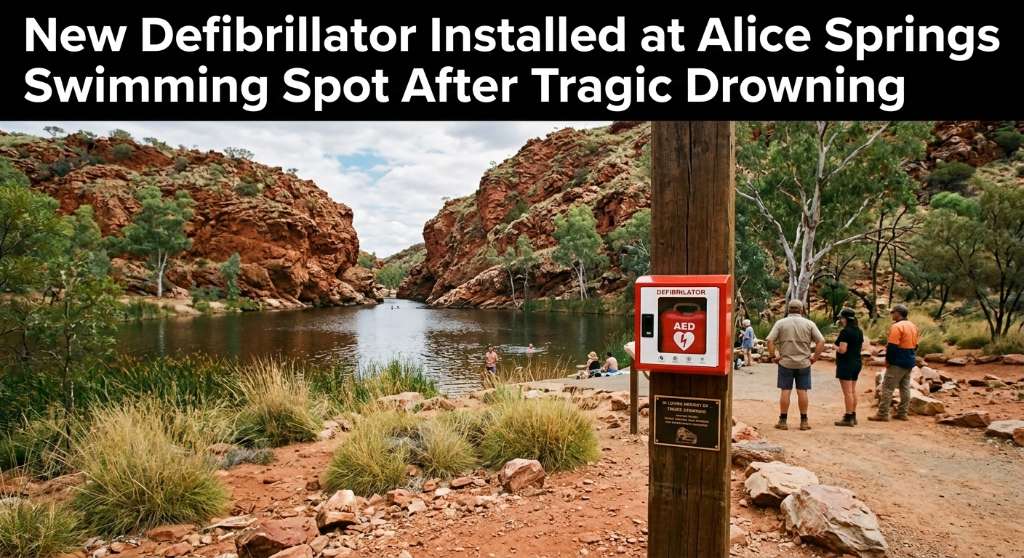
An automated external defibrillator and memorial plaque have been installed at Ellery Creek Big Hole following the death of disability advocate Ellen Fr...
Queensland firefighters spent several hours monitoring a significant grass fire at Mary Kinross Park in Bargara, near Bundaberg, after the blaze broke out on Wednesday evening....