Safety note: Admin approval is an initial review, not a guarantee that every detail is correct. Check important or urgent claims with official sources and report anything inaccurate or unsafe.
Source and credit: Contributor's own report
Court approves seawall for The Entrance North in landmark coastal erosion ruling - Central Coast, NSW
Smart summary
The NSW Land and Environment Court has approved the construction of a permanent seawall at The Entrance North, marking a significant legal decision that could influence future coastal protection projects across New So...
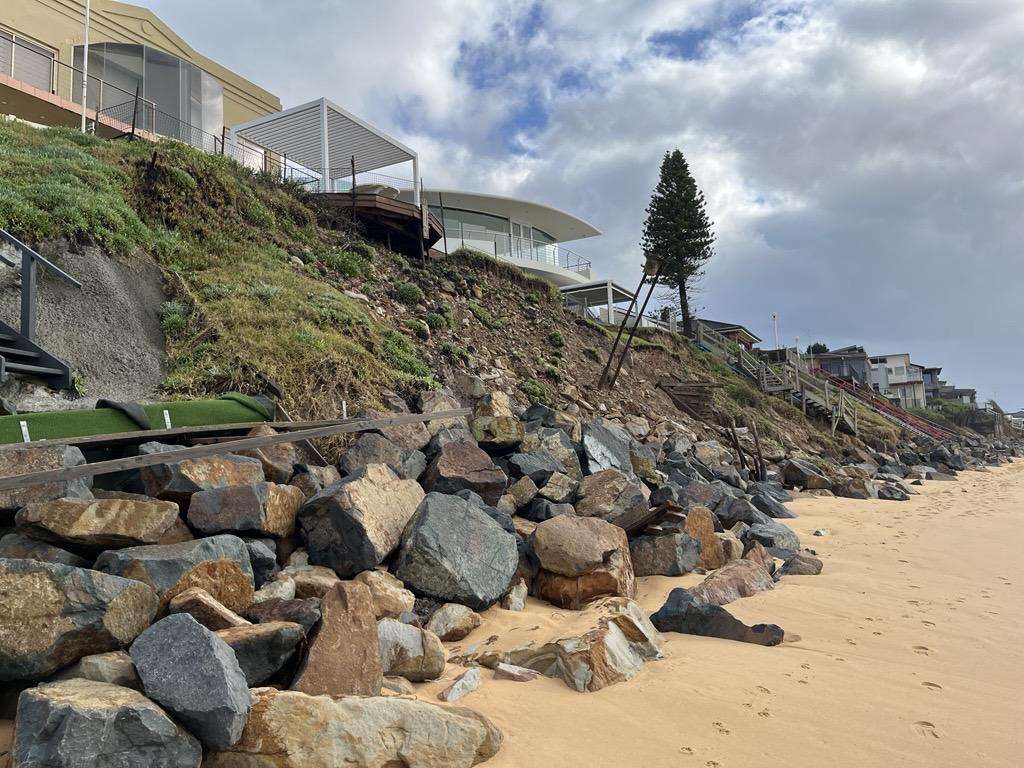
The New South Wales Land and Environment Court has ruled in favour of constructing a permanent seawall at the southern end of The Entrance North on the Central Coast, ending a lengthy legal dispute over how to protect beachfront homes from ongoing coastal erosion. The decision is being described as one of the most significant coastal planning rulings in recent years and may influence future applications for shoreline protection across NSW.
The approved project involves a 90-metre reinforced concrete seawall designed to safeguard residential properties that have faced severe erosion since 2020. Homeowners argued that repeated storms and powerful ocean swells had caused significant land loss and that temporary emergency protection works, including sandbags and other short-term measures, had failed to provide lasting protection.
The proposal had previously been opposed by the Central Coast Council, which argued that a permanent seawall could negatively affect the natural beach environment, alter the coastline and establish a precedent encouraging similar developments along other vulnerable beaches. Council representatives also raised concerns about potential impacts on public access and the long-term management of the coastline.
After reviewing expert engineering, environmental and planning evidence, the Land and Environment Court concluded that the seawall could proceed subject to a range of conditions. One important condition requires the property owners to reach agreement on how the structure will be maintained, repaired and funded over its lifetime. Final maintenance arrangements are expected to be submitted to the court before the project can move forward.
The ruling has generated mixed reactions within the community. Beachfront property owners welcomed the decision, describing it as essential for protecting homes that have been threatened by continuing coastal erosion. Some residents said the judgement provides certainty after years of uncertainty and repeated storm damage.
However, not everyone supports the outcome. Some local residents and coastal advocates remain concerned that permanent hard structures may affect the natural movement of sand along the coastline, potentially increasing erosion in nearby areas over time. These concerns reflect a broader debate occurring in many coastal communities as governments balance environmental protection with safeguarding private property.
The decision is expected to be closely watched by residents at Wamberal Beach and other erosion-prone locations on the Central Coast, where homeowners have also sought permanent solutions to protect properties from coastal erosion. Planning and environmental experts believe the judgement could become an important reference point for future applications involving seawalls and other coastal defence structures.
The Entrance North has experienced repeated coastal erosion events over recent years, particularly during periods of severe weather and large ocean swells. The court's decision recognises the ongoing risk while attempting to balance engineering solutions with environmental considerations.
Construction cannot begin until all court conditions have been satisfied and ongoing maintenance responsibilities are formally agreed. Once completed, the seawall is expected to provide long-term protection for affected properties while remaining subject to regulatory oversight.
CoastalErosionCourtSeawallProtection
The New South Wales Land and Environment Court has ruled in favour of constructing a permanent seawall at the southern end of The Entrance North on the Central Coast, ending a lengthy legal dispute over how to protect beachfront homes from ongoing coastal erosion. The decision is being described as one of the most significant coastal planning rulings in recent years and may influence future applications for shoreline protection across NSW.
The approved project involves a 90-metre reinforced concrete seawall designed to safeguard residential properties that have faced severe erosion since 2020. Homeowners argued that repeated storms and powerful ocean swells had caused significant land loss and that temporary emergency protection works, including sandbags and other short-term measures, had failed to provide lasting protection.
The proposal had previously been opposed by the Central Coast Council, which argued that a permanent seawall could negatively affect the natural beach environment, alter the coastline and establish a precedent encouraging similar developments along other vulnerable beaches. Council representatives also raised concerns about potential impacts on public access and the long-term management of the coastline.
After reviewing expert engineering, environmental and planning evidence, the Land and Environment Court concluded that the seawall could proceed subject to a range of conditions. One important condition requires the property owners to reach agreement on how the structure will be maintained, repaired and funded over its lifetime. Final maintenance arrangements are expected to be submitted to the court before the project can move forward.
The ruling has generated mixed reactions within the community. Beachfront property owners welcomed the decision, describing it as essential for protecting homes that have been threatened by continuing coastal erosion. Some residents said the judgement provides certainty after years of uncertainty and repeated storm damage.
However, not everyone supports the outcome. Some local residents and coastal advocates remain concerned that permanent hard structures may affect the natural movement of sand along the coastline, potentially increasing erosion in nearby areas over time. These concerns reflect a broader debate occurring in many coastal communities as governments balance environmental protection with safeguarding private property.
The decision is expected to be closely watched by residents at Wamberal Beach and other erosion-prone locations on the Central Coast, where homeowners have also sought permanent solutions to protect properties from coastal erosion. Planning and environmental experts believe the judgement could become an important reference point for future applications involving seawalls and other coastal defence structures.
The Entrance North has experienced repeated coastal erosion events over recent years, particularly during periods of severe weather and large ocean swells. The court's decision recognises the ongoing risk while attempting to balance engineering solutions with environmental considerations.
Construction cannot begin until all court conditions have been satisfied and ongoing maintenance responsibilities are formally agreed. Once completed, the seawall is expected to provide long-term protection for affected properties while remaining subject to regulatory oversight.
The new laboratory in Bundaberg will allow Indigenous rangers and traditional owner groups to test water locally, strengthening environmental management...
Conservation groups and landowners are opposing a proposed road through a protected sanctuary near Canberra, warning it could damage habitat for threate...
Liquidators have recovered just $8 million from more than $512 million invested in the collapsed First Guardian fund, leaving thousands of Australians u...
The university will introduce stronger in-person assessments and independent audits to help ensure students demonstrate their own knowledge as artificia...
New South Wales has begun accepting firearms under the national gun buyback scheme, but limited appointment availability has created an early challenge...
Australian property values have fallen for seven consecutive months, with the national median home value dropping approximately $63,400 since March as h...
Education experts support New South Wales' proposal to replace computer-based NAPLAN writing tests with traditional pen-and-paper examinations for stude...
Police are investigating after a one-year-old child died following a house fire in Collie, while several other people inside the property escaped safely.
A psychiatric report presented to South Australia's Supreme Court has raised questions about Tamika Chesser's mental competence in the case involving th...
A freedom of information request has revealed that Gold Coast Council does not hold a copy of the invoice for Mayor Tom Tate's three-day stay at Donald...