Safety note: Admin approval is an initial review, not a guarantee that every detail is correct. Check important or urgent claims with official sources and report anything inaccurate or unsafe.
Source and credit: Contributor's own report
Darwin cancer survivor urges men to take prostate testing seriously - Darwin, NT
Smart summary
A 95-year-old Darwin resident is using his own experience with prostate cancer to encourage more men to consider early PSA testing.
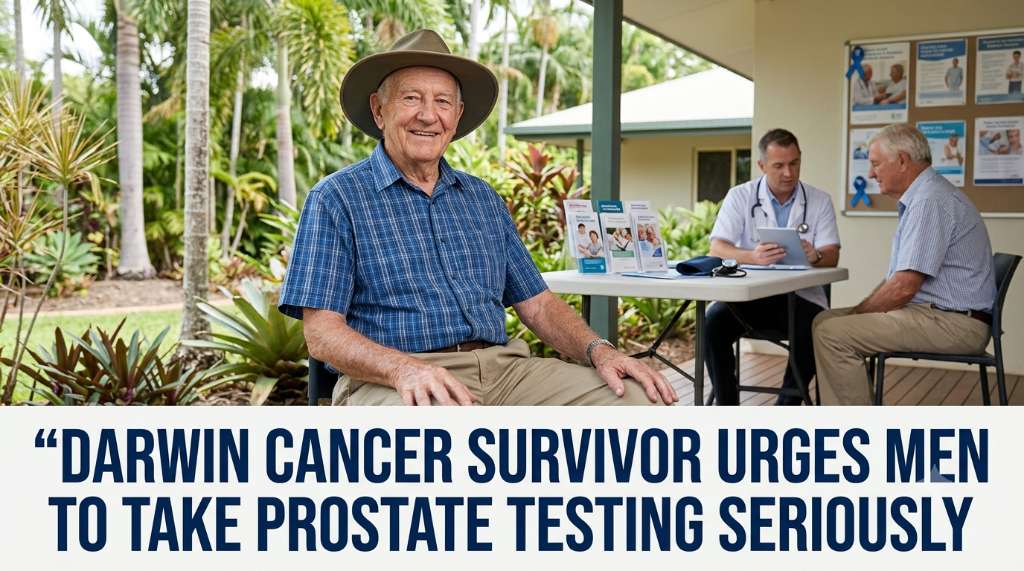
Darwin resident Don Lockley, 95, is urging men to take prostate cancer screening seriously after his own experience with the disease highlighted the importance of early detection.
Lockley was diagnosed with prostate cancer more than two decades ago after a routine medical check. His doctor detected abnormalities that led to further testing and a biopsy, eventually confirming the cancer. He underwent radiation treatment at Royal Adelaide Hospital and credits the early discovery with helping him continue an active life for many years.
Now, despite facing another prostate cancer diagnosis, Lockley has continued advocating for greater awareness of prostate health. He is using September's Prostate Cancer Awareness Month to encourage men to speak with their doctors about testing and understand their individual risk.
The issue is particularly significant in Darwin, where reported PSA testing rates are substantially below the national average. Testing rates in Leanyer are around 36 per cent below the national average, while Darwin city is reported to be about 66 per cent lower.
Lockley's experience has made him a strong supporter of early detection. He has remained active well into his later years, including playing hockey and completing a tandem skydive from about 12,000 feet for his 90th birthday.
He is also participating in the Prostate Cancer Foundation of Australia's Long Run during September. Although his original goal was to walk 100 kilometres and raise $1,000, he had already exceeded the walking target, reaching 126 kilometres and raising about $1,740.
Health advocates say awareness and early conversations with doctors can help men understand whether PSA testing is appropriate for them. PSA testing involves a blood test that measures prostate-specific antigen, although testing decisions can depend on age, symptoms, family history and individual risk factors.
The campaign comes amid concerns that low testing rates and limited awareness may prevent some men from detecting prostate cancer early. Prostate cancer can develop without obvious symptoms, meaning some men may not seek medical attention until the disease has progressed.
Lockley's story is being used as an example of why regular medical conversations can matter. His initial diagnosis came after a doctor identified abnormalities despite him not experiencing severe symptoms.
Health advocates are calling for greater education and awareness so men understand the potential benefits and limitations of PSA testing and can discuss their options with healthcare professionals.
For Darwin and the wider Northern Territory, the significant gap in testing rates has prompted renewed attention to prostate cancer awareness. The campaign also highlights the importance of making health information accessible and encouraging men to seek appropriate medical advice.
Lockley continues to advocate for testing while maintaining an active lifestyle, using his personal experience to encourage other men not to ignore prostate health.
TestingProstateCancerAwarenessLockley
Darwin resident Don Lockley, 95, is urging men to take prostate cancer screening seriously after his own experience with the disease highlighted the importance of early detection.
Lockley was diagnosed with prostate cancer more than two decades ago after a routine medical check. His doctor detected abnormalities that led to further testing and a biopsy, eventually confirming the cancer. He underwent radiation treatment at Royal Adelaide Hospital and credits the early discovery with helping him continue an active life for many years.
Now, despite facing another prostate cancer diagnosis, Lockley has continued advocating for greater awareness of prostate health. He is using September's Prostate Cancer Awareness Month to encourage men to speak with their doctors about testing and understand their individual risk.
The issue is particularly significant in Darwin, where reported PSA testing rates are substantially below the national average. Testing rates in Leanyer are around 36 per cent below the national average, while Darwin city is reported to be about 66 per cent lower.
Lockley's experience has made him a strong supporter of early detection. He has remained active well into his later years, including playing hockey and completing a tandem skydive from about 12,000 feet for his 90th birthday.
He is also participating in the Prostate Cancer Foundation of Australia's Long Run during September. Although his original goal was to walk 100 kilometres and raise $1,000, he had already exceeded the walking target, reaching 126 kilometres and raising about $1,740.
Health advocates say awareness and early conversations with doctors can help men understand whether PSA testing is appropriate for them. PSA testing involves a blood test that measures prostate-specific antigen, although testing decisions can depend on age, symptoms, family history and individual risk factors.
The campaign comes amid concerns that low testing rates and limited awareness may prevent some men from detecting prostate cancer early. Prostate cancer can develop without obvious symptoms, meaning some men may not seek medical attention until the disease has progressed.
Lockley's story is being used as an example of why regular medical conversations can matter. His initial diagnosis came after a doctor identified abnormalities despite him not experiencing severe symptoms.
Health advocates are calling for greater education and awareness so men understand the potential benefits and limitations of PSA testing and can discuss their options with healthcare professionals.
For Darwin and the wider Northern Territory, the significant gap in testing rates has prompted renewed attention to prostate cancer awareness. The campaign also highlights the importance of making health information accessible and encouraging men to seek appropriate medical advice.
Lockley continues to advocate for testing while maintaining an active lifestyle, using his personal experience to encourage other men not to ignore prostate health.
New funding from local charity Wishlist is improving communication support for patients at Bundaberg Hospital, with resources designed to help people communicate more effectivel...
New figures have renewed concerns about emergency department delays at Royal Hobart Hospital, with the health system facing questions over patient waiti...
Central Coast New South Wales · Health News · 10 Sep 2026
The design for new Key Health Worker Accommodation at Wyong has been released today, with the project aimed at helping address the need for suitable accommodation for healthcare...
An automated external defibrillator and memorial plaque have been installed at Ellery Creek Big Hole following the death of disability advocate Ellen Fr...
Paramedics responding to an emergency in Alice Springs were forced to use a stretcher as a barricade after an armed and allegedly intoxicated group beca...
Cairns Regional Council has unanimously voted to seek $400,000 in Queensland Government funding for a program designed to connect local businesses with the region’s growing film...
An automated external defibrillator and memorial plaque have been installed at Ellery Creek Big Hole following the death of disability advocate Ellen Fr...
Queensland firefighters spent several hours monitoring a significant grass fire at Mary Kinross Park in Bargara, near Bundaberg, after the blaze broke out on Wednesday evening....