Erin Patterson Loses Murder Conviction Appeal as Court Imposes Life Sentence Without Parole
By Chloe · Published 30 Oct 2026 · Updated 30 Oct 2026
Melbourne, VIC · Victoria News
Safety note: Admin approval is an initial review, not a guarantee that every detail is correct. Check important or urgent claims with official sources and report anything inaccurate or unsafe.
Source and credit: Contributor's own report
Erin Patterson Loses Murder Conviction Appeal as Court Imposes Life Sentence Without Parole - Melbourne, VIC
Smart summary
Victoria's highest court has rejected Erin Patterson's appeal and increased her sentence, ruling that she must spend the rest of her life in prison without parole.
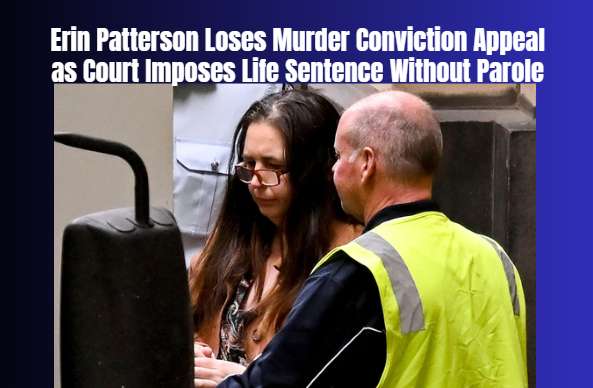
A major criminal justice development took place in Victoria on 30 October 2026, when the Court of Appeal rejected Erin Patterson's challenge against her murder convictions and increased her sentence to life imprisonment without the possibility of parole.
The decision follows one of Australia's most widely followed criminal cases, involving a deadly mushroom lunch hosted by Patterson at her home in Leongatha, Victoria, in July 2023. The meal resulted in the deaths of three people: Don Patterson, Gail Patterson and Heather Wilkinson. Heather's husband, Ian Wilkinson, also became seriously ill but survived.
Patterson was convicted of three murders and one attempted murder following a high-profile trial. In September 2025, she received three life sentences, with a minimum non-parole period of 33 years. This meant she could potentially apply for parole after serving that period.
However, prosecutors believed the original sentence was not sufficiently severe given the circumstances of the crimes. They appealed the sentencing decision, arguing that Patterson should never have the opportunity to be released from prison.
At the same time, Patterson challenged her convictions, arguing that problems during the trial had affected the fairness of the proceedings. Her legal team raised several grounds of appeal, including concerns about jury arrangements and the admission of mobile phone evidence.
On 30 October, a three-judge Court of Appeal panel, including Justice Stephen McLeish, delivered its decision at the Supreme Court of Victoria in Melbourne. The court rejected Patterson's appeal against her convictions after considering the arguments presented by her defence team.
The court also accepted the prosecution's argument that the original sentence was inadequate. As a result, the non-parole period was removed and Patterson was resentenced to life imprisonment without parole.
The decision means she will not be eligible for release through the ordinary parole process. It represents a significant outcome in the legal proceedings and closes an important stage of the case.
During the appeal proceedings, the court also considered arguments about Patterson's prison conditions. Her lawyers had described her confinement as particularly restrictive, while prosecutors maintained that the seriousness of the crimes justified the sentence they were seeking.
The judges considered the legal arguments from both sides before delivering their final decision. The ruling reflects the court's assessment of the seriousness of the offending and the evidence considered during the original proceedings.
The case has attracted national attention because of the unusual circumstances surrounding the deaths, the impact on the affected families and the extensive investigation that followed the lunch.
The outcome has also renewed public discussion about sentencing standards, criminal appeals and the role of parole in Australia's justice system.
For the families affected by the deaths, the decision marks another significant moment in a long legal process. Although the appeal proceedings have concluded at this level, any further legal challenge would face strict requirements under Australian law.
The ruling is one of the major court developments reported in Victoria on 30 October 2026.
PattersonCourtAppealDecisionParole
A major criminal justice development took place in Victoria on 30 October 2026, when the Court of Appeal rejected Erin Patterson's challenge against her murder convictions and increased her sentence to life imprisonment without the possibility of parole.
The decision follows one of Australia's most widely followed criminal cases, involving a deadly mushroom lunch hosted by Patterson at her home in Leongatha, Victoria, in July 2023. The meal resulted in the deaths of three people: Don Patterson, Gail Patterson and Heather Wilkinson. Heather's husband, Ian Wilkinson, also became seriously ill but survived.
Patterson was convicted of three murders and one attempted murder following a high-profile trial. In September 2025, she received three life sentences, with a minimum non-parole period of 33 years. This meant she could potentially apply for parole after serving that period.
However, prosecutors believed the original sentence was not sufficiently severe given the circumstances of the crimes. They appealed the sentencing decision, arguing that Patterson should never have the opportunity to be released from prison.
At the same time, Patterson challenged her convictions, arguing that problems during the trial had affected the fairness of the proceedings. Her legal team raised several grounds of appeal, including concerns about jury arrangements and the admission of mobile phone evidence.
On 30 October, a three-judge Court of Appeal panel, including Justice Stephen McLeish, delivered its decision at the Supreme Court of Victoria in Melbourne. The court rejected Patterson's appeal against her convictions after considering the arguments presented by her defence team.
The court also accepted the prosecution's argument that the original sentence was inadequate. As a result, the non-parole period was removed and Patterson was resentenced to life imprisonment without parole.
The decision means she will not be eligible for release through the ordinary parole process. It represents a significant outcome in the legal proceedings and closes an important stage of the case.
During the appeal proceedings, the court also considered arguments about Patterson's prison conditions. Her lawyers had described her confinement as particularly restrictive, while prosecutors maintained that the seriousness of the crimes justified the sentence they were seeking.
The judges considered the legal arguments from both sides before delivering their final decision. The ruling reflects the court's assessment of the seriousness of the offending and the evidence considered during the original proceedings.
The case has attracted national attention because of the unusual circumstances surrounding the deaths, the impact on the affected families and the extensive investigation that followed the lunch.
The outcome has also renewed public discussion about sentencing standards, criminal appeals and the role of parole in Australia's justice system.
For the families affected by the deaths, the decision marks another significant moment in a long legal process. Although the appeal proceedings have concluded at this level, any further legal challenge would face strict requirements under Australian law.
The ruling is one of the major court developments reported in Victoria on 30 October 2026.
A psychiatric report presented to South Australia's Supreme Court has raised questions about Tamika Chesser's mental competence in the case involving th...
Eight people have died in separate road crashes across Victoria during the Melbourne Cup long weekend, with four of the fatal incidents involving motorc...
New South Wales has begun accepting firearms under the national gun buyback scheme, but limited appointment availability has created an early challenge...
Victorian Police have arrested eight people following an alleged group assault involving an off-duty police officer, prompting a criminal investigation.
A pay dispute involving specialist electricity-market workers has escalated, with Australia's energy operator warning that industrial action could creat...
Falling property activity and weaker stamp duty and land tax collections are expected to reduce Victoria's projected revenue by around $5 billion over t...
A psychiatric report presented to South Australia's Supreme Court has raised questions about Tamika Chesser's mental competence in the case involving th...
A freedom of information request has revealed that Gold Coast Council does not hold a copy of the invoice for Mayor Tom Tate's three-day stay at Donald...