Cooling Property Market Deals $5 Billion Blow to Victoria's State Budget
By Chloe · Published 30 Oct 2026 · Updated 30 Oct 2026
Melbourne, VIC · Victoria News
Safety note: Admin approval is an initial review, not a guarantee that every detail is correct. Check important or urgent claims with official sources and report anything inaccurate or unsafe.
Source and credit: Contributor's own report
Cooling Property Market Deals $5 Billion Blow to Victoria's State Budget - Melbourne, VIC
Smart summary
Falling property activity and weaker stamp duty and land tax collections are expected to reduce Victoria's projected revenue by around $5 billion over the next four years, putting additional pressure on the state's fi...
Victoria's state government is facing a significant financial challenge after a slowdown in the property market created an estimated $5 billion shortfall in budget revenue forecasts. The development was revealed in a fiscal update released on Friday, 30 October 2026, less than a month before Victoria's state election.
The weaker property market is expected to reduce the government's income from stamp duty, land transfer duty and land taxes. These taxes are important sources of revenue for Victoria because property transactions and property ownership contribute significantly to state finances.
According to the fiscal update, the government expects property-related tax revenue to fall by an average of approximately $1.3 billion annually over the next four years. The decline reflects reduced activity in the housing market, with higher interest rates and other economic pressures affecting property purchases and investment decisions.
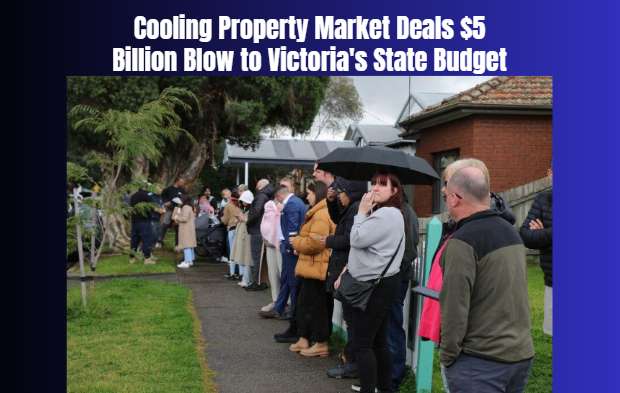
Melbourne has been one of the major areas experiencing a slowdown. Lower auction clearance rates and subdued property price growth have affected confidence among buyers and investors. Some property owners are also reconsidering their investments because of higher borrowing expenses, land taxes and changes to rental regulations.
The financial impact comes at a challenging time for the Victorian government, which is attempting to manage public spending while maintaining essential services and infrastructure projects.
The state's operating surplus is still expected to remain positive throughout the forecast period. However, the projected average surplus has fallen to approximately $300 million annually, compared with the $1 billion annual surplus forecast in the May budget.
Victoria's debt position also remains an important concern. Net debt is expected to reach approximately $197 billion by 2029–30. Although this is around $2 billion lower than previously forecast, the state will continue facing substantial interest expenses.
The fiscal update estimates that interest payments will reach approximately $8.9 billion during the current financial year. This represents about $24.3 million in interest expenses every day. By 2029–30, annual interest payments are projected to increase to approximately $11.9 billion.
Victorian Treasurer Colin Brooks said the property market slowdown was not limited to Victoria, with other eastern Australian states also experiencing similar economic conditions. He attributed the situation to inflation, interest rates and changes in federal budget settings.
The report also identifies several other risks to the state's economic outlook. Changes to Australia's migration policies could reduce the number of international students, workers and consumers contributing to Victoria's economy. Lower overseas migration could affect education exports, employment and business activity.
Higher fuel prices and construction material costs are additional concerns because they could increase the expense of delivering major infrastructure projects.
The property slowdown has also become an important political issue ahead of the November state election. Premier Ben Carroll has promised to reverse land tax increases introduced in 2023 if Labor wins another term in government.
For homeowners, property investors and prospective buyers, the changing market conditions could influence future investment decisions. Reduced property activity may also affect businesses connected to real estate, construction, finance and property management.
Despite the financial pressures, the government maintains that Victoria can continue funding important public services and infrastructure. The latest fiscal update nevertheless highlights the challenges of relying on property-related taxes when market conditions become weaker.
The coming months will be important in determining how Victoria manages its finances, responds to housing market conditions and balances government spending with its revenue outlook.
PropertyVictoriaBillionMarketState
Victoria's state government is facing a significant financial challenge after a slowdown in the property market created an estimated $5 billion shortfall in budget revenue forecasts. The development was revealed in a fiscal update released on Friday, 30 October 2026, less than a month before Victoria's state election.
The weaker property market is expected to reduce the government's income from stamp duty, land transfer duty and land taxes. These taxes are important sources of revenue for Victoria because property transactions and property ownership contribute significantly to state finances.
According to the fiscal update, the government expects property-related tax revenue to fall by an average of approximately $1.3 billion annually over the next four years. The decline reflects reduced activity in the housing market, with higher interest rates and other economic pressures affecting property purchases and investment decisions.
Melbourne has been one of the major areas experiencing a slowdown. Lower auction clearance rates and subdued property price growth have affected confidence among buyers and investors. Some property owners are also reconsidering their investments because of higher borrowing expenses, land taxes and changes to rental regulations.
The financial impact comes at a challenging time for the Victorian government, which is attempting to manage public spending while maintaining essential services and infrastructure projects.
The state's operating surplus is still expected to remain positive throughout the forecast period. However, the projected average surplus has fallen to approximately $300 million annually, compared with the $1 billion annual surplus forecast in the May budget.
Victoria's debt position also remains an important concern. Net debt is expected to reach approximately $197 billion by 2029–30. Although this is around $2 billion lower than previously forecast, the state will continue facing substantial interest expenses.
The fiscal update estimates that interest payments will reach approximately $8.9 billion during the current financial year. This represents about $24.3 million in interest expenses every day. By 2029–30, annual interest payments are projected to increase to approximately $11.9 billion.
Victorian Treasurer Colin Brooks said the property market slowdown was not limited to Victoria, with other eastern Australian states also experiencing similar economic conditions. He attributed the situation to inflation, interest rates and changes in federal budget settings.
The report also identifies several other risks to the state's economic outlook. Changes to Australia's migration policies could reduce the number of international students, workers and consumers contributing to Victoria's economy. Lower overseas migration could affect education exports, employment and business activity.
Higher fuel prices and construction material costs are additional concerns because they could increase the expense of delivering major infrastructure projects.
The property slowdown has also become an important political issue ahead of the November state election. Premier Ben Carroll has promised to reverse land tax increases introduced in 2023 if Labor wins another term in government.
For homeowners, property investors and prospective buyers, the changing market conditions could influence future investment decisions. Reduced property activity may also affect businesses connected to real estate, construction, finance and property management.
Despite the financial pressures, the government maintains that Victoria can continue funding important public services and infrastructure. The latest fiscal update nevertheless highlights the challenges of relying on property-related taxes when market conditions become weaker.
The coming months will be important in determining how Victoria manages its finances, responds to housing market conditions and balances government spending with its revenue outlook.
A nationwide survey of 4,000 Australians reveals declining confidence in politicians, growing dissatisfaction with democracy and significant differences...
New figures reveal more than $3 million in government spending on promotional merchandise, including unusual items such as condoms and lollies, raising...
Australia's antisemitism envoy has recommended stronger protest rules, additional visa checks and independent oversight of public broadcasters as part o...
Young residents, Indigenous advocates and farmers are raising concerns about proposed mining and gas extraction projects, warning that decisions made to...
Victorian Police have arrested eight people following an alleged group assault involving an off-duty police officer, prompting a criminal investigation.
A pay dispute involving specialist electricity-market workers has escalated, with Australia's energy operator warning that industrial action could creat...
Trevor Bergman has completed an extraordinary national challenge by donating blood or plasma at all 85 Lifeblood donation centres across Australia, maki...
Eight people have died in separate road crashes across Victoria during the Melbourne Cup long weekend, with four of the fatal incidents involving motorc...
A fisherman escaped unharmed after a large crocodile climbed onto his boat while he was fishing alone on the Mary River, prompting renewed safety warnin...
New South Wales has begun accepting firearms under the national gun buyback scheme, but limited appointment availability has created an early challenge...