Family Creates 'University of Life' for Daughter After School Ends
By Neha Maurya · Published 13 Jun 2026 · Updated 13 Jun 2026
Newcastle, NSW · New South Wales News
Safety note: Admin approval is an initial review, not a guarantee that every detail is correct. Check important or urgent claims with official sources and report anything inaccurate or unsafe.
Source and credit: Contributor's own report
Family Creates 'University of Life' for Daughter After School Ends - Newcastle, NSW
Smart summary
When traditional post-school options failed to meet their daughter's complex needs, one New South Wales family built a personalised learning environment designed to provide purpose, independence and community connection.
A family on the New South Wales Mid North Coast has transformed an unused family space into a unique educational program for their daughter, creating what they affectionately call a "University of Life".
For Lillian Rowsell, the transition out of school presented an uncertain future. Like many young people living with disability, the end of formal education raised difficult questions about how to maintain routine, continue learning and remain socially connected.
Rather than accepting limited options, Lillian's parents, Chris and Andrea Rowsell, decided to design a program tailored specifically to their daughter's needs and aspirations.
Located in Old Bar, the initiative operates from an unused self-contained flat attached to Lillian's grandfather's home. The dedicated learning space allows the now 25-year-old to leave home each day with a sense of purpose, much like her peers attending university or work.
Lillian lives with the effects of hemimegalencephaly, a rare neurological condition that caused severe seizures during infancy. After months of unsuccessful treatment attempts, she underwent major surgery as a baby to remove part of her brain. Despite facing significant challenges related to communication, mobility and vision, her family remained determined to ensure she could continue developing after finishing school.
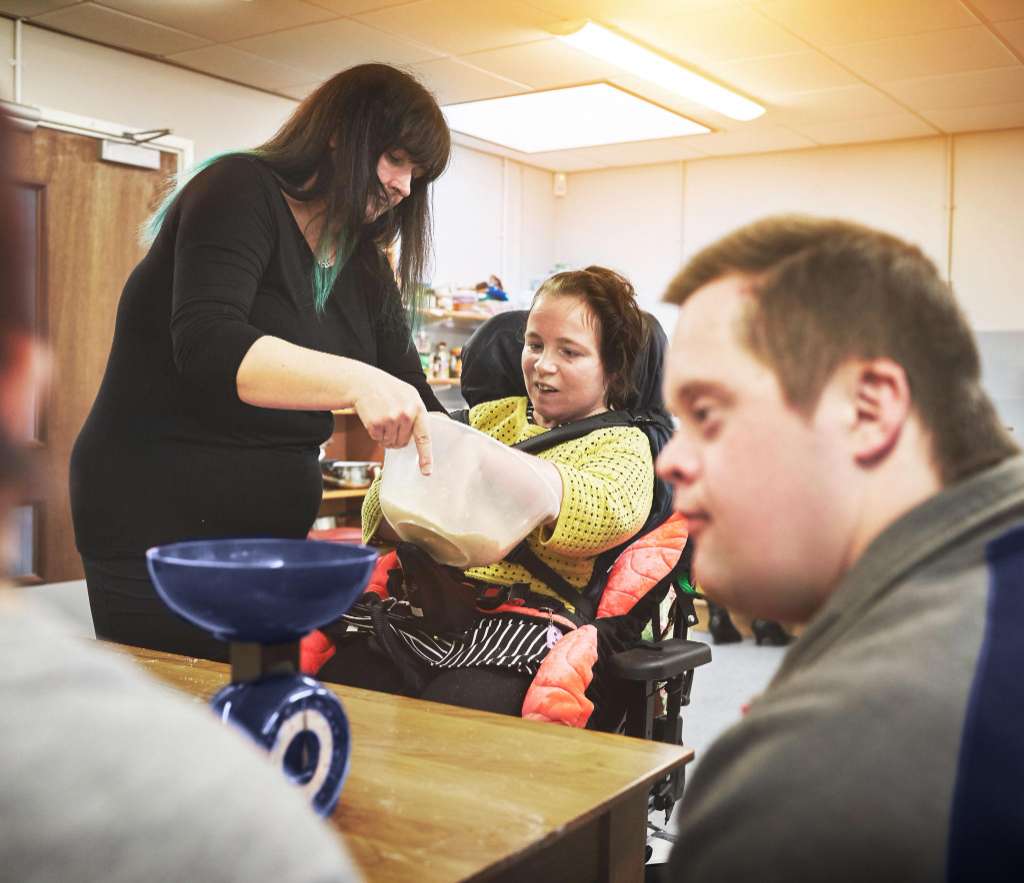
The "University of Life" combines structured learning with activities chosen by Lillian herself. Using visual communication cards, she helps decide how her day unfolds, selecting from educational games, music sessions, bowling outings and community participation opportunities.
Former school support staff members Kellie Trezise and Debbie Bonds, who had worked alongside Lillian throughout her education, continued supporting her through services funded under the National Disability Insurance Scheme (NDIS).
Experts say the family's approach highlights an important issue facing many Australians with disability.
Researchers have noted that the transition out of school can be particularly challenging for people with complex support needs, with some families describing the experience as "falling off a cliff" due to the lack of suitable programs available after graduation.
Lillian's parents hope their experience will encourage other families to think creatively about what life after school can look like.
The program also emphasises social inclusion. Group activities, music sessions with Lillian's grandfather and community engagement opportunities form an important part of the weekly routine. Over the years, other NDIS participants have also spent time within the program when their support goals aligned with Lillian's activities.
After operating for several years, the family says they have witnessed meaningful progress.
They report improvements in Lillian's responsiveness, communication and confidence, while maintaining that the most important measure of success is her enthusiasm for attending each day.
For Andrea Rowsell, the underlying philosophy is simple.
Every person deserves opportunities to make choices, continue learning and participate meaningfully within their community, regardless of the complexity of their disability.
The story of Lillian's "University of Life" demonstrates how personalised approaches, combined with family commitment and appropriate support services, can help create fulfilling pathways beyond the classroom.
While the model may not be suitable for everyone, it offers an inspiring example of how innovation and determination can open doors when conventional systems fall short.
For Lillian, university is not defined by lecture halls or degrees. Instead, it is measured through friendships, independence, discovery and the joy she experiences each morning as she heads off to campus.
LillianFamilySchoolUniversityLife
A family on the New South Wales Mid North Coast has transformed an unused family space into a unique educational program for their daughter, creating what they affectionately call a "University of Life".
For Lillian Rowsell, the transition out of school presented an uncertain future. Like many young people living with disability, the end of formal education raised difficult questions about how to maintain routine, continue learning and remain socially connected.
Rather than accepting limited options, Lillian's parents, Chris and Andrea Rowsell, decided to design a program tailored specifically to their daughter's needs and aspirations.
Located in Old Bar, the initiative operates from an unused self-contained flat attached to Lillian's grandfather's home. The dedicated learning space allows the now 25-year-old to leave home each day with a sense of purpose, much like her peers attending university or work.
Lillian lives with the effects of hemimegalencephaly, a rare neurological condition that caused severe seizures during infancy. After months of unsuccessful treatment attempts, she underwent major surgery as a baby to remove part of her brain. Despite facing significant challenges related to communication, mobility and vision, her family remained determined to ensure she could continue developing after finishing school.
The "University of Life" combines structured learning with activities chosen by Lillian herself. Using visual communication cards, she helps decide how her day unfolds, selecting from educational games, music sessions, bowling outings and community participation opportunities.
Former school support staff members Kellie Trezise and Debbie Bonds, who had worked alongside Lillian throughout her education, continued supporting her through services funded under the National Disability Insurance Scheme (NDIS).
Experts say the family's approach highlights an important issue facing many Australians with disability.
Researchers have noted that the transition out of school can be particularly challenging for people with complex support needs, with some families describing the experience as "falling off a cliff" due to the lack of suitable programs available after graduation.
Lillian's parents hope their experience will encourage other families to think creatively about what life after school can look like.
The program also emphasises social inclusion. Group activities, music sessions with Lillian's grandfather and community engagement opportunities form an important part of the weekly routine. Over the years, other NDIS participants have also spent time within the program when their support goals aligned with Lillian's activities.
After operating for several years, the family says they have witnessed meaningful progress.
They report improvements in Lillian's responsiveness, communication and confidence, while maintaining that the most important measure of success is her enthusiasm for attending each day.
For Andrea Rowsell, the underlying philosophy is simple.
Every person deserves opportunities to make choices, continue learning and participate meaningfully within their community, regardless of the complexity of their disability.
The story of Lillian's "University of Life" demonstrates how personalised approaches, combined with family commitment and appropriate support services, can help create fulfilling pathways beyond the classroom.
While the model may not be suitable for everyone, it offers an inspiring example of how innovation and determination can open doors when conventional systems fall short.
For Lillian, university is not defined by lecture halls or degrees. Instead, it is measured through friendships, independence, discovery and the joy she experiences each morning as she heads off to campus.
An automated external defibrillator and memorial plaque have been installed at Ellery Creek Big Hole following the death of disability advocate Ellen Fr...
Bathurst New South Wales · Community News · 17 Sep 2026
Kerry “Pecky” Peck, a long-standing Bathurst radio personality, has been inducted into the Bathurst Business Hall of Fame in recognition of his extensive contribution to the loc...
A new specialist family-violence support model has been introduced in Ballarat, with dedicated workers now embedded alongside Victoria Police to help people experiencing family...
Orange New South Wales · Community News · 17 Sep 2026
Orange City Council has elected a new Deputy Mayor for the next two years, with the decision announced today, 17 September 2026. The council said the election took place during...
A 36-year-old man has been charged after investigators allegedly found fraudulent identification documents, cloned number plates, cash and drug-manufact...
A Sydney court has heard that a man sent 249 messages to a former partner within 24 hours, with the messages treated as a single alleged breach of an ap...
A high-profile athlete has returned to court and told the hearing that an alleged unwanted kiss by former broadcaster Alan Jones remained difficult to f...
Work on the $150 million Sydney Town Hall Square project has been paused after the NSW Planning Minister referred the development for review by the Inde...
Cairns Regional Council has unanimously voted to seek $400,000 in Queensland Government funding for a program designed to connect local businesses with the region’s growing film...
An automated external defibrillator and memorial plaque have been installed at Ellery Creek Big Hole following the death of disability advocate Ellen Fr...
Queensland firefighters spent several hours monitoring a significant grass fire at Mary Kinross Park in Bargara, near Bundaberg, after the blaze broke out on Wednesday evening....