Safety note: Admin approval is an initial review, not a guarantee that every detail is correct. Check important or urgent claims with official sources and report anything inaccurate or unsafe.
Source and credit: Contributor's own report
Former QBCC Staffer Alleges CFMEU Pressure Influenced Contractor Investigations
Smart summary
Queensland's ongoing Commission of Inquiry into the influence of the Construction, Forestry, Maritime, Mining and Energy Union (CFMEU) has heard allegations that the union exerted pressure on the state's building watc...
Queensland's ongoing Commission of Inquiry into the influence of the Construction, Forestry, Maritime, Mining and Energy Union (CFMEU) has heard allegations that the union exerted pressure on the state's building watchdog to target specific contractors through licensing and compliance actions.
Former Queensland Building and Construction Commission (QBCC) licensing manager Graham Easterby is expected to provide evidence alleging that complaints raised by the CFMEU were frequently escalated through political and bureaucratic channels before being referred to the QBCC for investigation. According to the claims presented to the inquiry, safety concerns raised by union officials often resulted in increased scrutiny of particular contractors.
The inquiry heard allegations that former union-linked figures within regulatory structures may have played a role in influencing how complaints were handled. A key focus is the appointment of Jade Ingham, who joined the QBCC in 2018 and was later appointed to its board. Evidence before the inquiry alleges that the CFMEU used relationships within regulatory agencies to push for action against selected contractors. These allegations remain untested and are being examined as part of the inquiry process.
Mr Easterby is expected to allege that QBCC Commissioner Brett Bassett encouraged staff to pursue complaints originating from the CFMEU and consider regulatory actions including licence suspensions, cancellations or additional licence conditions. The inquiry is examining whether regulatory decisions were influenced by industrial or political considerations rather than being based solely on objective compliance concerns.
The allegations form part of a broader investigation into claims that Queensland regulatory bodies became overly influenced by the CFMEU during previous years. Multiple former public servants and regulators have provided evidence suggesting that union interests may have affected decision-making processes within agencies responsible for workplace safety and construction regulation. Earlier hearings heard testimony from former Workplace Health and Safety Queensland officials who alleged that safety complaints linked to the union sometimes received priority attention. Witnesses claimed that some public servants who resisted perceived union influence experienced professional difficulties or were sidelined within their organisations. These allegations are also being examined by the inquiry.
The inquiry was established by the Queensland Government to investigate allegations of misconduct, regulatory capture and inappropriate influence involving the CFMEU and various government agencies. It has already heard extensive evidence from former bureaucrats, inspectors, regulators and industry participants.
CFMEU representatives and individuals named during proceedings have previously denied wrongdoing and are being given opportunities to respond to allegations raised before the commission. As with all inquiry evidence, the claims remain subject to examination and findings have not yet been made.
The commission is expected to continue hearing evidence from former regulators and government officials over coming months. Its final findings could have significant implications for Queensland's construction industry, workplace safety oversight and the governance of regulatory agencies.
InquiryCfmeuAllegationsFormerRegulatory
Queensland's ongoing Commission of Inquiry into the influence of the Construction, Forestry, Maritime, Mining and Energy Union (CFMEU) has heard allegations that the union exerted pressure on the state's building watchdog to target specific contractors through licensing and compliance actions.
Former Queensland Building and Construction Commission (QBCC) licensing manager Graham Easterby is expected to provide evidence alleging that complaints raised by the CFMEU were frequently escalated through political and bureaucratic channels before being referred to the QBCC for investigation. According to the claims presented to the inquiry, safety concerns raised by union officials often resulted in increased scrutiny of particular contractors.
The inquiry heard allegations that former union-linked figures within regulatory structures may have played a role in influencing how complaints were handled. A key focus is the appointment of Jade Ingham, who joined the QBCC in 2018 and was later appointed to its board. Evidence before the inquiry alleges that the CFMEU used relationships within regulatory agencies to push for action against selected contractors. These allegations remain untested and are being examined as part of the inquiry process.
Mr Easterby is expected to allege that QBCC Commissioner Brett Bassett encouraged staff to pursue complaints originating from the CFMEU and consider regulatory actions including licence suspensions, cancellations or additional licence conditions. The inquiry is examining whether regulatory decisions were influenced by industrial or political considerations rather than being based solely on objective compliance concerns.
The allegations form part of a broader investigation into claims that Queensland regulatory bodies became overly influenced by the CFMEU during previous years. Multiple former public servants and regulators have provided evidence suggesting that union interests may have affected decision-making processes within agencies responsible for workplace safety and construction regulation. Earlier hearings heard testimony from former Workplace Health and Safety Queensland officials who alleged that safety complaints linked to the union sometimes received priority attention. Witnesses claimed that some public servants who resisted perceived union influence experienced professional difficulties or were sidelined within their organisations. These allegations are also being examined by the inquiry.
The inquiry was established by the Queensland Government to investigate allegations of misconduct, regulatory capture and inappropriate influence involving the CFMEU and various government agencies. It has already heard extensive evidence from former bureaucrats, inspectors, regulators and industry participants.
CFMEU representatives and individuals named during proceedings have previously denied wrongdoing and are being given opportunities to respond to allegations raised before the commission. As with all inquiry evidence, the claims remain subject to examination and findings have not yet been made.
The commission is expected to continue hearing evidence from former regulators and government officials over coming months. Its final findings could have significant implications for Queensland's construction industry, workplace safety oversight and the governance of regulatory agencies.
The Federal Government is preparing new measures targeting temporary visas, visa overstayers, international students and visa-hopping, while maintaining...
One Nation’s proposed major reduction in migration has triggered warnings that a sharp cut to population growth could weaken Australia’s economy and cre...
The Queensland Police Service is facing scrutiny over conditions inside the state’s watch houses after Workplace Health and Safety Queensland issued multiple regulatory notices....
Queensland Police are investigating allegations of a serious se-xual offence connected to a private rehabilitation clinic in Queensland. The investigation has attracted attentio...
Detectives from the Upper Mt Gravatt Criminal Investigation Branch have charged two more people in connection with a fatal traffic crash that occurred in Runcorn on Sunday, 28 J...
An investigation published on 1 September 2026 has raised serious questions about safety procedures at The Star Brisbane after reports that internal warnings about a safety flaw...
Cairns Regional Council has unanimously voted to seek $400,000 in Queensland Government funding for a program designed to connect local businesses with the region’s growing film...
Queensland firefighters spent several hours monitoring a significant grass fire at Mary Kinross Park in Bargara, near Bundaberg, after the blaze broke out on Wednesday evening....
New funding from local charity Wishlist is improving communication support for patients at Bundaberg Hospital, with resources designed to help people communicate more effectivel...
The Gold Coast is set to build excitement for one of Queensland’s biggest annual sporting events, with Supercars announcing a free community launch event ahead of the 2026 Boost...
Cairns Regional Council has unanimously voted to seek $400,000 in Queensland Government funding for a program designed to connect local businesses with the region’s growing film...
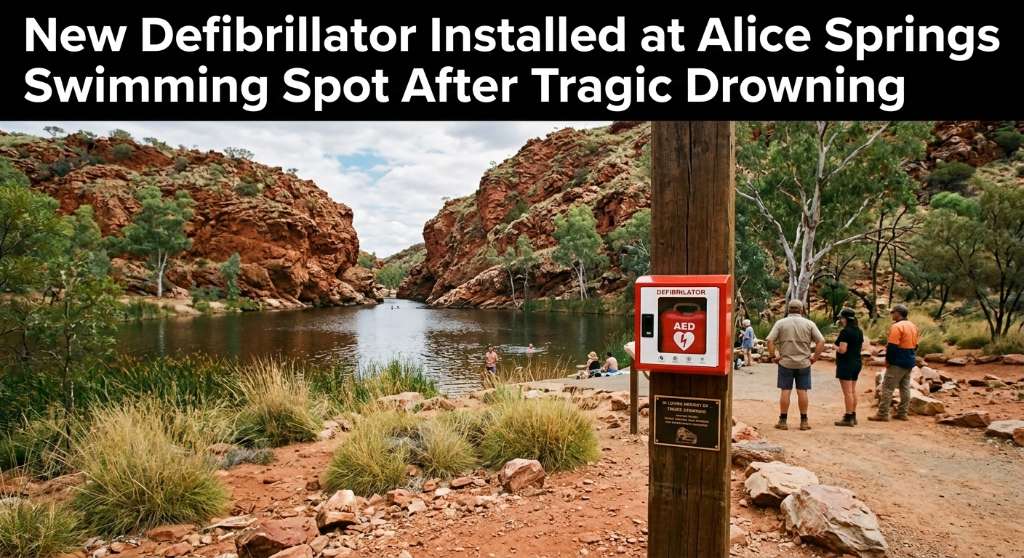
An automated external defibrillator and memorial plaque have been installed at Ellery Creek Big Hole following the death of disability advocate Ellen Fr...
Queensland firefighters spent several hours monitoring a significant grass fire at Mary Kinross Park in Bargara, near Bundaberg, after the blaze broke out on Wednesday evening....