Safety note: Admin approval is an initial review, not a guarantee that every detail is correct. Check important or urgent claims with official sources and report anything inaccurate or unsafe.
Source and credit: Contributor's own report
Giant Bluebottles Wash Ashore on Gold Coast Beaches Ahead of Summer - Gold Coast, QLD
Smart summary
Bluebottles measuring up to three times the usual size have been washing onto Gold Coast beaches earlier than expected, prompting questions from scientists about the species and the potency of its venom.
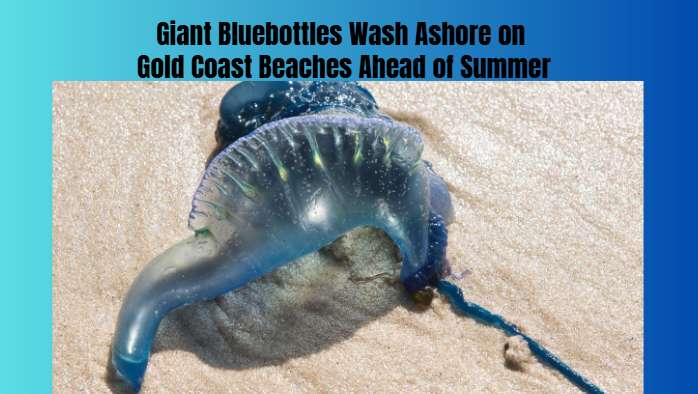
Unusually large bluebottles have been washing ashore along the Gold Coast coastline, surprising beachgoers and raising questions about the marine conditions contributing to their appearance.
The bluebottles, identified as Physalia megalista, can grow considerably larger than the species commonly seen in Queensland waters. Griffith University marine ecologist Kylie Pitt said the species is among the largest of the five bluebottle species now known to occur in Australian waters. Its appearance on Gold Coast beaches is relatively uncommon, as it is more typically found further south.
The floating part, known as the sail or float, can measure about 10 centimetres, while the animal's stinging tentacles can extend several metres. The size of the tentacles means that contact with a bluebottle can expose a person to a substantial area of stinging cells.
Scientists say there is still limited information about how the venom of the larger species compares with that of smaller bluebottles. Pitt explained that different species may have slightly different venom, while the severity of a sting can also depend on how much tentacle comes into contact with the skin.
The arrival of the large bluebottles has occurred earlier than the period when they are usually seen in Queensland. Gold Coast City Council lifeguard supervisor Scott Franzmann said bluebottles are more commonly expected around December and January. Despite the school holiday crowds, lifeguards had recorded 20 stings across 39 patrolled beaches, indicating a relatively low number of reported incidents at the time of the report.
Residents have reported seeing the large marine animals scattered along the shoreline. Some beachgoers have also expressed concern about pets approaching the washed-up creatures. Bluebottles can still sting after washing ashore, so people are advised not to touch them, even when they appear lifeless.
The Australian Marine Stinger Advisory Service describes bluebottle stings as causing an immediate, sharp pain, though they are generally not considered life-threatening. Guidance from the Royal Australian College of General Practitioners recommends removing tentacles with gloves or tweezers and rinsing the affected area with seawater. Anyone experiencing a severe reaction should seek urgent medical assistance.
Researchers are continuing to investigate the distribution of the different bluebottle species and the environmental conditions that influence where they wash ashore. Pitt said warmer El Niño conditions may have helped larger bluebottles survive this season, although more data is needed to understand the pattern.
The direction of the wind can also affect where bluebottles arrive. Their sails can be oriented differently, which may influence whether they are carried towards shore during north-easterly or north-westerly winds.
With the warmer months approaching and more people expected to visit the coast, lifeguards and marine scientists are monitoring the situation. Beachgoers are encouraged to watch for bluebottles along the waterline and avoid contact with them.
BluebottlesSpeciesCoastMarineThey
Unusually large bluebottles have been washing ashore along the Gold Coast coastline, surprising beachgoers and raising questions about the marine conditions contributing to their appearance.
The bluebottles, identified as Physalia megalista, can grow considerably larger than the species commonly seen in Queensland waters. Griffith University marine ecologist Kylie Pitt said the species is among the largest of the five bluebottle species now known to occur in Australian waters. Its appearance on Gold Coast beaches is relatively uncommon, as it is more typically found further south.
The floating part, known as the sail or float, can measure about 10 centimetres, while the animal's stinging tentacles can extend several metres. The size of the tentacles means that contact with a bluebottle can expose a person to a substantial area of stinging cells.
Scientists say there is still limited information about how the venom of the larger species compares with that of smaller bluebottles. Pitt explained that different species may have slightly different venom, while the severity of a sting can also depend on how much tentacle comes into contact with the skin.
The arrival of the large bluebottles has occurred earlier than the period when they are usually seen in Queensland. Gold Coast City Council lifeguard supervisor Scott Franzmann said bluebottles are more commonly expected around December and January. Despite the school holiday crowds, lifeguards had recorded 20 stings across 39 patrolled beaches, indicating a relatively low number of reported incidents at the time of the report.
Residents have reported seeing the large marine animals scattered along the shoreline. Some beachgoers have also expressed concern about pets approaching the washed-up creatures. Bluebottles can still sting after washing ashore, so people are advised not to touch them, even when they appear lifeless.
The Australian Marine Stinger Advisory Service describes bluebottle stings as causing an immediate, sharp pain, though they are generally not considered life-threatening. Guidance from the Royal Australian College of General Practitioners recommends removing tentacles with gloves or tweezers and rinsing the affected area with seawater. Anyone experiencing a severe reaction should seek urgent medical assistance.
Researchers are continuing to investigate the distribution of the different bluebottle species and the environmental conditions that influence where they wash ashore. Pitt said warmer El Niño conditions may have helped larger bluebottles survive this season, although more data is needed to understand the pattern.
The direction of the wind can also affect where bluebottles arrive. Their sails can be oriented differently, which may influence whether they are carried towards shore during north-easterly or north-westerly winds.
With the warmer months approaching and more people expected to visit the coast, lifeguards and marine scientists are monitoring the situation. Beachgoers are encouraged to watch for bluebottles along the waterline and avoid contact with them.
A high-tech greenhouse at Pacific Pines State High School is giving students hands-on experience in growing fresh produce, learning science and developi...
Brisbane is transforming plain walls and graffiti-prone public spaces into colourful murals by local artists, with a Newstead tunnel artwork and a Toowo...
Tasmanian homeowners and businesses are facing higher borrowing costs after the Reserve Bank lifted the cash rate to 4.6 per cent, with lower average wa...
The ACT will begin the first phase of the Thriving Kids program on October 1, providing developmental support pathways for children while concerns remai...
A high-tech greenhouse at Pacific Pines State High School is giving students hands-on experience in growing fresh produce, learning science and developi...
A Queensland government department has lost approximately $800,000 in a cyberattack, prompting a review that found no government data or sensitive infor...
Brisbane is transforming plain walls and graffiti-prone public spaces into colourful murals by local artists, with a Newstead tunnel artwork and a Toowo...
Two pedestrians remain in critical condition after a car struck them near Tallebudgera Surf Club, prompting a major emergency response and a police inve...
South Australian police have arrested a 22-year-old woman following an alleged assault on an elderly woman outside a business on Beach Road, Christies B...
Two men have been charged after a series of police raids across Cessnock, Denman, Muswellbrook and Singleton Heights uncovered 1,465 cannabis plants, wi...
A 36-year-old man from Kambah has been charged with drug trafficking and multiple prohibited weapons offences after ACT Policing searched his home as pa...
Around 800 heavy haulage trucks travel through Pinjarra each day, prompting renewed calls for a bypass to improve road safety, reduce congestion and eas...