Safety note: Admin approval is an initial review, not a guarantee that every detail is correct. Check important or urgent claims with official sources and report anything inaccurate or unsafe.
Source and credit: Contributor's own report
New Birthing Suite Sits Unused as Northern NSW Hospital Struggles to Find Staff - Northern, NSW
Smart summary
New maternity facility remains dormant because the hospital cannot recruit enough qualified doctors to operate the service
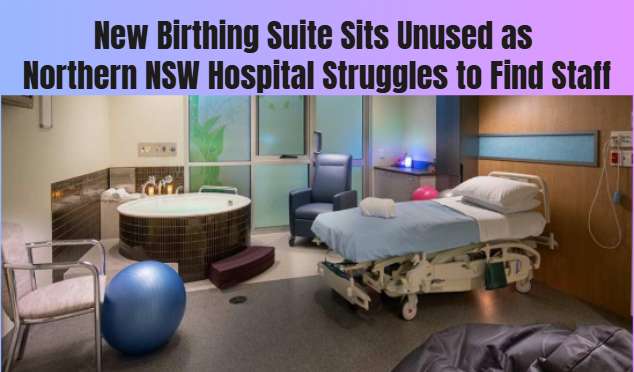
A newly completed birthing suite in northern New South Wales is remaining unused because the hospital has been unable to recruit enough appropriately qualified medical staff to operate the facility.
The new maternity service was intended to provide women in the region with greater access to local childbirth services. However, despite the facility being ready, women are still unable to give birth there because the hospital has struggled to secure the doctors required to provide the service safely. The situation comes amid a wider shortage of doctors with obstetric qualifications in regional and rural Australia.
The staffing problem highlights a significant challenge facing regional health services. Building or upgrading a hospital facility is only one part of establishing a functioning maternity service. Hospitals also need enough doctors, midwives, nurses and other healthcare professionals to provide continuous care, particularly because childbirth services must be available around the clock.
The shortage of doctors with GP-obstetric qualifications has become particularly difficult for regional hospitals. These doctors can provide maternity care in areas where specialist obstetricians may not be readily available. When hospitals cannot recruit enough suitably qualified staff, new facilities can remain unused even after significant public investment has been made.
For expectant mothers living in regional communities, the lack of a local birthing service can mean travelling considerable distances to another hospital when labour begins. This can create additional stress for pregnant women and their families and may also require careful planning around transport and access to medical care.
The issue also demonstrates the difference between having physical healthcare infrastructure and having the workforce necessary to operate it. A modern birthing suite may provide additional rooms and medical equipment, but without appropriately trained staff it cannot safely open for routine deliveries.
The northern NSW situation comes as health services across regional Australia continue to face difficulties attracting and retaining medical professionals. Regional hospitals can face competition with larger metropolitan centres, where doctors may have access to broader specialist teams, training opportunities and other professional resources.
For local communities, the unused facility represents both a missed healthcare opportunity and a reminder of the workforce pressures affecting regional medicine. The immediate challenge is not simply completing construction, but finding enough qualified professionals to make the service operational.
Health authorities continue to face pressure to improve access to maternity care outside major cities. Ensuring that regional hospitals have sustainable staffing arrangements will be important if newly built healthcare facilities are to deliver the services they were designed to provide.
The situation remains a current regional health issue as authorities work to address staffing shortages and determine how the birthing service can eventually become fully operational.
RegionalDoctorsProvideServiceBirthing
A newly completed birthing suite in northern New South Wales is remaining unused because the hospital has been unable to recruit enough appropriately qualified medical staff to operate the facility.
The new maternity service was intended to provide women in the region with greater access to local childbirth services. However, despite the facility being ready, women are still unable to give birth there because the hospital has struggled to secure the doctors required to provide the service safely. The situation comes amid a wider shortage of doctors with obstetric qualifications in regional and rural Australia.
The staffing problem highlights a significant challenge facing regional health services. Building or upgrading a hospital facility is only one part of establishing a functioning maternity service. Hospitals also need enough doctors, midwives, nurses and other healthcare professionals to provide continuous care, particularly because childbirth services must be available around the clock.
The shortage of doctors with GP-obstetric qualifications has become particularly difficult for regional hospitals. These doctors can provide maternity care in areas where specialist obstetricians may not be readily available. When hospitals cannot recruit enough suitably qualified staff, new facilities can remain unused even after significant public investment has been made.
For expectant mothers living in regional communities, the lack of a local birthing service can mean travelling considerable distances to another hospital when labour begins. This can create additional stress for pregnant women and their families and may also require careful planning around transport and access to medical care.
The issue also demonstrates the difference between having physical healthcare infrastructure and having the workforce necessary to operate it. A modern birthing suite may provide additional rooms and medical equipment, but without appropriately trained staff it cannot safely open for routine deliveries.
The northern NSW situation comes as health services across regional Australia continue to face difficulties attracting and retaining medical professionals. Regional hospitals can face competition with larger metropolitan centres, where doctors may have access to broader specialist teams, training opportunities and other professional resources.
For local communities, the unused facility represents both a missed healthcare opportunity and a reminder of the workforce pressures affecting regional medicine. The immediate challenge is not simply completing construction, but finding enough qualified professionals to make the service operational.
Health authorities continue to face pressure to improve access to maternity care outside major cities. Ensuring that regional hospitals have sustainable staffing arrangements will be important if newly built healthcare facilities are to deliver the services they were designed to provide.
The situation remains a current regional health issue as authorities work to address staffing shortages and determine how the birthing service can eventually become fully operational.
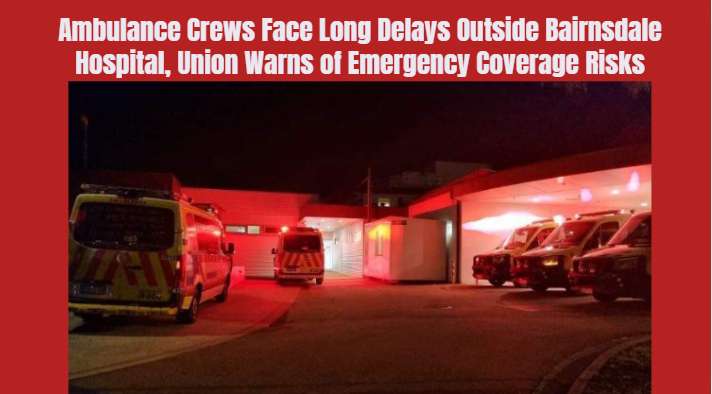
Ambulance crews in Bairnsdale have reportedly spent several hours waiting to transfer patients into hospital care, prompting concerns from the Victorian...
Central Coast New South Wales · Health News · 30 Sep 2026
Central Coast communities are set to receive more than $1.8 million in funding for health facility upgrades, with the money allocated to the Central Coast Local Health District...
A South Australian soccer player with two broken bones in his lower leg travelled about 70 kilometres by private car after waiting at a regional hospita...