Safety note: Admin approval is an initial review, not a guarantee that every detail is correct. Check important or urgent claims with official sources and report anything inaccurate or unsafe.
Source and credit: Contributor's own report
Nhulunbuy Faces Uncertain Future as Rio Tinto Mine Closure Approaches - Darwin, Northern Territory
Smart summary
Residents of the remote Northern Territory town of Nhulunbuy are calling for stronger leadership and clearer transition planning as Rio Tinto prepares to close its Gove bauxite mine in 2029, raising concerns about job...
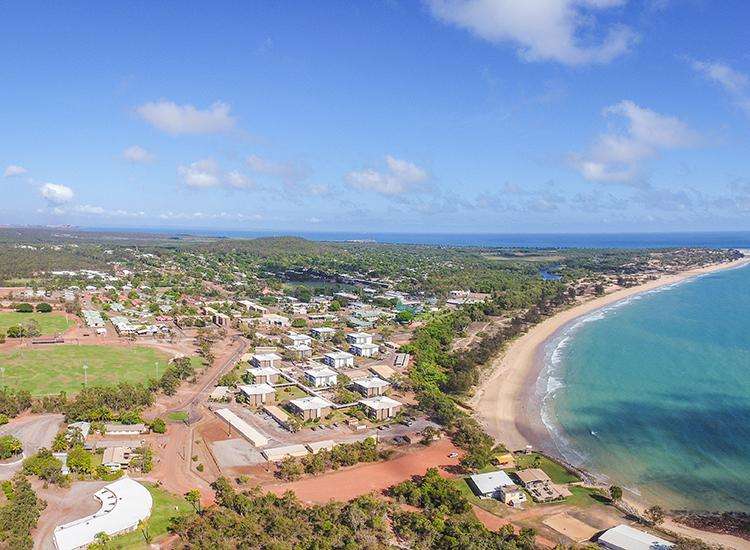
The remote mining town of Nhulunbuy in northeast Arnhem Land is preparing for one of the most significant economic transitions in its history as mining giant Rio Tinto plans to cease production at its Gove bauxite mine in 2029. While formal planning for the town's future has been underway since 2019, many residents say there is still little clarity about what life will look like once mining operations end.
For more than five decades, Nhulunbuy has relied heavily on Rio Tinto's mining operations. The town prospered through the extraction and export of bauxite, with mining supporting thousands of jobs and underpinning local businesses, schools, healthcare and other community services. However, the town has already experienced one major economic shock after the closure of the Gove alumina refinery in 2014, which resulted in the loss of more than 1,000 jobs and a significant decline in population.
Now, residents fear history could repeat itself. One of the biggest recent blows came when Woolworths announced plans to close the region's only supermarket, citing concerns about the town's long-term commercial viability after Rio Tinto's departure. Community members worry that the loss of key services could accelerate population decline and make it even harder to attract new investment.
Local business owners and residents have criticised Rio Tinto for what they describe as insufficient leadership during the transition process. Some argue the company has benefited enormously from the region over many decades but has not done enough to help secure a sustainable future for the town once mining ends. Others say communication about redevelopment opportunities and future economic plans has been limited, leaving many families uncertain about whether they should remain in Nhulunbuy or relocate elsewhere.
Despite these concerns, there are also signs of optimism. The land currently used for mining will eventually be returned to the Gumatj and Rirratjiŋu Traditional Owner clans, who have already invested in housing developments and local businesses as part of a broader vision for a diversified regional economy. The Gove Peninsula Futures Reference Group, which includes government agencies, Traditional Owners and industry representatives, is working to identify new industries that could support long-term employment, including tourism, renewable energy, cultural enterprises and space-related industries.
The Northern Territory Government says transition planning remains a priority, with ongoing collaboration between Traditional Owners, Rio Tinto and government stakeholders. Rio Tinto has stated that although mining will finish in 2029, rehabilitation and environmental monitoring will continue for many years afterwards, while social transition planning is also underway.
For many residents, however, time is becoming increasingly important. They believe major investment decisions, infrastructure planning and business support need to occur well before the mine closes to avoid another economic downturn. Community leaders say Nhulunbuy has the potential to remain a thriving regional centre but only if governments, industry and Traditional Owners work together to create sustainable employment and maintain essential services.
As 2029 approaches, the future of one of Australia's most iconic mining towns hangs in the balance. Whether Nhulunbuy successfully transforms into a diversified regional economy or experiences further population decline will depend on decisions made over the next few years.
MiningTintoNhulunbuyTownFuture
The remote mining town of Nhulunbuy in northeast Arnhem Land is preparing for one of the most significant economic transitions in its history as mining giant Rio Tinto plans to cease production at its Gove bauxite mine in 2029. While formal planning for the town's future has been underway since 2019, many residents say there is still little clarity about what life will look like once mining operations end.
For more than five decades, Nhulunbuy has relied heavily on Rio Tinto's mining operations. The town prospered through the extraction and export of bauxite, with mining supporting thousands of jobs and underpinning local businesses, schools, healthcare and other community services. However, the town has already experienced one major economic shock after the closure of the Gove alumina refinery in 2014, which resulted in the loss of more than 1,000 jobs and a significant decline in population.
Now, residents fear history could repeat itself. One of the biggest recent blows came when Woolworths announced plans to close the region's only supermarket, citing concerns about the town's long-term commercial viability after Rio Tinto's departure. Community members worry that the loss of key services could accelerate population decline and make it even harder to attract new investment.
Local business owners and residents have criticised Rio Tinto for what they describe as insufficient leadership during the transition process. Some argue the company has benefited enormously from the region over many decades but has not done enough to help secure a sustainable future for the town once mining ends. Others say communication about redevelopment opportunities and future economic plans has been limited, leaving many families uncertain about whether they should remain in Nhulunbuy or relocate elsewhere.
Despite these concerns, there are also signs of optimism. The land currently used for mining will eventually be returned to the Gumatj and Rirratjiŋu Traditional Owner clans, who have already invested in housing developments and local businesses as part of a broader vision for a diversified regional economy. The Gove Peninsula Futures Reference Group, which includes government agencies, Traditional Owners and industry representatives, is working to identify new industries that could support long-term employment, including tourism, renewable energy, cultural enterprises and space-related industries.
The Northern Territory Government says transition planning remains a priority, with ongoing collaboration between Traditional Owners, Rio Tinto and government stakeholders. Rio Tinto has stated that although mining will finish in 2029, rehabilitation and environmental monitoring will continue for many years afterwards, while social transition planning is also underway.
For many residents, however, time is becoming increasingly important. They believe major investment decisions, infrastructure planning and business support need to occur well before the mine closes to avoid another economic downturn. Community leaders say Nhulunbuy has the potential to remain a thriving regional centre but only if governments, industry and Traditional Owners work together to create sustainable employment and maintain essential services.
As 2029 approaches, the future of one of Australia's most iconic mining towns hangs in the balance. Whether Nhulunbuy successfully transforms into a diversified regional economy or experiences further population decline will depend on decisions made over the next few years.
Sydney Chinatown institution Emperor’s Garden has reached an agreement to repay more than $1 million in tax debt, with discussions now underway about re...
A major developer has ended its involvement in the Eyre residential development in Adelaide's north, leaving South Australia's Renewal SA to take respon...
Chinese-owned Yongji Health has taken almost complete control of Tasmanian Botanics, one of Australia's largest medicinal cannabis producers, following...
The Western Australia Supreme Court has dismissed a $2.6 million claim brought by engineering companies over alleged damage to a commercial barge that w...
Community and education representatives have raised concerns that the initial $500,000 allocation may not cover the infrastructure upgrades needed for t...
Essential bus services connecting Alice Springs with five remote communities have been reduced, with the operator warning that some routes could be canc...
Northern Territory Police are investigating a series of alleged aggravated burglaries in Alice Springs after up to seven homes in the Araluen area were...
Young people from regional and remote Queensland communities are participating in youth councils and a state youth parliament, raising issues such as di...
A 29-year-old man from Aldinga has been charged with multiple drug, traffic and weapons offences after police allegedly found methamphetamine, other ill...
South Australian police have arrested a 22-year-old woman following an alleged assault on an elderly woman outside a business on Beach Road, Christies B...
Two men have been charged after a series of police raids across Cessnock, Denman, Muswellbrook and Singleton Heights uncovered 1,465 cannabis plants, wi...