Safety note: Admin approval is an initial review, not a guarantee that every detail is correct. Check important or urgent claims with official sources and report anything inaccurate or unsafe.
Source and credit: Contributor's own report
Social housing income caps leaving tenants worse off under eligibility rules - Perth, WA
Smart summary
New reporting highlights how strict income limits and rent rules in social housing can suddenly push tenants into higher payments or force them out of the system, even when they are only slightly over thresholds.
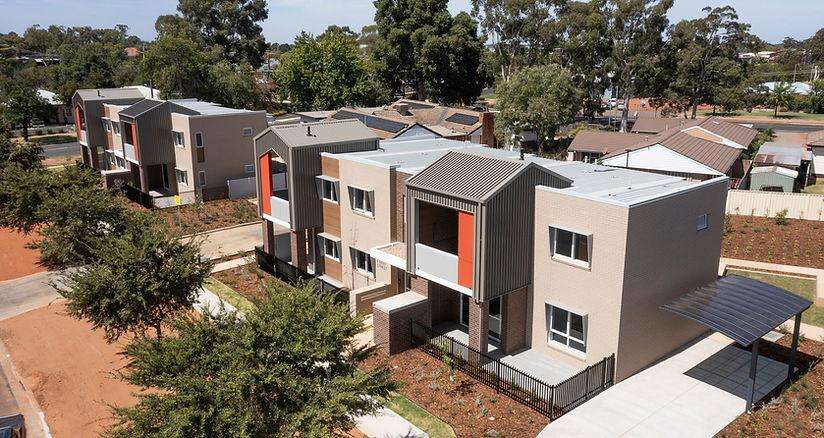
A growing concern in Australia’s housing system is that social housing income caps and eligibility rules can unintentionally disadvantage tenants who start earning more money, with some facing sharp rent increases or loss of access to subsidised housing.
The ABC report explains how social housing is designed to support low-income households by providing below-market rent linked to income or capped at a percentage of earnings. In many systems, tenants typically pay around 25–30% of their household income in rent, a model used by some community housing providers to keep housing affordable while maintaining operational costs.
However, once tenants exceed set income thresholds—even slightly—they can be required to either pay significantly higher rent (sometimes approaching market rates) or eventually exit the system. This creates what housing advocates describe as a “cliff effect,” where a small pay rise can result in a disproportionately large financial penalty.
In Queensland and other states, governments have been tightening oversight of social housing in response to concerns that some tenants on relatively high incomes were still occupying heavily subsidised homes. Recent policy changes include annual income reviews and rent reassessments, with tenants above eligibility limits either moved to market rent or asked to transition out of public housing over time.
Supporters of these policies argue they are necessary due to long social housing waitlists and limited supply. Across Australia, demand for social housing far exceeds availability, leaving many vulnerable people in temporary accommodation or long waiting queues. This shortage increases pressure on governments to ensure existing stock is reserved for those most in need.
But critics say the system can create instability for tenants trying to improve their financial situation. People who take on more work or increase their income may find themselves penalised through higher rent or uncertainty about their long-term housing security. This can discourage upward mobility and make it harder for households to transition into financial independence.
Housing experts also point to broader structural issues in Australia’s rental system, including rising rents, limited supply, and increasing affordability stress even among middle-income earners. Studies show that housing costs are consuming a growing share of household income nationwide, with affordability pressures affecting not only low-income households but also essential workers and families in major cities.
Some housing models attempt to address this by linking rent to income on a sliding scale permanently, rather than forcing tenants out once they earn more. Community housing providers like City West Housing, for example, use income-based rent models designed to provide more stability while still adjusting payments fairly over time.
Advocates argue that expanding such models, alongside increasing the overall supply of affordable and social housing, is key to reducing the unintended consequences of strict eligibility caps.
For now, the debate continues between ensuring fair allocation of limited housing stock and preventing policies that may unintentionally penalise tenants for improving their financial situation.
HousingIncomeRentTenantsSocial
A growing concern in Australia’s housing system is that social housing income caps and eligibility rules can unintentionally disadvantage tenants who start earning more money, with some facing sharp rent increases or loss of access to subsidised housing.
The ABC report explains how social housing is designed to support low-income households by providing below-market rent linked to income or capped at a percentage of earnings. In many systems, tenants typically pay around 25–30% of their household income in rent, a model used by some community housing providers to keep housing affordable while maintaining operational costs.
However, once tenants exceed set income thresholds—even slightly—they can be required to either pay significantly higher rent (sometimes approaching market rates) or eventually exit the system. This creates what housing advocates describe as a “cliff effect,” where a small pay rise can result in a disproportionately large financial penalty.
In Queensland and other states, governments have been tightening oversight of social housing in response to concerns that some tenants on relatively high incomes were still occupying heavily subsidised homes. Recent policy changes include annual income reviews and rent reassessments, with tenants above eligibility limits either moved to market rent or asked to transition out of public housing over time.
Supporters of these policies argue they are necessary due to long social housing waitlists and limited supply. Across Australia, demand for social housing far exceeds availability, leaving many vulnerable people in temporary accommodation or long waiting queues. This shortage increases pressure on governments to ensure existing stock is reserved for those most in need.
But critics say the system can create instability for tenants trying to improve their financial situation. People who take on more work or increase their income may find themselves penalised through higher rent or uncertainty about their long-term housing security. This can discourage upward mobility and make it harder for households to transition into financial independence.
Housing experts also point to broader structural issues in Australia’s rental system, including rising rents, limited supply, and increasing affordability stress even among middle-income earners. Studies show that housing costs are consuming a growing share of household income nationwide, with affordability pressures affecting not only low-income households but also essential workers and families in major cities.
Some housing models attempt to address this by linking rent to income on a sliding scale permanently, rather than forcing tenants out once they earn more. Community housing providers like City West Housing, for example, use income-based rent models designed to provide more stability while still adjusting payments fairly over time.
Advocates argue that expanding such models, alongside increasing the overall supply of affordable and social housing, is key to reducing the unintended consequences of strict eligibility caps.
For now, the debate continues between ensuring fair allocation of limited housing stock and preventing policies that may unintentionally penalise tenants for improving their financial situation.
A new proposal for factory-built ecohomes in Orange aims to speed up construction while reducing household energy costs as local property prices remain...
A Japanese love of Tasmanian buckwheat and fresh soba noodles helped create a lasting cultural connection that is now celebrated through the annual Hana...
Essential bus services connecting Alice Springs with five remote communities have been reduced, with the operator warning that some routes could be canc...
A carpentry apprentice in Alice Springs says course cancellations at Charles Darwin University could delay his qualification by up to 12 months because...
Geraldton is set to receive the Midwest region's first four-wheel-drive ambulance in October after concerns about emergency access to remote beaches, sa...
Heavy and near-record rainfall has inundated parts of Western Australia's Goldfields and Esperance region, damaging pastoral properties and forcing the...
Several sharks have been spotted near a whale carcass that washed ashore at Perth's City Beach, prompting authorities to issue multiple warnings for swi...
Australian tennis player Talia Gibson has reached her first WTA Tour-level singles final at the Singapore Open after Tatiana Prozorova withdrew from the...
A 22-year-old Elimbah man has been charged after a two-car crash at Baringa on the Sunshine Coast, with police alleging he fled into nearby bushland bef...
A new proposal for factory-built ecohomes in Orange aims to speed up construction while reducing household energy costs as local property prices remain...
Geelong's historic Botanic Gardens are preparing for their 175th anniversary, with volunteers and horticultural staff working to preserve a living colle...