Safety note: Admin approval is an initial review, not a guarantee that every detail is correct. Check important or urgent claims with official sources and report anything inaccurate or unsafe.
Source and credit: Contributor's own report
Perth Councils Seek Clearer Rules for Growing Data Centre Industry - Perth, WA
Smart summary
A failed attempt to ban data centres in Perth’s northern suburbs has renewed calls for the WA Government to provide clearer planning rules for the rapidly expanding industry.
Perth councils are seeking clearer guidance from the Western Australian Government on how to assess applications for large data centres, following growing community concerns about their potential environmental and neighbourhood impacts.
The issue was reported by ABC Perth today, 13 August 2026, after a councillor in the City of Stirling proposed investigating whether data centres should be prohibited throughout the local government area. The motion was defeated four votes to eight.
The debate highlights a broader planning challenge facing metropolitan Perth. Data centres are becoming increasingly important as demand for cloud computing, artificial intelligence and digital services grows. However, WA's current planning schemes do not specifically define data centres as their own land-use category.
Planning lawyer and town planner Belinda Moharich told ABC that councils can therefore face difficulties when assessing applications. Depending on the circumstances, data centres may be considered under categories such as warehouses or industrial uses, while some applications can fall into the category of a use not otherwise listed.
This has raised concerns among local governments that they do not have sufficiently specific planning tools to assess the unique characteristics of large data centres.
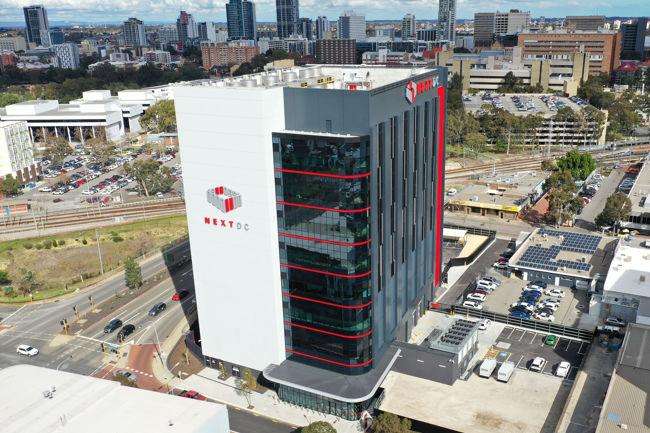
Data centres can vary significantly in size. Some operate within existing city buildings, while large facilities can occupy extensive industrial sites and require substantial electricity, cooling infrastructure, backup power systems and security.
Community concerns have included noise, water use, air quality and backup generators. These issues have become increasingly prominent as more large-scale data centre proposals emerge around Australian cities.
The City of Stirling currently has no data centre applications before council, but the failed motion has prompted a wider discussion about how the city should prepare for potential future proposals.
Other Perth councils are already dealing with data centre developments. The City of Gosnells, for example, approved a $415 million project in Maddington last year. The planned facility is expected to eventually reach approximately 200 megawatts of capacity.
Gosnells Mayor Terresa Lynes said her council has subsequently developed a policy covering environmental requirements for data centres, including considerations around water consumption and noise.
The policy approach includes encouraging technologies such as closed-loop cooling systems, which can reduce ongoing water consumption. The council is also considering measures involving backup generators and filtration systems.
The debate reflects a difficult balance for Perth councils. Data centres can bring investment, construction activity, technology infrastructure and jobs, while also requiring significant amounts of electricity and specialised infrastructure.
Rather than introducing blanket bans, some local government representatives believe councils should receive stronger planning rules that allow them to determine where data centres are appropriate and what environmental standards they must meet.
The rapid growth of artificial intelligence and cloud computing means demand for data storage and processing is expected to continue increasing. Perth is therefore likely to face more proposals for data infrastructure in coming years.
For residents, today's debate is important because planning decisions will influence where these facilities are located and what requirements developers must meet.
The WA Government is now being urged to provide greater clarity so councils can assess future applications consistently rather than trying to fit data centres into planning categories that were created for other types of development.
DataCentresCouncilsPerthPlanning
Perth councils are seeking clearer guidance from the Western Australian Government on how to assess applications for large data centres, following growing community concerns about their potential environmental and neighbourhood impacts.
The issue was reported by ABC Perth today, 13 August 2026, after a councillor in the City of Stirling proposed investigating whether data centres should be prohibited throughout the local government area. The motion was defeated four votes to eight.
The debate highlights a broader planning challenge facing metropolitan Perth. Data centres are becoming increasingly important as demand for cloud computing, artificial intelligence and digital services grows. However, WA's current planning schemes do not specifically define data centres as their own land-use category.
Planning lawyer and town planner Belinda Moharich told ABC that councils can therefore face difficulties when assessing applications. Depending on the circumstances, data centres may be considered under categories such as warehouses or industrial uses, while some applications can fall into the category of a use not otherwise listed.
This has raised concerns among local governments that they do not have sufficiently specific planning tools to assess the unique characteristics of large data centres.
Data centres can vary significantly in size. Some operate within existing city buildings, while large facilities can occupy extensive industrial sites and require substantial electricity, cooling infrastructure, backup power systems and security.
Community concerns have included noise, water use, air quality and backup generators. These issues have become increasingly prominent as more large-scale data centre proposals emerge around Australian cities.
The City of Stirling currently has no data centre applications before council, but the failed motion has prompted a wider discussion about how the city should prepare for potential future proposals.
Other Perth councils are already dealing with data centre developments. The City of Gosnells, for example, approved a $415 million project in Maddington last year. The planned facility is expected to eventually reach approximately 200 megawatts of capacity.
Gosnells Mayor Terresa Lynes said her council has subsequently developed a policy covering environmental requirements for data centres, including considerations around water consumption and noise.
The policy approach includes encouraging technologies such as closed-loop cooling systems, which can reduce ongoing water consumption. The council is also considering measures involving backup generators and filtration systems.
The debate reflects a difficult balance for Perth councils. Data centres can bring investment, construction activity, technology infrastructure and jobs, while also requiring significant amounts of electricity and specialised infrastructure.
Rather than introducing blanket bans, some local government representatives believe councils should receive stronger planning rules that allow them to determine where data centres are appropriate and what environmental standards they must meet.
The rapid growth of artificial intelligence and cloud computing means demand for data storage and processing is expected to continue increasing. Perth is therefore likely to face more proposals for data infrastructure in coming years.
For residents, today's debate is important because planning decisions will influence where these facilities are located and what requirements developers must meet.
The WA Government is now being urged to provide greater clarity so councils can assess future applications consistently rather than trying to fit data centres into planning categories that were created for other types of development.
New evidence indicates autonomous Open AI agents attempted to access information from several Australian government and public-sector websites, expanding...
A new Cooperative Research Centre based at the University of Queensland's Brisbane city campus will bring researchers, industry and government together...
Residents in Gisborne South can now access improved mobile phone coverage after a new Telstra tower was installed at I R Robertson Reserve following yea...
A proposed rocket launch facility near Port Lincoln has been put on hold after South Australia's Native Vegetation Council rejected an application to al...
Australian tennis player Talia Gibson has reached her first WTA Tour-level singles final at the Singapore Open after Tatiana Prozorova withdrew from the...
Drivers stopping to pick or photograph colourful everlasting wildflowers along Western Australia’s Bussell Highway are being warned about serious road-s...
Three separate earthquakes were recorded near Port Hedland in Western Australia over the weekend, with more than 100 reports submitted to Geoscience Aus...
A growing number of young Australians are taking up birdwatching, bringing fresh interest to the Broome Bird Observatory and the migratory shorebirds of...
A 50-year-old man has died after being struck by a vehicle in Fernvale, west of Brisbane, with police launching a homicide investigation and arresting a...
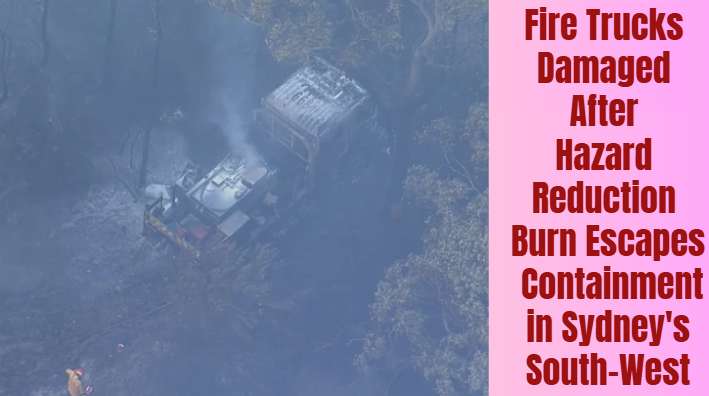
Multiple Rural Fire Service trucks were damaged after a planned hazard reduction burn at Wedderburn in Sydney's south-west escaped containment on Saturday.
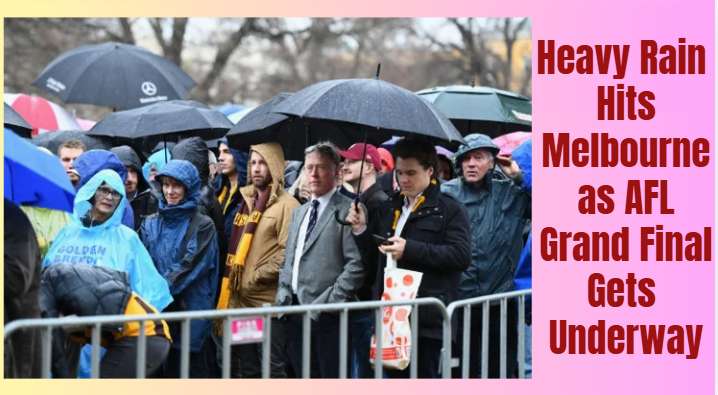
Wet conditions at the Melbourne Cricket Ground are creating difficult conditions for the AFL Grand Final, while poor weather has also disrupted flights...
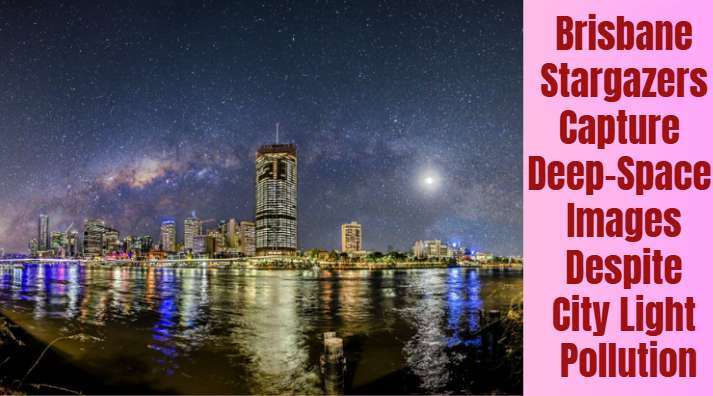
Amateur astronomers are using new telescope technology to photograph the Moon, planets and distant galaxies from Brisbane homes, showing that city skies...