South Australia Warned It Could Be Hit Hard by Proposed NDIS Changes
By Chloe · Published 26 Oct 2026 · Updated 26 Oct 2026
Adelaide, SA · South Australia News
Safety note: Admin approval is an initial review, not a guarantee that every detail is correct. Check important or urgent claims with official sources and report anything inaccurate or unsafe.
Source and credit: Contributor's own report
South Australia Warned It Could Be Hit Hard by Proposed NDIS Changes - Adelaide, SA
Smart summary
A new Deloitte report warns that changes to the National Disability Insurance Scheme could reduce funding growth in South Australia, putting pressure on services, families and jobs.
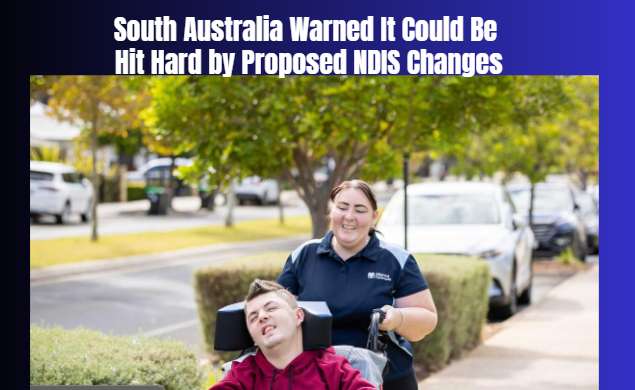
South Australia could face significant economic and social consequences from proposed changes to the National Disability Insurance Scheme (NDIS), according to a report released by Deloitte Access Economics and reported on 26 October 2026.
The report warns that South Australia may be particularly vulnerable because the state has a comparatively high level of NDIS participation and spending per person. It estimates that NDIS expenditure in the state could be $1.3 billion lower in 2030 than it would have been if the scheme continued growing at its previous rate.
The potential reduction could have consequences beyond people who directly receive disability support. Disability advocacy organisations and economists have warned that changes to funding may affect support workers, service providers, families and the wider state economy.
According to the report, the projected difference in funding could be equivalent to between 10,000 and 15,000 federally funded care and administrative roles. This is an estimate of the scale of funding change, not a confirmed prediction that the same number of jobs will disappear.
The report also raises concerns about families who rely on funded services to help care for relatives with disabilities. If assistance becomes less available, some family members could find it harder to remain in paid employment because they may need to take on more unpaid caring responsibilities.
Children with developmental delays and autism are another focus of the debate. Under the federal government's reforms, some children under nine with low to moderate support needs are transitioning away from the NDIS towards the new Thriving Kids program. The report warns that the replacement arrangements will need sufficient resources and accessible services to meet children's needs.
South Australia has begun preparing for the transition. The state and federal governments have committed a combined $230.3 million over five years to the Thriving Kids program. The state has also invested in early childhood development checks and its Preschool Boost initiative, which aims to provide additional support through early childhood settings.
However, Deloitte's analysis suggests these measures may not fully compensate for the potential reduction in NDIS funding. Families whose children no longer qualify for the scheme, or who are outside the age range covered by the new program, could face uncertainty about where to obtain appropriate assistance.
Disability advocacy organisation JFA Purple Orange has called for the South Australian government to take action to address potential gaps in services. The organisation warned that reducing federal support without adequate alternatives could transfer pressure to state-funded health, education and community services.
The federal government has defended its reforms, saying they are intended to make the NDIS financially sustainable while ensuring people receive the support they need. A government spokesperson also pointed to planned allied-health support and investments in early childhood services.
The debate now centres on whether the replacement programs and state services will be sufficient to meet demand as eligibility and funding arrangements change. The report does not establish that all projected reductions will automatically translate into lost jobs or reduced services, but it highlights the risks if replacement support is inadequate.
For South Australia, the transition will require coordination between governments, disability providers and families to ensure people do not lose essential assistance without suitable alternatives. The effects will depend on how the reforms are implemented, what services become available and whether additional support is provided where gaps emerge.
SupportCouldServicesNdisSouth
South Australia could face significant economic and social consequences from proposed changes to the National Disability Insurance Scheme (NDIS), according to a report released by Deloitte Access Economics and reported on 26 October 2026.
The report warns that South Australia may be particularly vulnerable because the state has a comparatively high level of NDIS participation and spending per person. It estimates that NDIS expenditure in the state could be $1.3 billion lower in 2030 than it would have been if the scheme continued growing at its previous rate.
The potential reduction could have consequences beyond people who directly receive disability support. Disability advocacy organisations and economists have warned that changes to funding may affect support workers, service providers, families and the wider state economy.
According to the report, the projected difference in funding could be equivalent to between 10,000 and 15,000 federally funded care and administrative roles. This is an estimate of the scale of funding change, not a confirmed prediction that the same number of jobs will disappear.
The report also raises concerns about families who rely on funded services to help care for relatives with disabilities. If assistance becomes less available, some family members could find it harder to remain in paid employment because they may need to take on more unpaid caring responsibilities.
Children with developmental delays and autism are another focus of the debate. Under the federal government's reforms, some children under nine with low to moderate support needs are transitioning away from the NDIS towards the new Thriving Kids program. The report warns that the replacement arrangements will need sufficient resources and accessible services to meet children's needs.
South Australia has begun preparing for the transition. The state and federal governments have committed a combined $230.3 million over five years to the Thriving Kids program. The state has also invested in early childhood development checks and its Preschool Boost initiative, which aims to provide additional support through early childhood settings.
However, Deloitte's analysis suggests these measures may not fully compensate for the potential reduction in NDIS funding. Families whose children no longer qualify for the scheme, or who are outside the age range covered by the new program, could face uncertainty about where to obtain appropriate assistance.
Disability advocacy organisation JFA Purple Orange has called for the South Australian government to take action to address potential gaps in services. The organisation warned that reducing federal support without adequate alternatives could transfer pressure to state-funded health, education and community services.
The federal government has defended its reforms, saying they are intended to make the NDIS financially sustainable while ensuring people receive the support they need. A government spokesperson also pointed to planned allied-health support and investments in early childhood services.
The debate now centres on whether the replacement programs and state services will be sufficient to meet demand as eligibility and funding arrangements change. The report does not establish that all projected reductions will automatically translate into lost jobs or reduced services, but it highlights the risks if replacement support is inadequate.
For South Australia, the transition will require coordination between governments, disability providers and families to ensure people do not lose essential assistance without suitable alternatives. The effects will depend on how the reforms are implemented, what services become available and whether additional support is provided where gaps emerge.
South Australian health authorities report 22 meningococcal disease cases this year and urge eligible residents to receive vaccination as contact tracin...
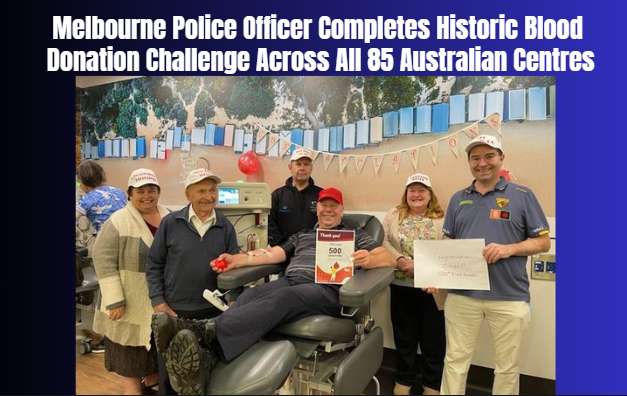
Trevor Bergman has completed an extraordinary national challenge by donating blood or plasma at all 85 Lifeblood donation centres across Australia, maki...
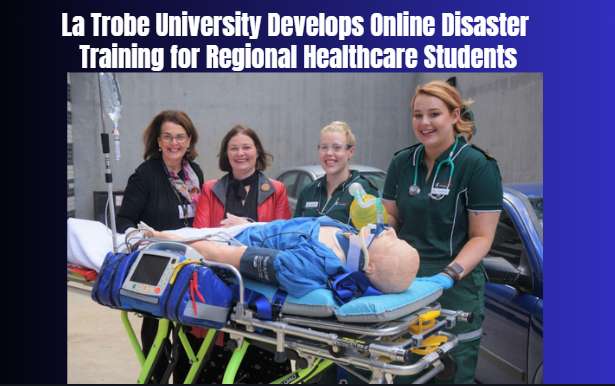
Interactive online games are being developed to help healthcare students in regional Australia practise responding to natural disasters and mass-casualt...
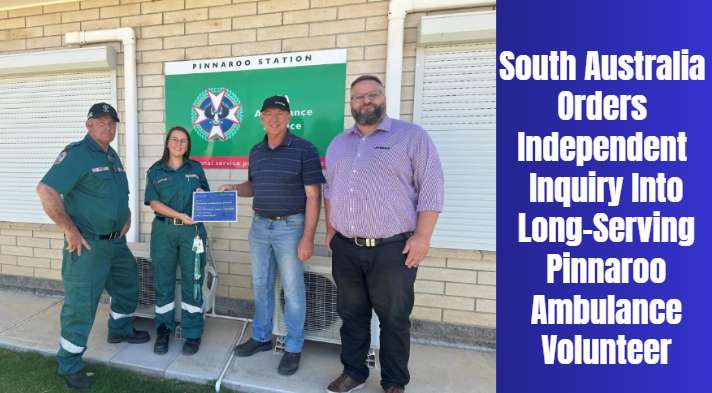
An external investigator will examine the case of volunteer ambulance officer Rob Berlin, who was stood down after almost 50 years of service, as commun...
A psychiatric report presented to South Australia's Supreme Court has raised questions about Tamika Chesser's mental competence in the case involving th...
Residents have rallied against a proposed 1,200-megawatt artificial intelligence data centre near Tungkillo, raising concerns about water supplies, land...
South Australian health authorities report 22 meningococcal disease cases this year and urge eligible residents to receive vaccination as contact tracin...
South Australian detectives have arrested a second man over a series of alleged business break-ins, thefts and property damage incidents across metropol...
A psychiatric report presented to South Australia's Supreme Court has raised questions about Tamika Chesser's mental competence in the case involving th...
A freedom of information request has revealed that Gold Coast Council does not hold a copy of the invoice for Mayor Tom Tate's three-day stay at Donald...