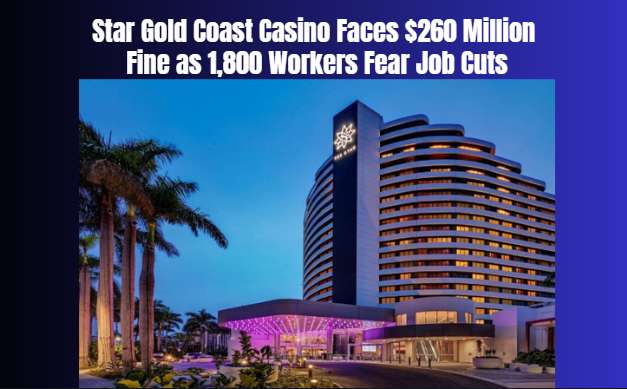
Star Gold Coast Casino Faces $260 Million Fine as 1,800 Workers Fear Job Cuts
By Chloe · Published 29 Oct 2026 · Updated 29 Oct 2026
Gold Coast, QLD · Queensland News
Safety note: Admin approval is an initial review, not a guarantee that every detail is correct. Check important or urgent claims with official sources and report anything inaccurate or unsafe.
Source and credit: Contributor's own report
Star Gold Coast Casino Faces $260 Million Fine as 1,800 Workers Fear Job Cuts - Gold Coast, QLD
Smart summary
The Federal Court’s $260 million penalty against Star Entertainment over historical money-laundering offences has raised concerns about the future of approximately 1,800 employees at its Gold Coast casino, with unions...
The Star Gold Coast casino is facing renewed uncertainty after the Federal Court imposed a $260 million penalty on Star Entertainment over historical money-laundering offences. The decision, reported on Wednesday, 28 October 2026, has prompted concern from workers and unions about the potential effect on jobs, wages and the future operations of the casino.
The United Workers Union warned on Thursday that approximately 1,800 employees at the Gold Coast property could be affected by the financial consequences of the penalty. The union said staff should not bear the consequences of the company's past failures, particularly when workers depend on their employment to support themselves and their families. ABC News
The Federal Court's penalty relates to historical failures involving anti-money-laundering obligations. Casinos are required to maintain systems that identify suspicious financial activity, monitor transactions and report concerns to the relevant authorities. These safeguards are designed to prevent criminal funds from moving through legitimate financial and gambling businesses.
The case has placed renewed focus on Star Entertainment's compliance systems and its ability to maintain financial stability while meeting its regulatory responsibilities. Before the penalty was imposed, the company had argued that a fine exceeding $100 million could push it into liquidation. The final penalty of $260 million has therefore intensified concerns about the company's financial position and its capacity to absorb the cost.
United Workers Union spokesperson Pat O'Donnell said the union was worried that the penalty could lead to job losses or make it more difficult to maintain acceptable wages and employment conditions. Workers at the Gold Coast casino include people whose livelihoods depend on the property's continued operation, from gaming and hospitality staff to workers supporting day-to-day services.
The possible consequences extend beyond individual employees. The Gold Coast casino forms part of the region's hospitality and tourism economy, attracting visitors who spend money at hotels, restaurants, entertainment venues and nearby businesses. Significant reductions in staffing or casino operations could affect other businesses that benefit from visitor spending.
However, the warning about employment does not mean that 1,800 jobs have already been cut or that the casino is confirmed to be closing. The figure represents the number of employees the union says could be affected by the situation. Any actual employment changes would depend on the company's response to the penalty and its wider financial circumstances.
The case also highlights the importance of corporate accountability in Australia's gambling sector. Casinos operate under strict regulatory requirements because of the financial risks associated with money laundering and other criminal activity. Effective compliance systems are necessary to protect the integrity of financial transactions and maintain public confidence.
For Star Entertainment, the immediate challenge is managing the consequences of the court's decision while continuing its operations and meeting its obligations. For employees, the uncertainty centres on whether the penalty will lead to restructuring, reduced staffing or changes to employment conditions.
As of 29 October 2026, the union had publicly raised concerns about the possible impact on workers, but no confirmed announcement of 1,800 job cuts had been reported in the available source. The longer-term effect on the casino's workforce and operations remained uncertain.
CasinoFinancialPenaltyWorkersUnion
The Star Gold Coast casino is facing renewed uncertainty after the Federal Court imposed a $260 million penalty on Star Entertainment over historical money-laundering offences. The decision, reported on Wednesday, 28 October 2026, has prompted concern from workers and unions about the potential effect on jobs, wages and the future operations of the casino.
The United Workers Union warned on Thursday that approximately 1,800 employees at the Gold Coast property could be affected by the financial consequences of the penalty. The union said staff should not bear the consequences of the company's past failures, particularly when workers depend on their employment to support themselves and their families. ABC News
The Federal Court's penalty relates to historical failures involving anti-money-laundering obligations. Casinos are required to maintain systems that identify suspicious financial activity, monitor transactions and report concerns to the relevant authorities. These safeguards are designed to prevent criminal funds from moving through legitimate financial and gambling businesses.
The case has placed renewed focus on Star Entertainment's compliance systems and its ability to maintain financial stability while meeting its regulatory responsibilities. Before the penalty was imposed, the company had argued that a fine exceeding $100 million could push it into liquidation. The final penalty of $260 million has therefore intensified concerns about the company's financial position and its capacity to absorb the cost.
United Workers Union spokesperson Pat O'Donnell said the union was worried that the penalty could lead to job losses or make it more difficult to maintain acceptable wages and employment conditions. Workers at the Gold Coast casino include people whose livelihoods depend on the property's continued operation, from gaming and hospitality staff to workers supporting day-to-day services.
The possible consequences extend beyond individual employees. The Gold Coast casino forms part of the region's hospitality and tourism economy, attracting visitors who spend money at hotels, restaurants, entertainment venues and nearby businesses. Significant reductions in staffing or casino operations could affect other businesses that benefit from visitor spending.
However, the warning about employment does not mean that 1,800 jobs have already been cut or that the casino is confirmed to be closing. The figure represents the number of employees the union says could be affected by the situation. Any actual employment changes would depend on the company's response to the penalty and its wider financial circumstances.
The case also highlights the importance of corporate accountability in Australia's gambling sector. Casinos operate under strict regulatory requirements because of the financial risks associated with money laundering and other criminal activity. Effective compliance systems are necessary to protect the integrity of financial transactions and maintain public confidence.
For Star Entertainment, the immediate challenge is managing the consequences of the court's decision while continuing its operations and meeting its obligations. For employees, the uncertainty centres on whether the penalty will lead to restructuring, reduced staffing or changes to employment conditions.
As of 29 October 2026, the union had publicly raised concerns about the possible impact on workers, but no confirmed announcement of 1,800 job cuts had been reported in the available source. The longer-term effect on the casino's workforce and operations remained uncertain.
Australian property values have fallen for seven consecutive months, with the national median home value dropping approximately $63,400 since March as h...
Around 8,000 customers in Western Australia's coastal city of Albany will need to replace gas appliances with electric alternatives or switch to bottled...
Buyers from Sydney and Melbourne are purchasing homes in Alice Springs at a rapid pace, attracted by strong rental returns and limited housing availabil...
Growing awareness of Auslan is highlighting the importance of teaching children sign language and helping them communicate with people who are deaf or h...
A freedom of information request has revealed that Gold Coast Council does not hold a copy of the invoice for Mayor Tom Tate's three-day stay at Donald...
Eight people have died in separate road crashes across Victoria during the Melbourne Cup long weekend, with four of the fatal incidents involving motorc...
A psychiatric report presented to South Australia's Supreme Court has raised questions about Tamika Chesser's mental competence in the case involving th...
A freedom of information request has revealed that Gold Coast Council does not hold a copy of the invoice for Mayor Tom Tate's three-day stay at Donald...