Safety note: Admin approval is an initial review, not a guarantee that every detail is correct. Check important or urgent claims with official sources and report anything inaccurate or unsafe.
Source and credit: Contributor's own report
Sunshine Coast Teen Takes Privacy-Focused Health App to National Cyber Event - Sunshine Coast, QLD
Smart summary
A 15-year-old Pacific Lutheran College student has developed a privacy-first women’s health app and presented her work at a major national cyber event.
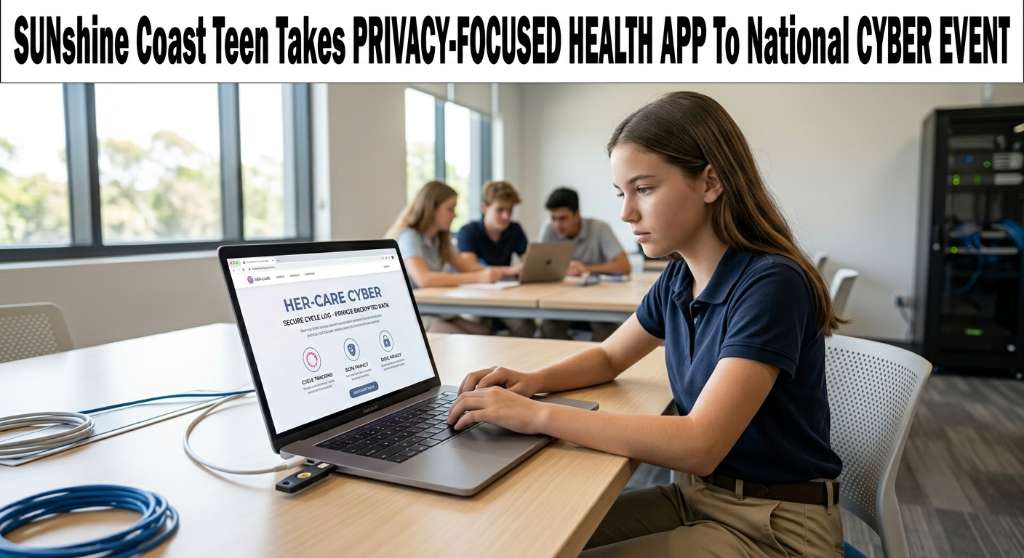
A 15-year-old Sunshine Coast student has gained national attention after developing a women’s health application focused on protecting users’ personal information.
Pacific Lutheran College student Eva Barker recently returned from the International Women in Cyber Awards in Canberra, where she was nominated in the Rising Woman category for her work on a privacy-focused period and cycle application.
The app, called Dotti, is designed as a period, cycle, pregnancy and wellbeing companion. One of its central features is an approach that keeps users’ health information on their own device rather than storing it in a central database.
The application also includes an on-device artificial intelligence companion designed to learn patterns over time. Other features are intended to help users record symptoms and prepare information that may be useful when attending medical appointments.
Barker, who is in Year 10, said the idea came from her own experience using existing health applications. She wanted to develop something that she believed would be easier and more appropriate for women and girls to use.
Her appearance at the Canberra cyber event also gave her an opportunity to connect with senior figures in the defence and cybersecurity sectors, including Chief of Army Lieutenant General Susan Coyle, as well as representatives from the United States and United Kingdom embassies.
Privacy has become an increasingly discussed issue surrounding digital women's health services, particularly because period and reproductive-health information can be highly personal. Barker said this concern influenced the way she designed Dotti, with privacy incorporated into the project from the beginning.
The broader debate around health-data privacy has also received international attention. The report noted a US class-action settlement involving women’s health app Flo Health and Google concerning allegations about the handling of reproductive-health data. The companies denied wrongdoing, and the settlement received preliminary court approval in April.
Barker’s school said she developed the project independently while balancing her Year 10 studies and other school activities. Her project involved learning the skills required to develop the application and researching the privacy considerations surrounding digital health technology.
Dotti is also intended to have a social-impact component. Its enterprise program encourages employers to provide the application to staff, while a portion of enterprise purchases is intended to support organisations working to improve access to period products.
The project highlights the growing involvement of young people in technology, cybersecurity and digital privacy. Barker’s work combines software development with a focus on how sensitive personal information can be handled in digital services.
The Sunshine Coast student’s nomination at the national cyber event has placed her project in front of people working across technology, defence and cybersecurity, while her application continues to focus on privacy-conscious health tracking.
HealthApplicationBarkerInformationPrivacy
A 15-year-old Sunshine Coast student has gained national attention after developing a women’s health application focused on protecting users’ personal information.
Pacific Lutheran College student Eva Barker recently returned from the International Women in Cyber Awards in Canberra, where she was nominated in the Rising Woman category for her work on a privacy-focused period and cycle application.
The app, called Dotti, is designed as a period, cycle, pregnancy and wellbeing companion. One of its central features is an approach that keeps users’ health information on their own device rather than storing it in a central database.
The application also includes an on-device artificial intelligence companion designed to learn patterns over time. Other features are intended to help users record symptoms and prepare information that may be useful when attending medical appointments.
Barker, who is in Year 10, said the idea came from her own experience using existing health applications. She wanted to develop something that she believed would be easier and more appropriate for women and girls to use.
Her appearance at the Canberra cyber event also gave her an opportunity to connect with senior figures in the defence and cybersecurity sectors, including Chief of Army Lieutenant General Susan Coyle, as well as representatives from the United States and United Kingdom embassies.
Privacy has become an increasingly discussed issue surrounding digital women's health services, particularly because period and reproductive-health information can be highly personal. Barker said this concern influenced the way she designed Dotti, with privacy incorporated into the project from the beginning.
The broader debate around health-data privacy has also received international attention. The report noted a US class-action settlement involving women’s health app Flo Health and Google concerning allegations about the handling of reproductive-health data. The companies denied wrongdoing, and the settlement received preliminary court approval in April.
Barker’s school said she developed the project independently while balancing her Year 10 studies and other school activities. Her project involved learning the skills required to develop the application and researching the privacy considerations surrounding digital health technology.
Dotti is also intended to have a social-impact component. Its enterprise program encourages employers to provide the application to staff, while a portion of enterprise purchases is intended to support organisations working to improve access to period products.
The project highlights the growing involvement of young people in technology, cybersecurity and digital privacy. Barker’s work combines software development with a focus on how sensitive personal information can be handled in digital services.
The Sunshine Coast student’s nomination at the national cyber event has placed her project in front of people working across technology, defence and cybersecurity, while her application continues to focus on privacy-conscious health tracking.
Concerns are growing over the reliability and availability of Australia's public electric vehicle charging network, with thousands of charging points po...
Residents have rallied against a proposed 1,200-megawatt artificial intelligence data centre near Tungkillo, raising concerns about water supplies, land...
Students at the University of New South Wales are learning how artificial intelligence bots operate, how to identify them online and how to reduce their...
The Shire of Harvey is weighing the cost of repairing its only public electric-vehicle charging station as ageing infrastructure puts pressure on local...
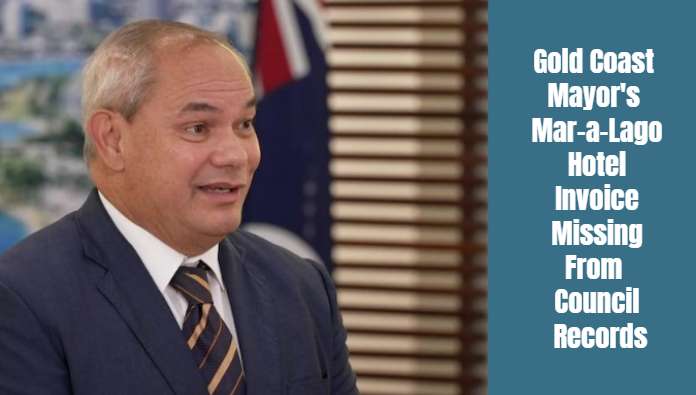
A freedom of information request has revealed that Gold Coast Council does not hold a copy of the invoice for Mayor Tom Tate's three-day stay at Donald...
Eight people have died in separate road crashes across Victoria during the Melbourne Cup long weekend, with four of the fatal incidents involving motorc...
Police are investigating after a one-year-old child died following a house fire in Collie, while several other people inside the property escaped safely.
A psychiatric report presented to South Australia's Supreme Court has raised questions about Tamika Chesser's mental competence in the case involving th...
A freedom of information request has revealed that Gold Coast Council does not hold a copy of the invoice for Mayor Tom Tate's three-day stay at Donald...