Safety note: Admin approval is an initial review, not a guarantee that every detail is correct. Check important or urgent claims with official sources and report anything inaccurate or unsafe.
Source and credit: Contributor's own report
Telstra outage halts NSW regional trains and coal freight services across the state - Sydney, NSW
Smart summary
A major Telstra network outage disrupted transport operations across New South Wales, forcing the suspension of some passenger and freight rail services, including coal trains, after communication systems were affected.
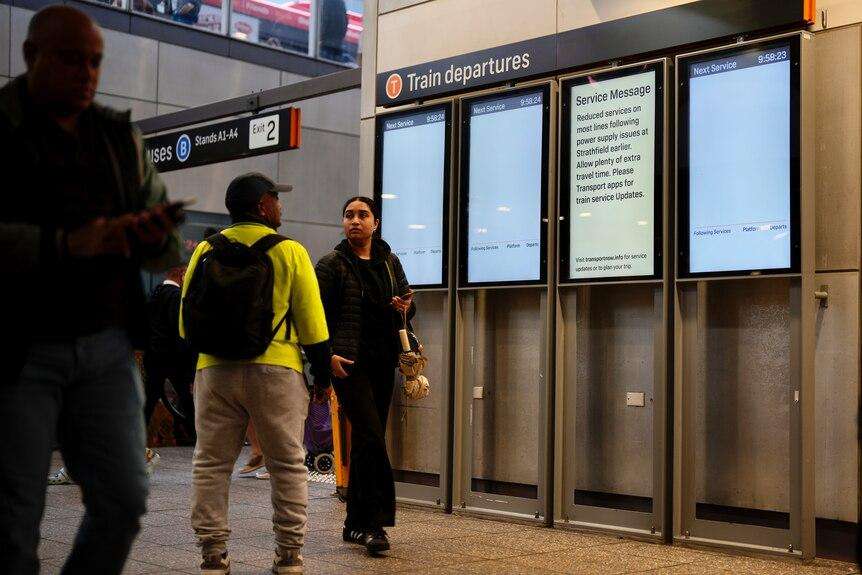
A nationwide outage affecting Telstra's mobile network caused major disruptions across Australia on 8 July 2026, with parts of New South Wales experiencing significant impacts on passenger rail services and freight operations. The telecommunications failure affected critical communication systems used by transport operators, forcing authorities to suspend some services as a safety precaution.
In New South Wales, several regional train services were cancelled after the outage affected communication links required for safe rail operations. Services in areas including the Hunter region, routes between Sydney and Canberra, and parts of the Southern Highlands were among those impacted. Transport authorities said trains were stopped or cancelled while the network issue was investigated and systems were restored.
The disruption also affected the state's freight rail network, with some coal and freight trains halted because operators could not rely on normal communication systems. The decision was made as a precaution to maintain safety while telecommunications services were unavailable. The shutdown highlighted the importance of reliable digital infrastructure in Australia's transport sector, particularly for industries such as mining and freight logistics.
The outage began during the early morning period and affected Telstra mobile customers across Australia. The company later said the problem was linked to failures involving time synchronisation systems within its network infrastructure, which affected how different parts of the telecommunications system communicated with each other. Telstra said there was no evidence the incident was caused by malicious activity.
The effects extended beyond transport. Customers reported problems with mobile calls, data services and electronic payment systems, while some emergency calls to Triple Zero (000) were also affected. Authorities urged people not to make unnecessary test calls to emergency services during the disruption to avoid putting additional pressure on the system.
Businesses across Australia also reported difficulties processing payments and communicating with customers. Cafes, retailers, transport operators and other services that depend heavily on mobile connectivity experienced interruptions during the outage. The incident renewed discussion about Australia's reliance on major telecommunications providers and the need for stronger backup systems for essential services.
Government agencies, transport authorities and regulators moved to investigate the failure. The Australian Communications and Media Authority (ACMA) is expected to examine the outage, including the impact on emergency services and whether telecommunications providers have sufficient resilience measures in place.
For regional communities, the disruption demonstrated how closely modern transport networks are connected to telecommunications infrastructure. Coal mining operations, freight companies and regional passengers rely on dependable communication systems to maintain daily operations, making network failures capable of creating widespread consequences.
Telstra apologised to affected customers and continued restoration efforts throughout the day. While services gradually returned, the outage has prompted renewed calls for improved redundancy, stronger backup networks and better protection of critical infrastructure to prevent similar disruptions in the future.
ServicesAffectedOutageSystemsTransport
A nationwide outage affecting Telstra's mobile network caused major disruptions across Australia on 8 July 2026, with parts of New South Wales experiencing significant impacts on passenger rail services and freight operations. The telecommunications failure affected critical communication systems used by transport operators, forcing authorities to suspend some services as a safety precaution.
In New South Wales, several regional train services were cancelled after the outage affected communication links required for safe rail operations. Services in areas including the Hunter region, routes between Sydney and Canberra, and parts of the Southern Highlands were among those impacted. Transport authorities said trains were stopped or cancelled while the network issue was investigated and systems were restored.
The disruption also affected the state's freight rail network, with some coal and freight trains halted because operators could not rely on normal communication systems. The decision was made as a precaution to maintain safety while telecommunications services were unavailable. The shutdown highlighted the importance of reliable digital infrastructure in Australia's transport sector, particularly for industries such as mining and freight logistics.
The outage began during the early morning period and affected Telstra mobile customers across Australia. The company later said the problem was linked to failures involving time synchronisation systems within its network infrastructure, which affected how different parts of the telecommunications system communicated with each other. Telstra said there was no evidence the incident was caused by malicious activity.
The effects extended beyond transport. Customers reported problems with mobile calls, data services and electronic payment systems, while some emergency calls to Triple Zero (000) were also affected. Authorities urged people not to make unnecessary test calls to emergency services during the disruption to avoid putting additional pressure on the system.
Businesses across Australia also reported difficulties processing payments and communicating with customers. Cafes, retailers, transport operators and other services that depend heavily on mobile connectivity experienced interruptions during the outage. The incident renewed discussion about Australia's reliance on major telecommunications providers and the need for stronger backup systems for essential services.
Government agencies, transport authorities and regulators moved to investigate the failure. The Australian Communications and Media Authority (ACMA) is expected to examine the outage, including the impact on emergency services and whether telecommunications providers have sufficient resilience measures in place.
For regional communities, the disruption demonstrated how closely modern transport networks are connected to telecommunications infrastructure. Coal mining operations, freight companies and regional passengers rely on dependable communication systems to maintain daily operations, making network failures capable of creating widespread consequences.
Telstra apologised to affected customers and continued restoration efforts throughout the day. While services gradually returned, the outage has prompted renewed calls for improved redundancy, stronger backup networks and better protection of critical infrastructure to prevent similar disruptions in the future.
Tesla is preparing to bring its driverless Cybercab to Australia for a preview, giving Australians an early look at the company’s autonomous vehicle tec...
A 15-year-old Pacific Lutheran College student has developed a privacy-first women’s health app and presented her work at a major national cyber event.
Greater Geelong Council wants data-centre operators to contribute to local infrastructure as community concerns grow over energy, water use and developm...
A 36-year-old man has been charged after investigators allegedly found fraudulent identification documents, cloned number plates, cash and drug-manufact...
A Sydney court has heard that a man sent 249 messages to a former partner within 24 hours, with the messages treated as a single alleged breach of an ap...
A high-profile athlete has returned to court and told the hearing that an alleged unwanted kiss by former broadcaster Alan Jones remained difficult to f...
Work on the $150 million Sydney Town Hall Square project has been paused after the NSW Planning Minister referred the development for review by the Inde...
Cairns Regional Council has unanimously voted to seek $400,000 in Queensland Government funding for a program designed to connect local businesses with the region’s growing film...
An automated external defibrillator and memorial plaque have been installed at Ellery Creek Big Hole following the death of disability advocate Ellen Fr...
Queensland firefighters spent several hours monitoring a significant grass fire at Mary Kinross Park in Bargara, near Bundaberg, after the blaze broke out on Wednesday evening....