Queensland Space Agency Identifies Mysterious Beach “Fuel Vessels” as Rocket Debris
By Neha · Published 06 Jul 2026 · Updated 06 Jul 2026
Townsville, QLD · Queensland News
Safety note: Admin approval is an initial review, not a guarantee that every detail is correct. Check important or urgent claims with official sources and report anything inaccurate or unsafe.
Source and credit: Contributor's own report
Queensland Space Agency Identifies Mysterious Beach “Fuel Vessels” as Rocket Debris - Townsville, QLD
Smart summary
Australia’s Space Agency says several metallic objects found on a North Queensland beach are likely pressure vessels from a foreign rocket launch vehicle that recently re-entered Earth’s atmosphere, prompting warnings...
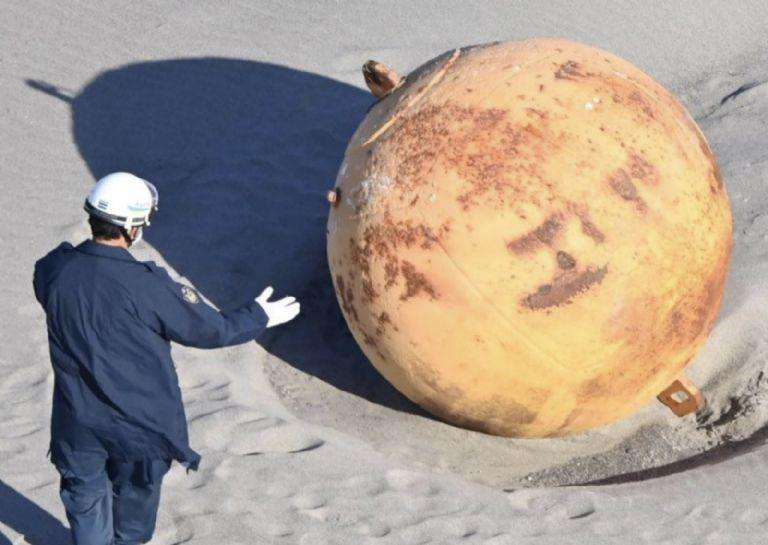
A series of mysterious metallic objects that washed up on a beach in North Queensland have been identified by the Australian Space Agency (ASA) as likely pressure vessels from a space launch vehicle, most likely originating from a foreign rocket body re-entering Earth’s atmosphere.
The objects were first discovered by locals at Forrest Beach, near Ingham (north of Townsville), triggering an emergency response involving firefighters, police, and hazardous materials teams. Authorities initially set up exclusion zones around the debris due to concerns that the objects could contain or have previously contained residual rocket fuel or pressurised gases.
Over several days, multiple similar spherical objects were found along the coastline, prompting further investigation. Specialists in protective gear were deployed to examine and secure the items, while parts of the beach were temporarily restricted to the public as a precaution.
The Australian Space Agency later confirmed that the recovered objects are consistent with space launch debris, specifically fuel or gas pressure containers commonly used in rockets. These components are designed to withstand extreme pressure and heat, which allows them to survive re-entry into Earth’s atmosphere and sometimes fall intact into oceans or onto land.
Officials stated that the debris likely originated from a recent orbital re-entry event involving a foreign launch vehicle, though the exact rocket and country of origin are still being confirmed through international coordination. Space agencies typically work together to trace such objects back to their launch source under global space treaties.
Experts have explained that these types of spherical tanks are relatively common in space operations. Often referred to informally as “space balls,” they are used to store pressurised gases or propellants that help control rocket systems in orbit. Because of their strong titanium or composite construction, they can survive atmospheric re-entry better than many other spacecraft components.
Despite being considered largely safe after assessment, authorities are continuing to warn the public not to touch or move any similar objects that may wash ashore. Even if fuel has been burned off during re-entry, traces of hazardous chemicals can sometimes remain, and the structural integrity of such objects may be unpredictable.
The ASA has also indicated that more debris could potentially be discovered in surrounding coastal areas as ocean currents and tides shift floating fragments toward shorelines. Residents have been advised to report any unusual metallic objects immediately and to keep a safe distance.
The discovery has drawn attention from both scientists and the public, highlighting the growing issue of space debris re-entering Earth’s atmosphere as global satellite launches increase. Experts say such events are expected to become more common as orbital activity expands worldwide.
SpaceObjectsDebrisRocketBeach
A series of mysterious metallic objects that washed up on a beach in North Queensland have been identified by the Australian Space Agency (ASA) as likely pressure vessels from a space launch vehicle, most likely originating from a foreign rocket body re-entering Earth’s atmosphere.
The objects were first discovered by locals at Forrest Beach, near Ingham (north of Townsville), triggering an emergency response involving firefighters, police, and hazardous materials teams. Authorities initially set up exclusion zones around the debris due to concerns that the objects could contain or have previously contained residual rocket fuel or pressurised gases.
Over several days, multiple similar spherical objects were found along the coastline, prompting further investigation. Specialists in protective gear were deployed to examine and secure the items, while parts of the beach were temporarily restricted to the public as a precaution.
The Australian Space Agency later confirmed that the recovered objects are consistent with space launch debris, specifically fuel or gas pressure containers commonly used in rockets. These components are designed to withstand extreme pressure and heat, which allows them to survive re-entry into Earth’s atmosphere and sometimes fall intact into oceans or onto land.
Officials stated that the debris likely originated from a recent orbital re-entry event involving a foreign launch vehicle, though the exact rocket and country of origin are still being confirmed through international coordination. Space agencies typically work together to trace such objects back to their launch source under global space treaties.
Experts have explained that these types of spherical tanks are relatively common in space operations. Often referred to informally as “space balls,” they are used to store pressurised gases or propellants that help control rocket systems in orbit. Because of their strong titanium or composite construction, they can survive atmospheric re-entry better than many other spacecraft components.
Despite being considered largely safe after assessment, authorities are continuing to warn the public not to touch or move any similar objects that may wash ashore. Even if fuel has been burned off during re-entry, traces of hazardous chemicals can sometimes remain, and the structural integrity of such objects may be unpredictable.
The ASA has also indicated that more debris could potentially be discovered in surrounding coastal areas as ocean currents and tides shift floating fragments toward shorelines. Residents have been advised to report any unusual metallic objects immediately and to keep a safe distance.
The discovery has drawn attention from both scientists and the public, highlighting the growing issue of space debris re-entering Earth’s atmosphere as global satellite launches increase. Experts say such events are expected to become more common as orbital activity expands worldwide.
A Queensland government department has lost approximately $800,000 in a cyberattack, prompting a review that found no government data or sensitive infor...
New evidence indicates autonomous Open AI agents attempted to access information from several Australian government and public-sector websites, expanding...
A new Cooperative Research Centre based at the University of Queensland's Brisbane city campus will bring researchers, industry and government together...
Residents in Gisborne South can now access improved mobile phone coverage after a new Telstra tower was installed at I R Robertson Reserve following yea...
Fire crews and water-bombing helicopters are responding to a fast-moving bushfire near Oak Valley, north of Townsville, as residents in nearby areas are...
The Bureau of Meteorology is warning of possible thunderstorms across southern Queensland during the King’s Birthday long weekend, with unsettled weathe...
Changes to Australia’s working holiday visa program have raised concerns among tourism and hospitality businesses in Far North Queensland, where backpac...
Queensland Police established an emergency exclusion zone in Kallangur, north of Brisbane, after receiving reports of an armed person inside a residence...
A 36-year-old man extradited from Perth has received a suspended prison sentence after being convicted over a violent incident involving four people at...
Darwin's Frontier Bar and Grill manager Aston Bell has received two industry awards, recognising her leadership, customer service and contribution to th...
A teenager from Devonport has died and four other people were injured after a serious crash involving a ute on Mersey Main Road near Latrobe, Tasmania.