Townsville Hospital Under Scrutiny After Serious Patient Care Failures
By Chloe · Published 11 Nov 2026 · Updated 11 Nov 2026
Townsville, QLD · Queensland News
Safety note: Admin approval is an initial review, not a guarantee that every detail is correct. Check important or urgent claims with official sources and report anything inaccurate or unsafe.
Source and credit: Contributor's own report
Townsville Hospital Under Scrutiny After Serious Patient Care Failures - Townsville, QLD
Smart summary
An independent Queensland Health investigation has found that serious failures in urology services at Townsville Hospital could have been addressed years earlier, raising concerns about patient safety, delayed treatme...
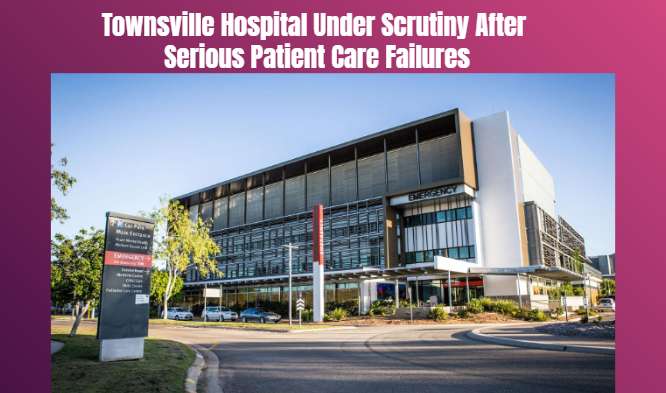
Townsville Hospital and Health Service in Queensland is facing renewed scrutiny following the release of an independent investigation into serious failures in its urology services. The investigation found that problems affecting patient care had been known for several years but could have been addressed earlier by hospital leadership.
The findings were released by Queensland Health on Wednesday, 11 November 2026. The investigation examined the management and delivery of urological care at Townsville Hospital, which provides specialist services to patients across North Queensland, including people living hundreds of kilometres away.
According to the investigation, the hospital's board was aware of gaps in urology services as early as 2022. However, investigators found that the seriousness of the emerging patient safety risks was not fully recognised until 2025.
The problems included delays in appointments, diagnostic testing and follow-up treatment. Some patients were referred for investigations but did not receive the necessary follow-up care within appropriate timeframes.
The situation became particularly concerning for patients with serious medical conditions, including cancers that may have progressed while treatment and medical intervention were delayed.
Former hospital chief executive Kieran Keyes previously acknowledged that hundreds of patients had experienced gaps in their care. He also apologised publicly to affected patients and their families.
The latest investigation found that the problems were not simply individual administrative mistakes. It identified broader concerns involving management oversight, communication and the hospital's ability to respond effectively to warnings about patient safety.
Monthly performance figures also showed that the problem had not been completely resolved. In August 2026, approximately 44 per cent of the most urgent urology patients were still not receiving care within clinically recommended timeframes.
Queensland Health Director-General Dr David Rosengren released the findings and said the department had accepted, in principle, the investigation's 27 recommendations and key findings.
A separate cultural review of the hospital also identified serious workplace concerns. Staff described relationships between employees and the hospital board as fractured, with some workers believing senior management was disconnected from the realities of clinical care.
The review also identified a widespread fear among staff of speaking up about problems, including concerns involving patient safety.
These findings have raised questions about whether hospital employees had sufficient opportunities to report problems and whether earlier warnings were taken seriously.
The investigation has placed renewed pressure on Queensland Health to improve accountability, strengthen hospital management and ensure patients receive timely treatment.
Townsville Hospital remains a major healthcare provider for North Queensland, making improvements particularly important for regional communities that depend on its specialist medical services.
The findings highlight the importance of effective communication, reliable patient tracking systems and strong clinical oversight in public hospitals.
Queensland Health's response and implementation of the recommendations will be important in determining whether similar failures can be prevented in the future.
HospitalCareInvestigationPatientsQueensland
Townsville Hospital and Health Service in Queensland is facing renewed scrutiny following the release of an independent investigation into serious failures in its urology services. The investigation found that problems affecting patient care had been known for several years but could have been addressed earlier by hospital leadership.
The findings were released by Queensland Health on Wednesday, 11 November 2026. The investigation examined the management and delivery of urological care at Townsville Hospital, which provides specialist services to patients across North Queensland, including people living hundreds of kilometres away.
According to the investigation, the hospital's board was aware of gaps in urology services as early as 2022. However, investigators found that the seriousness of the emerging patient safety risks was not fully recognised until 2025.
The problems included delays in appointments, diagnostic testing and follow-up treatment. Some patients were referred for investigations but did not receive the necessary follow-up care within appropriate timeframes.
The situation became particularly concerning for patients with serious medical conditions, including cancers that may have progressed while treatment and medical intervention were delayed.
Former hospital chief executive Kieran Keyes previously acknowledged that hundreds of patients had experienced gaps in their care. He also apologised publicly to affected patients and their families.
The latest investigation found that the problems were not simply individual administrative mistakes. It identified broader concerns involving management oversight, communication and the hospital's ability to respond effectively to warnings about patient safety.
Monthly performance figures also showed that the problem had not been completely resolved. In August 2026, approximately 44 per cent of the most urgent urology patients were still not receiving care within clinically recommended timeframes.
Queensland Health Director-General Dr David Rosengren released the findings and said the department had accepted, in principle, the investigation's 27 recommendations and key findings.
A separate cultural review of the hospital also identified serious workplace concerns. Staff described relationships between employees and the hospital board as fractured, with some workers believing senior management was disconnected from the realities of clinical care.
The review also identified a widespread fear among staff of speaking up about problems, including concerns involving patient safety.
These findings have raised questions about whether hospital employees had sufficient opportunities to report problems and whether earlier warnings were taken seriously.
The investigation has placed renewed pressure on Queensland Health to improve accountability, strengthen hospital management and ensure patients receive timely treatment.
Townsville Hospital remains a major healthcare provider for North Queensland, making improvements particularly important for regional communities that depend on its specialist medical services.
The findings highlight the importance of effective communication, reliable patient tracking systems and strong clinical oversight in public hospitals.
Queensland Health's response and implementation of the recommendations will be important in determining whether similar failures can be prevented in the future.
NSW patient survey findings highlight safety concerns in several major hospitals, as the state government commits additional security staff to emergency...
The ACT Government has released early designs for a major hospital expansion in Bruce, featuring new clinical facilities, additional beds, an emergency...
Q fever is a bacterial disease that can spread from infected animals, particularly cattle, sheep and goats, to humans. People can become infected by breathing in contaminated du...
A new $37 million cardiac hybrid theatre has officially opened at Rockhampton Hospital, bringing advanced heart treatment facilities to Central Queensla...
The Australian Government is considering moving the major Great Barrier Reef aquarium to Townsville's Strand after an engineering report raised concerns...
Meteorologists warn of giant hail, destructive winds and intense rainfall across parts of Queensland, while northern districts remain under severe heatw...
A special soybean planting strategy is helping Australia move closer to eradicating red witchweed, an invasive parasite that has damaged agricultural cr...
NSW patient survey findings highlight safety concerns in several major hospitals, as the state government commits additional security staff to emergency...
Police are investigating a daylight theft after three valuable trophies belonging to Australia's legendary racehorse were taken from an exhibition displ...
Operation Amarok 15 resulted in 1,594 charges, hundreds of apprehended domestic violence order breaches identified and dozens of firearms seized across...