Safety note: Admin approval is an initial review, not a guarantee that every detail is correct. Check important or urgent claims with official sources and report anything inaccurate or unsafe.
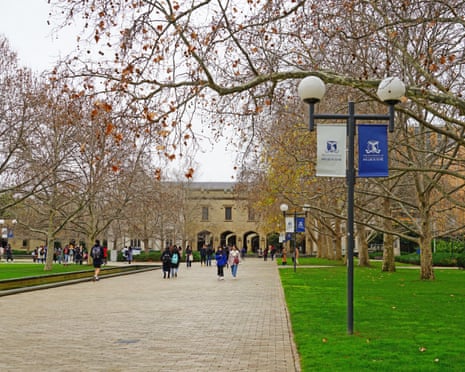
University of Melbourne Sharply Revises Protest Rules After Pro‑Palestine Sit‑Ins, Commission Reports
Smart summary
The University of Melbourne has announced a significant overhaul of its protest policies after a series of pro‑Palestine sit‑ins that sparked controversy on campus. According to a report from the Royal Commission, the...
The University of Melbourne has announced a significant overhaul of its protest policies after a series of pro‑Palestine sit‑ins that sparked controversy on campus.
According to a report from the Royal Commission, the university’s new guidelines aim to balance the right to free expression with the need to maintain a safe and respectful environment for all students. The commission noted that the previous rules were deemed inadequate in addressing incidents of hate speech and anti‑Semitic rhetoric that emerged during the recent demonstrations.
The revised policy introduces clearer definitions of prohibited behaviour, stricter enforcement mechanisms, and a dedicated task force to monitor protest activities. It also outlines specific protocols for managing large gatherings, including coordination with campus security and local police.
Student groups have expressed mixed reactions. While some welcome the move as a step toward protecting vulnerable communities, others argue that the changes may stifle legitimate dissent. The university’s Vice Chancellor stated that the policy changes are not punitive but rather designed to ensure that all voices can be heard in a safe setting.
The Royal Commission’s findings highlight the broader national debate over campus free speech and the responsibilities of universities in addressing hate and discrimination. The University of Melbourne’s decision reflects a growing trend among Australian institutions to reassess protest policies in light of social justice concerns.
The new guidelines will take effect immediately, with a review scheduled for the end of the academic year to assess their impact and effectiveness.
UniversityCommissionProtestCampusMelbourne
The University of Melbourne has announced a significant overhaul of its protest policies after a series of pro‑Palestine sit‑ins that sparked controversy on campus.
According to a report from the Royal Commission, the university’s new guidelines aim to balance the right to free expression with the need to maintain a safe and respectful environment for all students. The commission noted that the previous rules were deemed inadequate in addressing incidents of hate speech and anti‑Semitic rhetoric that emerged during the recent demonstrations.
The revised policy introduces clearer definitions of prohibited behaviour, stricter enforcement mechanisms, and a dedicated task force to monitor protest activities. It also outlines specific protocols for managing large gatherings, including coordination with campus security and local police.
Student groups have expressed mixed reactions. While some welcome the move as a step toward protecting vulnerable communities, others argue that the changes may stifle legitimate dissent. The university’s Vice Chancellor stated that the policy changes are not punitive but rather designed to ensure that all voices can be heard in a safe setting.
The Royal Commission’s findings highlight the broader national debate over campus free speech and the responsibilities of universities in addressing hate and discrimination. The University of Melbourne’s decision reflects a growing trend among Australian institutions to reassess protest policies in light of social justice concerns.
The new guidelines will take effect immediately, with a review scheduled for the end of the academic year to assess their impact and effectiveness.
The Federal Government is preparing new measures targeting temporary visas, visa overstayers, international students and visa-hopping, while maintaining...
One Nation’s proposed major reduction in migration has triggered warnings that a sharp cut to population growth could weaken Australia’s economy and cre...
A Melbourne doctor facing serious criminal charges has had his court case adjourned while investigators continue examining a large amount of digital material seized during a pol...
Victoria Police have arrested two men and a woman as part of an ongoing investigation into the fatal shooting of a 22-year-old man in Thomastown, in Melbourne’s north. The incid...
Victoria Police have charged a 17-year-old boy with arson and endangering life following an investigation into an alleged firebombing at a gym in Maidstone, Melbourne. The inves...
Police say Port Phillip Crime Investigation Unit detectives arrested a man on Monday following a prolonged investigation into a series of alleged violent assaults and thefts acr...
A 21-year-old Bendigo man, Adrian Turnbull, has been sentenced to a maximum of four years and eight months in prison after pleading guilty to a series of offences committed acro...
A new specialist family-violence support model has been introduced in Ballarat, with dedicated workers now embedded alongside Victoria Police to help people experiencing family...
A Coroners Court hearing is being held in Victoria today to examine the circumstances surrounding the death of a 56-year-old man from Bendigo. The case is one of the local matte...
Bendigo is marking a major milestone this year as the city celebrates 175 years since the discovery of gold in the region. On Tuesday, September 15, 2026, residents and visitors...
Cairns Regional Council has unanimously voted to seek $400,000 in Queensland Government funding for a program designed to connect local businesses with the region’s growing film...
An automated external defibrillator and memorial plaque have been installed at Ellery Creek Big Hole following the death of disability advocate Ellen Fr...
Queensland firefighters spent several hours monitoring a significant grass fire at Mary Kinross Park in Bargara, near Bundaberg, after the blaze broke out on Wednesday evening....