WA Premier Orders Removal of Nicky Winmar Statue Following Assault Conviction
By Neha Maurya · Published 04 Jul 2026 · Updated 04 Jul 2026
Perth, WA · Western Australia News
Safety note: Admin approval is an initial review, not a guarantee that every detail is correct. Check important or urgent claims with official sources and report anything inaccurate or unsafe.
Source and credit: Contributor's own report
WA Premier Orders Removal of Nicky Winmar Statue Following Assault Conviction - Perth, WA
Smart summary
The Western Australian Government has directed that the bronze statue of AFL great Nicky Winmar be removed from Optus Stadium after his conviction for assaulting a woman in Victoria, saying the decision sends a strong...
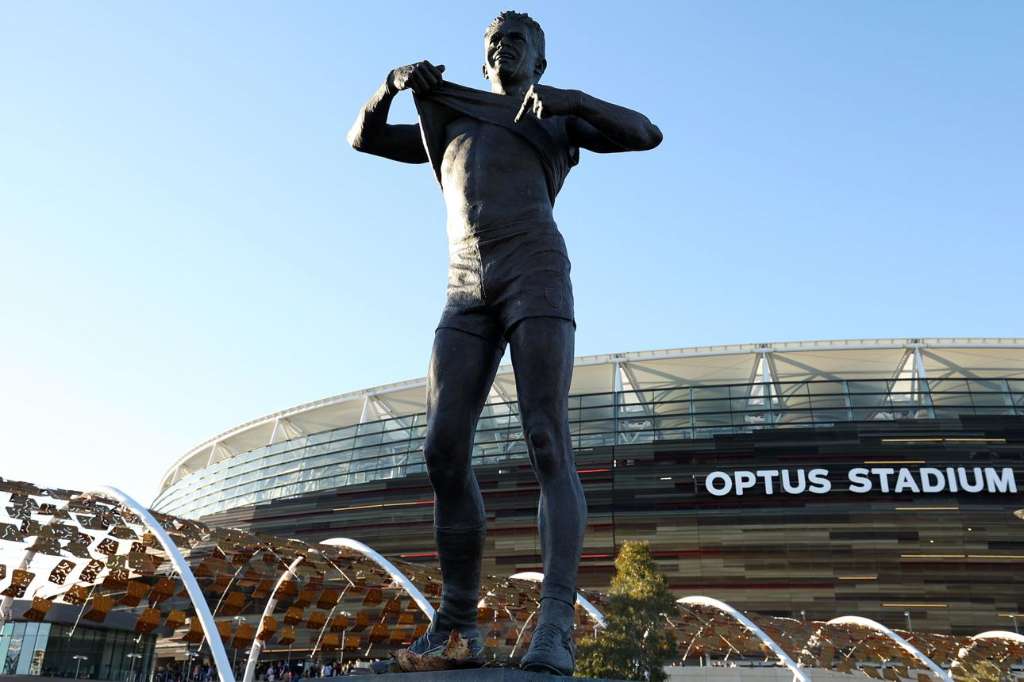
The Western Australian Government has ordered the removal of the bronze statue of former AFL star Nicky Winmar from Optus Stadium after he was convicted of assaulting a woman in Victoria. The decision was announced by WA Premier Roger Cook, who said that while Winmar's contribution to Australian football and his stand against racism remain historically significant, the conviction meant it was no longer appropriate for the statue to remain on public display.
The statue, unveiled in 2019, commemorates one of the most iconic moments in Australian sporting history. It depicts Winmar lifting his St Kilda jumper and pointing to his skin during a 1993 AFL match against Collingwood after enduring racist abuse from spectators. The gesture became a defining symbol in the fight against racism in Australian sport and has long been recognised as a milestone in the AFL's journey toward greater inclusion and respect for Indigenous players.
On 3 July 2026, the Bendigo Magistrates' Court found Winmar guilty of three assault offences involving a woman during an incident at Cohuna, Victoria, in May 2025. Magistrate Trieu Huynh found that Winmar grabbed the woman's arm, dragged her by the hair and repeatedly struck her head against a wooden door. He was acquitted of one charge of intentionally causing injury but convicted on two counts of common law assault and one count of unlawful assault. A pre-sentence hearing has been scheduled for August.
Following the court's decision, Premier Cook said that violence against women is never acceptable and that public monuments should reflect values the community wishes to uphold. He directed Venues West, the state agency responsible for managing Optus Stadium, to begin arrangements for the statue's removal. Venues West confirmed it would work with the AFL to remove the monument, although no timeline has yet been announced.
The decision has prompted mixed public reactions. Some believe removing the statue is appropriate given the seriousness of the offences and the importance of sending a clear message about family and domestic violence. Others argue the statue commemorates a historically important anti-racism moment rather than celebrating Winmar's personal life, suggesting the monument's historical significance should be considered separately from his criminal conviction.
Winmar remains one of the AFL's most influential Indigenous players, having played 251 games for St Kilda and the Western Bulldogs during his career. His 1993 anti-racism gesture is widely regarded as one of the most powerful images in Australian sporting history and has been credited with helping change public attitudes toward racial vilification in football. Nevertheless, government officials say public monuments also represent community values and accountability.
The removal of the statue marks a significant and symbolic decision for Western Australia, reflecting the balance between recognising important historical achievements and responding to serious criminal convictions involving public figures. As the legal process continues ahead of sentencing, the debate surrounding Winmar's legacy is expected to continue within both the sporting community and the broader public.
WinmarStatueAssaultBeenDecision
The Western Australian Government has ordered the removal of the bronze statue of former AFL star Nicky Winmar from Optus Stadium after he was convicted of assaulting a woman in Victoria. The decision was announced by WA Premier Roger Cook, who said that while Winmar's contribution to Australian football and his stand against racism remain historically significant, the conviction meant it was no longer appropriate for the statue to remain on public display.
The statue, unveiled in 2019, commemorates one of the most iconic moments in Australian sporting history. It depicts Winmar lifting his St Kilda jumper and pointing to his skin during a 1993 AFL match against Collingwood after enduring racist abuse from spectators. The gesture became a defining symbol in the fight against racism in Australian sport and has long been recognised as a milestone in the AFL's journey toward greater inclusion and respect for Indigenous players.
On 3 July 2026, the Bendigo Magistrates' Court found Winmar guilty of three assault offences involving a woman during an incident at Cohuna, Victoria, in May 2025. Magistrate Trieu Huynh found that Winmar grabbed the woman's arm, dragged her by the hair and repeatedly struck her head against a wooden door. He was acquitted of one charge of intentionally causing injury but convicted on two counts of common law assault and one count of unlawful assault. A pre-sentence hearing has been scheduled for August.
Following the court's decision, Premier Cook said that violence against women is never acceptable and that public monuments should reflect values the community wishes to uphold. He directed Venues West, the state agency responsible for managing Optus Stadium, to begin arrangements for the statue's removal. Venues West confirmed it would work with the AFL to remove the monument, although no timeline has yet been announced.
The decision has prompted mixed public reactions. Some believe removing the statue is appropriate given the seriousness of the offences and the importance of sending a clear message about family and domestic violence. Others argue the statue commemorates a historically important anti-racism moment rather than celebrating Winmar's personal life, suggesting the monument's historical significance should be considered separately from his criminal conviction.
Winmar remains one of the AFL's most influential Indigenous players, having played 251 games for St Kilda and the Western Bulldogs during his career. His 1993 anti-racism gesture is widely regarded as one of the most powerful images in Australian sporting history and has been credited with helping change public attitudes toward racial vilification in football. Nevertheless, government officials say public monuments also represent community values and accountability.
The removal of the statue marks a significant and symbolic decision for Western Australia, reflecting the balance between recognising important historical achievements and responding to serious criminal convictions involving public figures. As the legal process continues ahead of sentencing, the debate surrounding Winmar's legacy is expected to continue within both the sporting community and the broader public.
Sydney Chinatown institution Emperor’s Garden has reached an agreement to repay more than $1 million in tax debt, with discussions now underway about re...
A major developer has ended its involvement in the Eyre residential development in Adelaide's north, leaving South Australia's Renewal SA to take respon...
Chinese-owned Yongji Health has taken almost complete control of Tasmanian Botanics, one of Australia's largest medicinal cannabis producers, following...
The Western Australia Supreme Court has dismissed a $2.6 million claim brought by engineering companies over alleged damage to a commercial barge that w...
A 59-year-old rubbish-truck driver has been charged with dangerous driving causing death after a 70-year-old man was fatally struck in Queens Park earli...
Police have arrested five people after a man was taken to hospital with a gunshot wound following a serious incident at Moonyoonooka, east of Geraldton,...
Young people from regional and remote Queensland communities are participating in youth councils and a state youth parliament, raising issues such as di...
A 29-year-old man from Aldinga has been charged with multiple drug, traffic and weapons offences after police allegedly found methamphetamine, other ill...
South Australian police have arrested a 22-year-old woman following an alleged assault on an elderly woman outside a business on Beach Road, Christies B...
Two men have been charged after a series of police raids across Cessnock, Denman, Muswellbrook and Singleton Heights uncovered 1,465 cannabis plants, wi...