Safety note: Admin approval is an initial review, not a guarantee that every detail is correct. Check important or urgent claims with official sources and report anything inaccurate or unsafe.
Source and credit: Contributor's own report
15,000 Kingfish Arrive in Tasmania for Bass Strait Aquaculture Trial - Hobart, TAS
Smart summary
Fifteen thousand juvenile yellowtail kingfish have arrived in Tasmania from Western Australia as part of a three-year research project testing offshore aquaculture in Bass Strait.
Fifteen thousand juvenile yellowtail kingfish have arrived in Tasmania from Western Australia, marking the next stage of an Australian research project investigating whether different fish species can be successfully raised in offshore waters.
The fingerlings travelled approximately 3,000 kilometres from Fremantle to Hobart in two specialist air-freight shipments. The young fish were transported in oxygenated bags placed inside insulated boxes designed to maintain suitable conditions throughout the journey. According to the research team, the fish arrived safely without mortalities and were considered healthy after the trip.
The kingfish are part of the Blue Economy Zone research trial in Bass Strait. The research site is located about 12.5 kilometres offshore from Burnie, Tasmania, in Commonwealth waters. The project is examining the feasibility of multi-species offshore aquaculture and aims to generate scientific and operational evidence about growing fish in marine environments further offshore.
The newly arrived fish will not immediately be placed into the offshore sea pens. Instead, they will spend approximately three months at the Institute for Marine and Antarctic Studies aquaculture research facility at Taroona. During this period, researchers will monitor their health, water conditions, feeding and growth.
The fish currently weigh around one gram each. The research team expects them to grow to between 100 and 150 grams before they are transferred to the offshore trial site. The transfer is planned for December, when the fish will travel to Burnie before being transported by vessel to the research area in Bass Strait.
Once placed offshore, the kingfish are expected to remain in the research sea pen for approximately 14 months. The target is for them to grow to around four kilograms before harvesting. The trial is scheduled to continue through 2028, when the research infrastructure will be decommissioned and the results assessed.
The kingfish trial follows earlier work involving Atlantic salmon at the same research site. The research organisation said the salmon performed above predicted growth levels during the first stage of the project, although fish mortalities were also experienced. The addition of yellowtail kingfish allows researchers to investigate another species and compare how different fish respond to offshore conditions in Bass Strait.
The project is also significant because the Blue Economy Zone is Australia's first aquaculture research trial in Commonwealth waters. Researchers are investigating how offshore farming could operate in challenging marine conditions while gathering information that could inform future aquaculture development and regulation.
The kingfish originated from a Western Australian government hatchery in Fremantle, which has produced juvenile yellowtail kingfish for more than two decades. Before being transported to Tasmania, the fish underwent biosecurity procedures designed to reduce the risk of introducing diseases or pathogens.
The project is being conducted as a research trial rather than a commercial farming operation. Any future commercial development would require separate assessment and government approvals. The current project is intended to provide evidence about the technical, environmental and operational requirements of offshore aquaculture in Australian waters.
ResearchFishOffshoreKingfishTrial
Fifteen thousand juvenile yellowtail kingfish have arrived in Tasmania from Western Australia, marking the next stage of an Australian research project investigating whether different fish species can be successfully raised in offshore waters.
The fingerlings travelled approximately 3,000 kilometres from Fremantle to Hobart in two specialist air-freight shipments. The young fish were transported in oxygenated bags placed inside insulated boxes designed to maintain suitable conditions throughout the journey. According to the research team, the fish arrived safely without mortalities and were considered healthy after the trip.
The kingfish are part of the Blue Economy Zone research trial in Bass Strait. The research site is located about 12.5 kilometres offshore from Burnie, Tasmania, in Commonwealth waters. The project is examining the feasibility of multi-species offshore aquaculture and aims to generate scientific and operational evidence about growing fish in marine environments further offshore.
The newly arrived fish will not immediately be placed into the offshore sea pens. Instead, they will spend approximately three months at the Institute for Marine and Antarctic Studies aquaculture research facility at Taroona. During this period, researchers will monitor their health, water conditions, feeding and growth.
The fish currently weigh around one gram each. The research team expects them to grow to between 100 and 150 grams before they are transferred to the offshore trial site. The transfer is planned for December, when the fish will travel to Burnie before being transported by vessel to the research area in Bass Strait.
Once placed offshore, the kingfish are expected to remain in the research sea pen for approximately 14 months. The target is for them to grow to around four kilograms before harvesting. The trial is scheduled to continue through 2028, when the research infrastructure will be decommissioned and the results assessed.
The kingfish trial follows earlier work involving Atlantic salmon at the same research site. The research organisation said the salmon performed above predicted growth levels during the first stage of the project, although fish mortalities were also experienced. The addition of yellowtail kingfish allows researchers to investigate another species and compare how different fish respond to offshore conditions in Bass Strait.
The project is also significant because the Blue Economy Zone is Australia's first aquaculture research trial in Commonwealth waters. Researchers are investigating how offshore farming could operate in challenging marine conditions while gathering information that could inform future aquaculture development and regulation.
The kingfish originated from a Western Australian government hatchery in Fremantle, which has produced juvenile yellowtail kingfish for more than two decades. Before being transported to Tasmania, the fish underwent biosecurity procedures designed to reduce the risk of introducing diseases or pathogens.
The project is being conducted as a research trial rather than a commercial farming operation. Any future commercial development would require separate assessment and government approvals. The current project is intended to provide evidence about the technical, environmental and operational requirements of offshore aquaculture in Australian waters.
A proposal for a 25-site tourist park opposite the renovated Kin Kin Hotel has prompted differing views among residents, while the developer says the pr...
An investigation has raised questions about what happened after NSW's building regulator disciplined a major developer and prepared a public statement a...
A vehicle has crashed into a house in Albury, prompting police attendance at a residential property near the intersection of Mate and North streets. The incident was reported to...
New figures have renewed concerns about emergency department delays at Royal Hobart Hospital, with the health system facing questions over patient waiti...
Sixteen-year-old Xavier Cain from Mount Gambier is preparing to compete against some of the world's leading simulator racers in the 2026 Porsche e Sports...
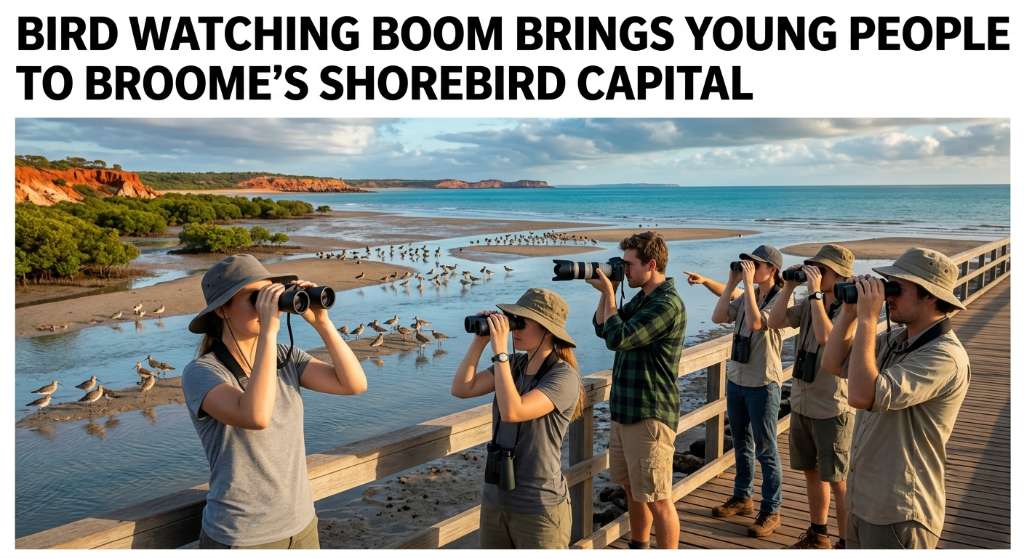
A growing number of young Australians are taking up birdwatching, bringing fresh interest to the Broome Bird Observatory and the migratory shorebirds of...
Tasmania Police are investigating a two-vehicle collision at the intersection of Percival and Cotton Streets in Latrobe, with three people taken to hosp...