Australian Consumer Sentiment Dips Further Amid Growing Economic Concerns
By Neha Maurya · Published 09 Jun 2026 · Updated 09 Jun 2026
Sydney, NSW · New South Wales News
Safety note: Admin approval is an initial review, not a guarantee that every detail is correct. Check important or urgent claims with official sources and report anything inaccurate or unsafe.
Source and credit: Contributor's own report
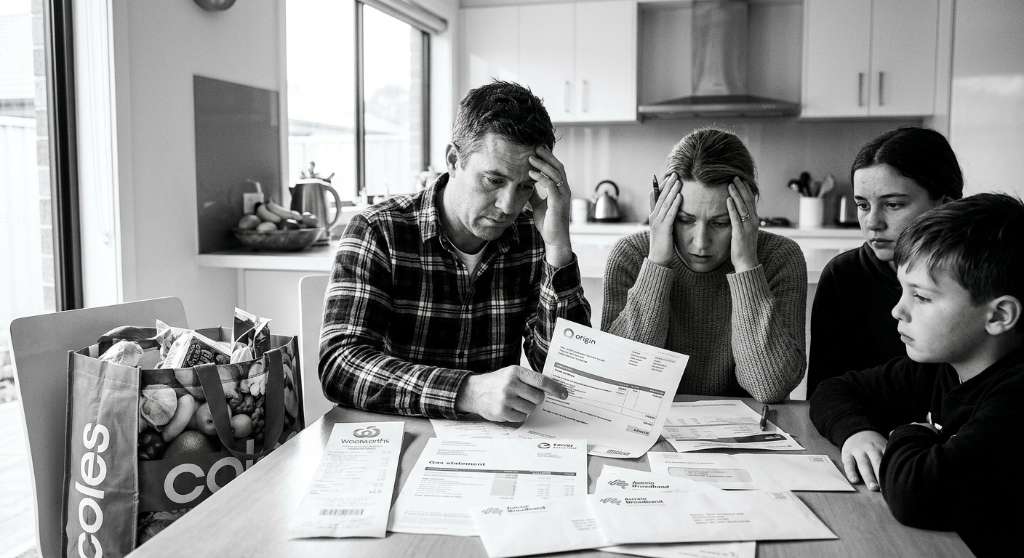
A conceptual image representing economic uncertainty and consumer confidence.
Smart summary
New survey data reveals a decline in consumer confidence across Australia, as households express mounting anxiety regarding inflation and the national economic outlook.
Australian consumer confidence has deteriorated further in June, with households across the country expressing growing concerns about rising living costs, higher borrowing expenses and the nation's economic outlook.
The latest Westpac-Melbourne Institute Consumer Sentiment Index fell to 80.6 points in June, down 2.9 per cent from the previous month. A reading below 100 indicates that pessimists outnumber optimists, with the latest result placing sentiment among the weakest recorded in the survey's 50-year history.
Westpac's head of Australian macro-forecasting, Matthew Hassan, said the findings highlighted the mounting pressure many households continue to experience.
"At 80.6, the latest monthly index read is back amongst the weakest seen in the fifty-year history of the survey," Hassan said.
Several factors have contributed to the decline in confidence, including persistent cost-of-living pressures, elevated interest rates and increasing fuel prices. Many Australians remain concerned about their ability to manage household budgets as essential expenses continue to consume a larger share of family incomes.
The survey showed that expectations surrounding personal finances weakened significantly during June, reflecting ongoing uncertainty about future economic conditions. Households also became less optimistic about Australia's broader economic prospects over the next 12 months.
Confidence in the housing market also softened, with fewer consumers expecting strong growth in property values. Analysts believe changing market conditions and recent policy discussions surrounding housing and taxation may be influencing buyer sentiment.
Although there was a slight improvement in consumers' willingness to purchase major household items, the measure remained well below its long-term average, suggesting Australians continue to prioritise essential spending over discretionary purchases.
Economists warn that prolonged weakness in consumer confidence could weigh on retail spending and broader economic activity in the months ahead. Household consumption plays a vital role in Australia's economy, and cautious spending habits often reflect deeper concerns about employment security and financial wellbeing.
The latest figures arrive as policymakers and economists closely monitor inflation trends and the impact of higher interest rates on Australian households. While inflationary pressures have eased from their peak, many families are yet to feel meaningful relief in day-to-day expenses.
For businesses, the decline in confidence presents additional challenges, particularly for sectors reliant on discretionary consumer spending. Retailers, hospitality operators and service providers may continue to face subdued demand if households remain focused on managing financial pressures.
Despite the gloomy outlook, economists note that improvements in inflation outcomes and greater certainty around interest rates could eventually help restore confidence.
For now, however, the June results paint a picture of an Australian public that remains deeply cautious about the future, with many families continuing to navigate one of the most financially challenging periods in recent years.
ConfidenceConsumerEconomicHouseholdsContinue
Australian consumer confidence has deteriorated further in June, with households across the country expressing growing concerns about rising living costs, higher borrowing expenses and the nation's economic outlook.
The latest Westpac-Melbourne Institute Consumer Sentiment Index fell to 80.6 points in June, down 2.9 per cent from the previous month. A reading below 100 indicates that pessimists outnumber optimists, with the latest result placing sentiment among the weakest recorded in the survey's 50-year history.
Westpac's head of Australian macro-forecasting, Matthew Hassan, said the findings highlighted the mounting pressure many households continue to experience.
"At 80.6, the latest monthly index read is back amongst the weakest seen in the fifty-year history of the survey," Hassan said.
Several factors have contributed to the decline in confidence, including persistent cost-of-living pressures, elevated interest rates and increasing fuel prices. Many Australians remain concerned about their ability to manage household budgets as essential expenses continue to consume a larger share of family incomes.
The survey showed that expectations surrounding personal finances weakened significantly during June, reflecting ongoing uncertainty about future economic conditions. Households also became less optimistic about Australia's broader economic prospects over the next 12 months.
Confidence in the housing market also softened, with fewer consumers expecting strong growth in property values. Analysts believe changing market conditions and recent policy discussions surrounding housing and taxation may be influencing buyer sentiment.
Although there was a slight improvement in consumers' willingness to purchase major household items, the measure remained well below its long-term average, suggesting Australians continue to prioritise essential spending over discretionary purchases.
Economists warn that prolonged weakness in consumer confidence could weigh on retail spending and broader economic activity in the months ahead. Household consumption plays a vital role in Australia's economy, and cautious spending habits often reflect deeper concerns about employment security and financial wellbeing.
The latest figures arrive as policymakers and economists closely monitor inflation trends and the impact of higher interest rates on Australian households. While inflationary pressures have eased from their peak, many families are yet to feel meaningful relief in day-to-day expenses.
For businesses, the decline in confidence presents additional challenges, particularly for sectors reliant on discretionary consumer spending. Retailers, hospitality operators and service providers may continue to face subdued demand if households remain focused on managing financial pressures.
Despite the gloomy outlook, economists note that improvements in inflation outcomes and greater certainty around interest rates could eventually help restore confidence.
For now, however, the June results paint a picture of an Australian public that remains deeply cautious about the future, with many families continuing to navigate one of the most financially challenging periods in recent years.
Darwin Northern Territory · Other News · 01 Sep 2026
A scenic hike through Butterfly Gorge in the Northern Territory turned into a frightening experience when a buffalo charged at two hikers. ABC Darwin reported the story today, 1...
Coffs Harbour New South Wales · Other News · 01 Sep 2026
A Safe Work NSW inspection blitz across the Coffs Harbour region has uncovered dozens of workplace-safety issues in the horticulture industry. The operation followed concerns ab...
A major Queensland Government infrastructure investment is set to unlock thousands of new homes across the Fraser Coast, including projects in Maryborough.
A 22-year-old man has been charged after a police pursuit involving an allegedly stolen Toyota utility near Moree in northern New South Wales. NSW Police published the update on...
Sydney New South Wales · General News · 15 Sep 2026
A tragic incident in Auburn, in Sydney’s west, has resulted in the death of a three-year-old girl after she was struck by a car in a residential driveway on Tuesday, September 1...
A 16-year-old boy is due to appear before a children’s court after being charged following an alleged brawl at a train station in Penrith, in Sydney’s west. The incident occurre...
A man in his 40s has been shot dead at the doorway of a home in Merrylands West, western Sydney, prompting a major police investigation. The shooting occurred on Wednesday after...
A 36-year-old man has been charged after investigators allegedly found fraudulent identification documents, cloned number plates, cash and drug-manufact...
A Sydney court has heard that a man sent 249 messages to a former partner within 24 hours, with the messages treated as a single alleged breach of an ap...
A high-profile athlete has returned to court and told the hearing that an alleged unwanted kiss by former broadcaster Alan Jones remained difficult to f...
Work on the $150 million Sydney Town Hall Square project has been paused after the NSW Planning Minister referred the development for review by the Inde...
Cairns Regional Council has unanimously voted to seek $400,000 in Queensland Government funding for a program designed to connect local businesses with the region’s growing film...
An automated external defibrillator and memorial plaque have been installed at Ellery Creek Big Hole following the death of disability advocate Ellen Fr...
Queensland firefighters spent several hours monitoring a significant grass fire at Mary Kinross Park in Bargara, near Bundaberg, after the blaze broke out on Wednesday evening....