Safety note: Admin approval is an initial review, not a guarantee that every detail is correct. Check important or urgent claims with official sources and report anything inaccurate or unsafe.
Source and credit: Contributor's own report
BHP Staff Told “No Hiring If AI Can Do the Job” as Mining Giant Accelerates Artificial Intelligence Push - Canberra, ACT
Smart summary
BHP employees have been warned that future hiring decisions will consider whether artificial intelligence can perform the work, as the mining giant increases its focus on automation and digital technology.
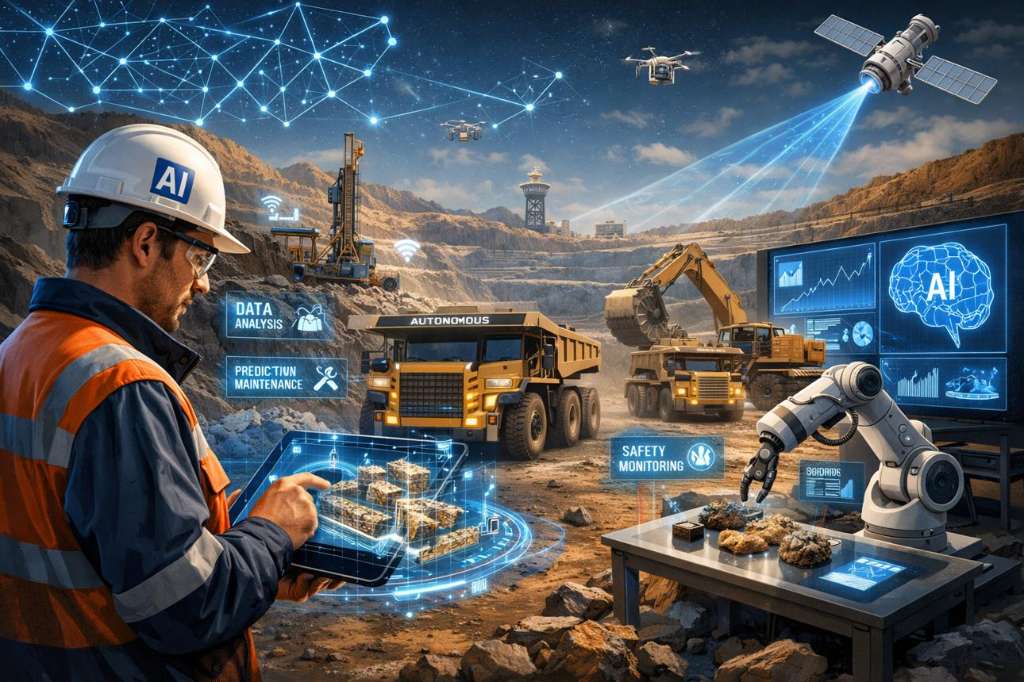
Australia’s mining industry is entering a new era of automation, with major companies including BHP increasing their use of artificial intelligence (AI), data systems and advanced technology to improve productivity, safety and operational efficiency. The company has reportedly told staff that future recruitment decisions will consider whether a role can be completed by artificial intelligence, raising questions about the impact of AI on traditional mining jobs.
The message has sparked discussion among workers and industry observers about how quickly AI will transform employment across the resources sector. While BHP has not suggested that all human roles will disappear, the company is examining how technology can support operations and reduce repetitive tasks.
BHP has been investing heavily in digital technologies, including artificial intelligence systems that help analyse data, improve equipment performance and support safer decision-making. The mining giant says AI is becoming an important part of modern mining operations, helping teams identify problems earlier, improve reliability and make better operational decisions.
The move reflects a broader trend across the global mining industry, where companies are adopting automation for activities such as equipment monitoring, mineral processing, maintenance planning and transport operations. Technologies such as AI-powered inspections, automated systems and predictive analytics are increasingly being used to improve efficiency and reduce risks for workers.
However, the growing role of AI has raised concerns among some employees about job security and future career opportunities. Workers and unions argue that technological changes must be introduced responsibly, with proper consultation, training opportunities and support for employees whose roles may change.
Mining remains one of Australia’s largest employment sectors, providing thousands of direct and indirect jobs across regions including Western Australia’s Pilbara, Queensland’s mining communities and South Australia’s resources areas. Many roles require specialist skills, practical experience and human decision-making that cannot easily be replaced by technology.
Industry leaders argue that AI should be viewed as a tool that works alongside employees rather than simply replacing workers. They say the future mining workforce will require new skills, including data analysis, technology management, automation knowledge and digital problem-solving abilities.
BHP has also continued to recruit for a range of operational, engineering and technology positions, showing that while some tasks may become automated, demand remains for skilled workers who can manage and operate increasingly advanced mining systems.
The debate comes at a time when BHP is already facing major workplace discussions, including industrial action involving workers at its Port Hedland operations over pay and conditions.
As artificial intelligence continues to develop, Australia’s mining sector faces the challenge of balancing innovation with employment security. The coming years are expected to bring significant changes in how mining companies hire, train and support their workforce.
MiningWorkersArtificialIncludingIntelligence
Australia’s mining industry is entering a new era of automation, with major companies including BHP increasing their use of artificial intelligence (AI), data systems and advanced technology to improve productivity, safety and operational efficiency. The company has reportedly told staff that future recruitment decisions will consider whether a role can be completed by artificial intelligence, raising questions about the impact of AI on traditional mining jobs.
The message has sparked discussion among workers and industry observers about how quickly AI will transform employment across the resources sector. While BHP has not suggested that all human roles will disappear, the company is examining how technology can support operations and reduce repetitive tasks.
BHP has been investing heavily in digital technologies, including artificial intelligence systems that help analyse data, improve equipment performance and support safer decision-making. The mining giant says AI is becoming an important part of modern mining operations, helping teams identify problems earlier, improve reliability and make better operational decisions.
The move reflects a broader trend across the global mining industry, where companies are adopting automation for activities such as equipment monitoring, mineral processing, maintenance planning and transport operations. Technologies such as AI-powered inspections, automated systems and predictive analytics are increasingly being used to improve efficiency and reduce risks for workers.
However, the growing role of AI has raised concerns among some employees about job security and future career opportunities. Workers and unions argue that technological changes must be introduced responsibly, with proper consultation, training opportunities and support for employees whose roles may change.
Mining remains one of Australia’s largest employment sectors, providing thousands of direct and indirect jobs across regions including Western Australia’s Pilbara, Queensland’s mining communities and South Australia’s resources areas. Many roles require specialist skills, practical experience and human decision-making that cannot easily be replaced by technology.
Industry leaders argue that AI should be viewed as a tool that works alongside employees rather than simply replacing workers. They say the future mining workforce will require new skills, including data analysis, technology management, automation knowledge and digital problem-solving abilities.
BHP has also continued to recruit for a range of operational, engineering and technology positions, showing that while some tasks may become automated, demand remains for skilled workers who can manage and operate increasingly advanced mining systems.
The debate comes at a time when BHP is already facing major workplace discussions, including industrial action involving workers at its Port Hedland operations over pay and conditions.
As artificial intelligence continues to develop, Australia’s mining sector faces the challenge of balancing innovation with employment security. The coming years are expected to bring significant changes in how mining companies hire, train and support their workforce.
Tesla is preparing to bring its driverless Cybercab to Australia for a preview, giving Australians an early look at the company’s autonomous vehicle tec...
A 15-year-old Pacific Lutheran College student has developed a privacy-first women’s health app and presented her work at a major national cyber event.
Greater Geelong Council wants data-centre operators to contribute to local infrastructure as community concerns grow over energy, water use and developm...
The Federal Government is preparing new measures targeting temporary visas, visa overstayers, international students and visa-hopping, while maintaining...
One Nation’s proposed major reduction in migration has triggered warnings that a sharp cut to population growth could weaken Australia’s economy and cre...
A Canberra woman has become the first person in the ACT whose death has been linked to a highly potent synthetic opioid, prompting renewed concern about...
Canberra’s Commonwealth Park has welcomed visitors for the annual Floriade festival, bringing flowers, entertainment and spring activities to the city.
Cairns Regional Council has unanimously voted to seek $400,000 in Queensland Government funding for a program designed to connect local businesses with the region’s growing film...
An automated external defibrillator and memorial plaque have been installed at Ellery Creek Big Hole following the death of disability advocate Ellen Fr...
Queensland firefighters spent several hours monitoring a significant grass fire at Mary Kinross Park in Bargara, near Bundaberg, after the blaze broke out on Wednesday evening....