Expo '88 Legacy Offers Lessons for Brisbane's 2032 Olympic Future
By Neha Maurya · Published 13 Jun 2026 · Updated 13 Jun 2026
Brisbane, Queensland · Queensland News
Safety note: Admin approval is an initial review, not a guarantee that every detail is correct. Check important or urgent claims with official sources and report anything inaccurate or unsafe.
As Brisbane prepares to host the 2032 Olympic Games, historians and urban planners are looking back at Expo '88 to understand how major international events can shape a city's identity for generations.
As Brisbane counts down to the 2032 Olympic and Paralympic Games, many Queenslanders are reflecting on another landmark event that transformed the city — World Expo '88.
Held over six months in 1988, the international exposition attracted more than 15 million visitors, introducing Brisbane to a global audience and fundamentally reshaping the city's cultural and physical landscape. Today, historians and planners believe the event offers valuable lessons as preparations for the Olympics continue.
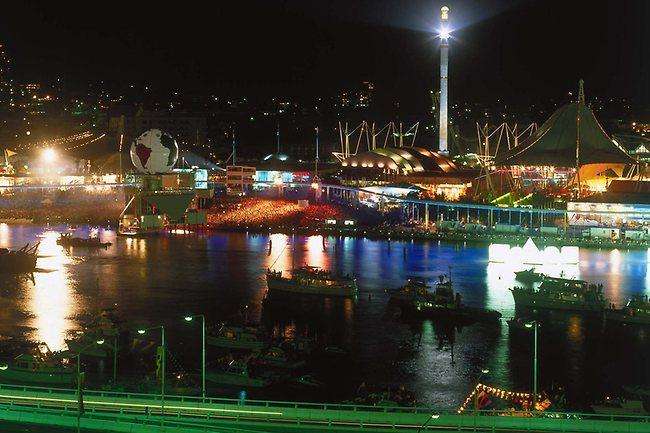
Before Expo '88, the area now known as South Bank Parklands was largely an industrial and underutilised riverside precinct. The expo triggered an ambitious urban renewal project that reimagined the site as a public destination focused on recreation, culture and community use.
Stephanie Wyeth, an associate professor at the University of Queensland's School of Architecture, Design and Planning, said the event demonstrated the importance of ensuring major infrastructure projects deliver long-term benefits beyond the event itself.
According to Wyeth, future planning for Olympic venues should prioritise the experiences of residents and provide opportunities for communities to influence how spaces are used after the Games conclude.
One of the most enduring symbols of Expo '88 is the Skyneedle, the 88-metre tower originally positioned on the South Bank riverfront. Intended to be relocated overseas following the exposition, the structure was ultimately saved through the intervention of Queensland hairdressing entrepreneur Stefan Ackerie, who purchased it to ensure it remained in Brisbane.
Today, the Skyneedle still stands in South Brisbane, serving as a reminder of the city's transformation during the late 1980s.
Stefan has argued that Brisbane should preserve key elements created for the 2032 Olympics rather than allowing them to disappear once the event ends.
"Don't let stuff go. It belongs to the city," he said while reflecting on the importance of retaining meaningful landmarks.
Expo '88 also left behind several other physical reminders of the event, including the Nepalese Peace Pagoda at South Bank and the Japanese Garden, which was relocated to the Brisbane Botanic Gardens at Mount Coot-tha.
Beyond infrastructure, historians say Expo '88 broadened Brisbane's outlook by exposing residents to international cultures, technologies and ideas at a scale the city had rarely experienced before.
The parallels with the upcoming Olympics are clear.
Like Expo '88, the Brisbane 2032 Games represent an opportunity to strengthen tourism, stimulate investment and showcase Queensland to the world. However, planners are increasingly focused on ensuring these benefits continue long after the closing ceremony.
The challenge lies in balancing short-term excitement with thoughtful, community-focused development.
As Brisbane evolves into a global host city, Expo '88 remains a powerful example of how major events can leave a lasting legacy when designed with future generations in mind.
Nearly four decades later, South Bank has become one of Australia's most beloved urban spaces — evidence that the true success of a world event is measured not only by attendance figures but by the lasting value it creates for the people who call the city home.
With the Olympic countdown underway, many hope Brisbane can once again seize the opportunity to shape a legacy that extends far beyond the spotlight of international attention.
BrisbaneExpoCityEventSouth
As Brisbane counts down to the 2032 Olympic and Paralympic Games, many Queenslanders are reflecting on another landmark event that transformed the city — World Expo '88.
Held over six months in 1988, the international exposition attracted more than 15 million visitors, introducing Brisbane to a global audience and fundamentally reshaping the city's cultural and physical landscape. Today, historians and planners believe the event offers valuable lessons as preparations for the Olympics continue.
Before Expo '88, the area now known as South Bank Parklands was largely an industrial and underutilised riverside precinct. The expo triggered an ambitious urban renewal project that reimagined the site as a public destination focused on recreation, culture and community use.
Stephanie Wyeth, an associate professor at the University of Queensland's School of Architecture, Design and Planning, said the event demonstrated the importance of ensuring major infrastructure projects deliver long-term benefits beyond the event itself.
According to Wyeth, future planning for Olympic venues should prioritise the experiences of residents and provide opportunities for communities to influence how spaces are used after the Games conclude.
One of the most enduring symbols of Expo '88 is the Skyneedle, the 88-metre tower originally positioned on the South Bank riverfront. Intended to be relocated overseas following the exposition, the structure was ultimately saved through the intervention of Queensland hairdressing entrepreneur Stefan Ackerie, who purchased it to ensure it remained in Brisbane.
Today, the Skyneedle still stands in South Brisbane, serving as a reminder of the city's transformation during the late 1980s.
Stefan has argued that Brisbane should preserve key elements created for the 2032 Olympics rather than allowing them to disappear once the event ends.
"Don't let stuff go. It belongs to the city," he said while reflecting on the importance of retaining meaningful landmarks.
Expo '88 also left behind several other physical reminders of the event, including the Nepalese Peace Pagoda at South Bank and the Japanese Garden, which was relocated to the Brisbane Botanic Gardens at Mount Coot-tha.
Beyond infrastructure, historians say Expo '88 broadened Brisbane's outlook by exposing residents to international cultures, technologies and ideas at a scale the city had rarely experienced before.
The parallels with the upcoming Olympics are clear.
Like Expo '88, the Brisbane 2032 Games represent an opportunity to strengthen tourism, stimulate investment and showcase Queensland to the world. However, planners are increasingly focused on ensuring these benefits continue long after the closing ceremony.
The challenge lies in balancing short-term excitement with thoughtful, community-focused development.
As Brisbane evolves into a global host city, Expo '88 remains a powerful example of how major events can leave a lasting legacy when designed with future generations in mind.
Nearly four decades later, South Bank has become one of Australia's most beloved urban spaces — evidence that the true success of a world event is measured not only by attendance figures but by the lasting value it creates for the people who call the city home.
With the Olympic countdown underway, many hope Brisbane can once again seize the opportunity to shape a legacy that extends far beyond the spotlight of international attention.
Darwin Northern Territory · Other News · 01 Sep 2026
A scenic hike through Butterfly Gorge in the Northern Territory turned into a frightening experience when a buffalo charged at two hikers. ABC Darwin reported the story today, 1...
Coffs Harbour New South Wales · Other News · 01 Sep 2026
A Safe Work NSW inspection blitz across the Coffs Harbour region has uncovered dozens of workplace-safety issues in the horticulture industry. The operation followed concerns ab...
A major Queensland Government infrastructure investment is set to unlock thousands of new homes across the Fraser Coast, including projects in Maryborough.
Queensland's emerging football prospects are coming together for a three-day Brisbane Lions State Academy showcase, giving young players an opportunity...
A Wavell Heights enrolled nurse has been charged with four counts of alleged sexual assault and one count of wilful exposure, with his professional regi...
A 24-year-old Carina Heights man has been charged with 36 offences following an investigation into alleged break-ins, vehicle offences and other propert...
Cairns Regional Council has unanimously voted to seek $400,000 in Queensland Government funding for a program designed to connect local businesses with the region’s growing film...
An automated external defibrillator and memorial plaque have been installed at Ellery Creek Big Hole following the death of disability advocate Ellen Fr...
Queensland firefighters spent several hours monitoring a significant grass fire at Mary Kinross Park in Bargara, near Bundaberg, after the blaze broke out on Wednesday evening....