Safety note: Admin approval is an initial review, not a guarantee that every detail is correct. Check important or urgent claims with official sources and report anything inaccurate or unsafe.
Source and credit: Contributor's own report
Fire Trucks Damaged After Hazard Reduction Burn Escapes Containment in Sydney's South-West - Sydney, NSW
Smart summary
Multiple Rural Fire Service trucks were damaged after a planned hazard reduction burn at Wedderburn in Sydney's south-west escaped containment on Saturday.
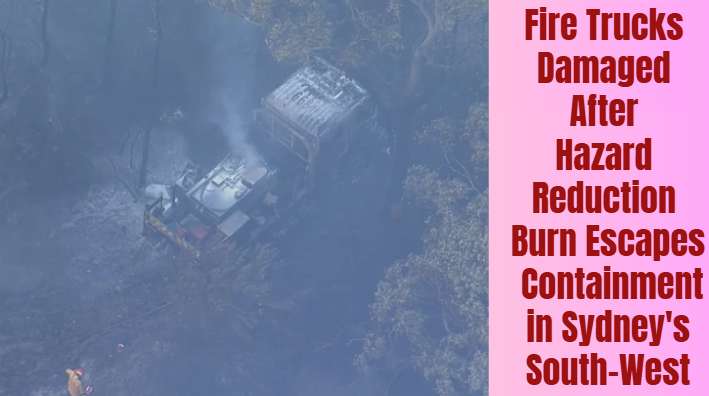
A planned hazard reduction burn in Sydney’s south-west became difficult to control on Saturday, with multiple Rural Fire Service (RFS) fire trucks damaged after the fire escaped its containment area.
The incident occurred at Wedderburn, an area south-west of Sydney, during a planned operation designed to reduce bushfire fuel and lower the risk of future uncontrolled fires. Hazard reduction burns are regularly carried out across New South Wales as part of preparations for the bushfire season.
The burn was intended to be controlled by firefighters within predetermined containment lines. However, conditions changed during the operation and the fire moved beyond the area that crews had planned to burn. The situation required firefighters to respond to the developing fire while protecting equipment and surrounding areas.
Reports published on Saturday said multiple RFS vehicles were damaged during the incident, with one fire truck reported to have been destroyed. Nineteen people were also reported to have been affected by the incident, although the available reports did not indicate that the event resulted in a major loss of life.
Hazard reduction burning is an important part of bushfire management in NSW. The RFS describes hazard reduction operations as planned burns intended to reduce bushfire hazards. Such operations can involve deliberately burning vegetation under selected weather and fuel conditions so that future bushfires have less combustible material available.
The incident highlights the operational risks that firefighters can face even during planned burns. Fire behaviour can change quickly depending on wind, temperature, humidity, vegetation and terrain. Once a burn moves outside its intended containment area, additional crews and equipment may be required to manage the situation.
The NSW Rural Fire Service continues to monitor fire incidents across the state and advises residents to remain aware of local fire conditions. Its incident system provides information about active bushfires, hazard-reduction operations and other emergency incidents.
The Wedderburn incident also comes as NSW authorities continue carrying out planned fuel-reduction work ahead of the warmer months. A separate NSW Government hazard-reduction operation at Werakata National Park was scheduled across September 25 and 26, involving an 85-hectare area and temporary road and track closures. Authorities warned that smoke from hazard-reduction burns can affect visibility and people with respiratory conditions.
The Wedderburn incident serves as a reminder that planned fire operations can still become challenging when conditions change. Fire crews are expected to continue monitoring the affected area and dealing with any remaining risks.
FireIncidentPlannedAreaBurn
A planned hazard reduction burn in Sydney’s south-west became difficult to control on Saturday, with multiple Rural Fire Service (RFS) fire trucks damaged after the fire escaped its containment area.
The incident occurred at Wedderburn, an area south-west of Sydney, during a planned operation designed to reduce bushfire fuel and lower the risk of future uncontrolled fires. Hazard reduction burns are regularly carried out across New South Wales as part of preparations for the bushfire season.
The burn was intended to be controlled by firefighters within predetermined containment lines. However, conditions changed during the operation and the fire moved beyond the area that crews had planned to burn. The situation required firefighters to respond to the developing fire while protecting equipment and surrounding areas.
Reports published on Saturday said multiple RFS vehicles were damaged during the incident, with one fire truck reported to have been destroyed. Nineteen people were also reported to have been affected by the incident, although the available reports did not indicate that the event resulted in a major loss of life.
Hazard reduction burning is an important part of bushfire management in NSW. The RFS describes hazard reduction operations as planned burns intended to reduce bushfire hazards. Such operations can involve deliberately burning vegetation under selected weather and fuel conditions so that future bushfires have less combustible material available.
The incident highlights the operational risks that firefighters can face even during planned burns. Fire behaviour can change quickly depending on wind, temperature, humidity, vegetation and terrain. Once a burn moves outside its intended containment area, additional crews and equipment may be required to manage the situation.
The NSW Rural Fire Service continues to monitor fire incidents across the state and advises residents to remain aware of local fire conditions. Its incident system provides information about active bushfires, hazard-reduction operations and other emergency incidents.
The Wedderburn incident also comes as NSW authorities continue carrying out planned fuel-reduction work ahead of the warmer months. A separate NSW Government hazard-reduction operation at Werakata National Park was scheduled across September 25 and 26, involving an 85-hectare area and temporary road and track closures. Authorities warned that smoke from hazard-reduction burns can affect visibility and people with respiratory conditions.
The Wedderburn incident serves as a reminder that planned fire operations can still become challenging when conditions change. Fire crews are expected to continue monitoring the affected area and dealing with any remaining risks.
Central Coast New South Wales · Emergency News · 24 Sep 2026
Emergency services responded to a fire at the former Woy Woy Leagues Club on the Central Coast on Thursday, 24 September 2026. The abandoned venue was reported to have gone up i...
Thousands of homes and businesses around Mildura in north-west Victoria are dealing with an extended power outage after a vehicle crashed into a power pole at Birdwoodton. The i...
Two teenage boys were taken to hospital after falling from a dam wall at a popular swimming location in Brisbane’s north during the first weekend of Que...
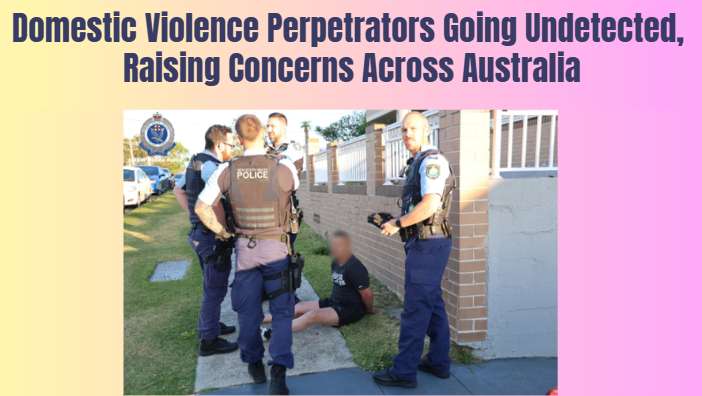
Recent domestic violence-related deaths in New South Wales have highlighted concerns about gaps in identifying alleged perpetrators before serious viole...
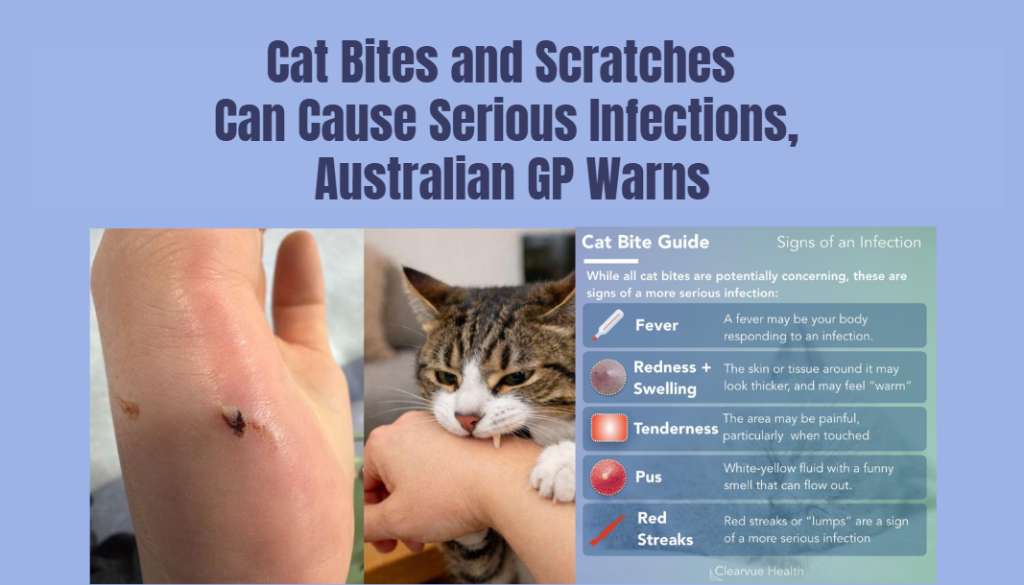
Australian health experts are warning that cat bites and scratches can cause severe infections, with hospitalisations from cat-related injuries nearly t...
A parliamentary petition calling for specialist endometriosis education in NSW public high schools has attracted more than 1,700 signatures, as health a...
A firearms expert has told a court that a gun presented as evidence in the murder investigation involving two Australian brothers and their American fri...
Wet conditions at the Melbourne Cricket Ground are creating difficult conditions for the AFL Grand Final, while poor weather has also disrupted flights...
Amateur astronomers are using new telescope technology to photograph the Moon, planets and distant galaxies from Brisbane homes, showing that city skies...
Australian cyclist Sarah Gigante is back racing internationally after more than a year away from competition and will lead a four-rider Australian team...
Police have arrested three teenagers after a man was allegedly stabbed while confronting a group of boys attempting to break into a car in Melbourne’s s...