Safety note: Admin approval is an initial review, not a guarantee that every detail is correct. Check important or urgent claims with official sources and report anything inaccurate or unsafe.
Source and credit: Contributor's own report
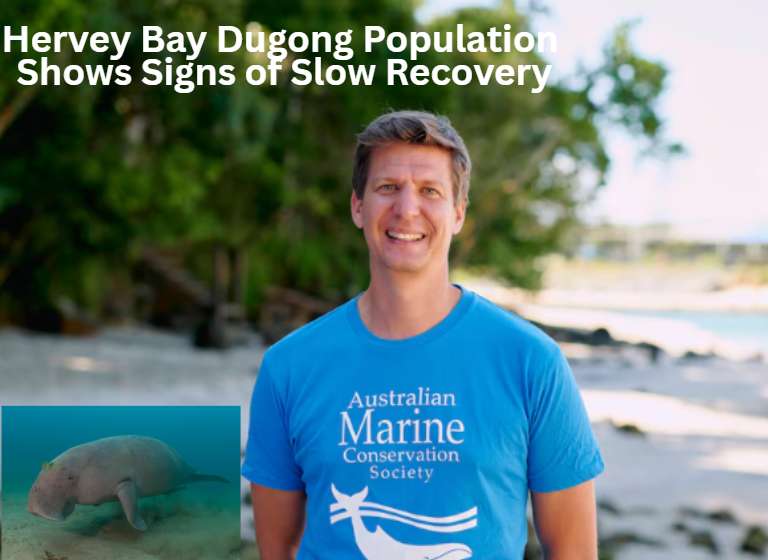
Hervey Bay Dugong Population Shows Signs of Slow Recovery - Hervey Bay, QLD
Smart summary
Researchers have recorded a small increase in dugong numbers around Hervey Bay and the Great Sandy Strait after severe flooding damaged seagrass habitats in 2022.
Dugong populations around Hervey Bay and the Great Sandy Strait are showing early signs of recovery, according to researchers monitoring the vulnerable marine mammals in south-east Queensland.
Aerial surveys conducted by researchers from James Cook University and Trop WATER found that the number of dugongs observed in the region increased between 2022 and 2024. Researchers counted about 109 dugongs during the 2024 survey, compared with 103 recorded in 2022.
The increase follows major flooding in 2022 that damaged extensive areas of seagrass, an important food source for dugongs. Since then, researchers have observed signs that seagrass habitats are recovering in several coastal areas.
The recovery of seagrass appears to have influenced where dugongs are being found. During the 2022 survey, many of the animals were concentrated in central parts of Hervey Bay. By 2024, dugongs had spread further south towards the Great Sandy Strait.
Researchers say the movement could indicate that the animals are returning to areas where seagrass meadows are recovering.
However, scientists are cautious about describing the increase as a full population recovery. A major concern is the number of calves recorded during the survey.
Only three calves were observed in 2024, compared with nine in 2022. Researchers say this could indicate that some animals are still recovering from nutritional stress caused by the loss of seagrass habitat.
Dugongs depend heavily on seagrass for food, and the availability and quality of those meadows can affect their health and ability to reproduce.
Researchers used two methods to assess the population. Observers recorded the animals they could see from aircraft, while statistical correction methods were used to account for dugongs that may have been hidden because they were underwater, feeding or in deeper and murkier water.
The results provide an important snapshot of the local population, but researchers say additional surveys will be needed to determine whether the positive trend continues.
The monitoring also involves consultation with the Butchulla people, the Traditional Owners of the coastal country stretching from Burrum Heads to Rainbow Beach. The Butchulla name for dugong is “yuangan”, and protecting seagrass and sea country is an important part of local conservation efforts.
Researchers are hoping to secure funding for another aerial survey in 2027. A third survey could help establish whether dugong numbers are continuing to increase and whether more calves are being recorded.
Researchers have also suggested that local organisations could help fill gaps between large-scale surveys through smaller monitoring programs using drones or vessels.
For the community, protecting seagrass habitat remains an important part of supporting the dugong population. Boat users are also encouraged to slow down in areas where dugongs are present and watch carefully for animals near the surface.
The latest findings provide some encouraging evidence after the environmental damage caused by the 2022 floods. But the relatively small number of calves means scientists are continuing to monitor the population carefully.
The combination of recovering seagrass, wider dugong distribution and a modest increase in observed animals gives researchers a reason for cautious optimism while highlighting the need for continued monitoring and habitat protection.
ResearchersSeagrassDugongsAnimalsDugong
Dugong populations around Hervey Bay and the Great Sandy Strait are showing early signs of recovery, according to researchers monitoring the vulnerable marine mammals in south-east Queensland.
Aerial surveys conducted by researchers from James Cook University and Trop WATER found that the number of dugongs observed in the region increased between 2022 and 2024. Researchers counted about 109 dugongs during the 2024 survey, compared with 103 recorded in 2022.
The increase follows major flooding in 2022 that damaged extensive areas of seagrass, an important food source for dugongs. Since then, researchers have observed signs that seagrass habitats are recovering in several coastal areas.
The recovery of seagrass appears to have influenced where dugongs are being found. During the 2022 survey, many of the animals were concentrated in central parts of Hervey Bay. By 2024, dugongs had spread further south towards the Great Sandy Strait.
Researchers say the movement could indicate that the animals are returning to areas where seagrass meadows are recovering.
However, scientists are cautious about describing the increase as a full population recovery. A major concern is the number of calves recorded during the survey.
Only three calves were observed in 2024, compared with nine in 2022. Researchers say this could indicate that some animals are still recovering from nutritional stress caused by the loss of seagrass habitat.
Dugongs depend heavily on seagrass for food, and the availability and quality of those meadows can affect their health and ability to reproduce.
Researchers used two methods to assess the population. Observers recorded the animals they could see from aircraft, while statistical correction methods were used to account for dugongs that may have been hidden because they were underwater, feeding or in deeper and murkier water.
The results provide an important snapshot of the local population, but researchers say additional surveys will be needed to determine whether the positive trend continues.
The monitoring also involves consultation with the Butchulla people, the Traditional Owners of the coastal country stretching from Burrum Heads to Rainbow Beach. The Butchulla name for dugong is “yuangan”, and protecting seagrass and sea country is an important part of local conservation efforts.
Researchers are hoping to secure funding for another aerial survey in 2027. A third survey could help establish whether dugong numbers are continuing to increase and whether more calves are being recorded.
Researchers have also suggested that local organisations could help fill gaps between large-scale surveys through smaller monitoring programs using drones or vessels.
For the community, protecting seagrass habitat remains an important part of supporting the dugong population. Boat users are also encouraged to slow down in areas where dugongs are present and watch carefully for animals near the surface.
The latest findings provide some encouraging evidence after the environmental damage caused by the 2022 floods. But the relatively small number of calves means scientists are continuing to monitor the population carefully.
The combination of recovering seagrass, wider dugong distribution and a modest increase in observed animals gives researchers a reason for cautious optimism while highlighting the need for continued monitoring and habitat protection.
Isis Central Sugar Mill is seeking financial assistance from the Queensland Government after mechanical problems and weaker sugar prices put pressure on...
A Darwin teacher is challenging an interim decision to suspend her registration while the Northern Territory Teacher Registration Board investigates all...
A Gippsland mother has been charged after allegedly placing a recording device in her non-verbal seven-year-old son's clothing following concerns about...
A growing number of young Australians are taking up birdwatching, bringing fresh interest to the Broome Bird Observatory and the migratory shorebirds of...
A new Cooperative Research Centre based at the University of Queensland's Brisbane city campus will bring researchers, industry and government together...
A 13-year-old Queensland rider has been invited to compete at two youth world bull-riding finals in the United States, with the Mount Isa Rodeo providin...
A Queensland man has been charged with allegedly bribing a foreign public official while Australian and Bangladeshi authorities continue investigating t...
Two men have been charged after detectives investigating an alleged large-scale drug supply network seized cocaine, methylamphetamine, MDMA and other it...