NAB Shifts Interest Rate Forecasts Amid Record Low Consumer Sentiment
By Neha Maurya · Published 09 Jun 2026 · Updated 09 Jun 2026
Sydney, NSW · New South Wales News
Safety note: Admin approval is an initial review, not a guarantee that every detail is correct. Check important or urgent claims with official sources and report anything inaccurate or unsafe.
Source and credit: Contributor's own report
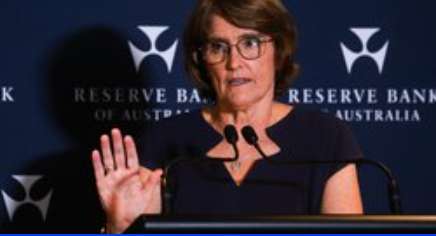
A conceptual image representing Australian financial and economic trends.
Smart summary
National Australia Bank has revised its economic outlook, moving from predicted rate hikes to potential cuts as Australians express record dissatisfaction with the Federal Budget.
National Australia Bank has dramatically revised its interest rate forecast, abandoning expectations of another Reserve Bank increase and instead predicting that the next movement in official rates could be downward.
The change comes as fresh Westpac-Melbourne Institute consumer sentiment figures revealed Australians remain deeply pessimistic about their financial outlook, with reactions to the recent Federal Budget ranking among the most negative recorded in the survey's history.
NAB economists Sally Auld and Gareth Spence said they no longer expect the Reserve Bank of Australia to lift the cash rate again this year. Instead, they believe the current cash rate has likely reached its peak.
"We no longer expect the RBA to hike by 25 basis points in August, and now see the cash rate peaking at the current rate for the cycle," NAB said in its latest economic update. "The next move in the cash rate is likely to be down, but the timing is uncertain."
The revised forecast reflects growing concerns about slowing economic activity, weakening consumer confidence and rising unemployment, despite inflation remaining above the Reserve Bank's preferred target range.
The latest Westpac-Melbourne Institute Consumer Sentiment Index fell to 80.6 points in June, indicating that pessimists continue to significantly outnumber optimists. Any reading below 100 reflects negative sentiment among households.
Westpac's head of Australian macro-forecasting, Matthew Hassan, described the result as one of the weakest recorded in the survey's five-decade history.
"At 80.6, the latest monthly index read is back amongst the weakest seen in the fifty-year history of the survey," Hassan said.
Rising mortgage repayments, persistent inflation, higher petrol prices and uncertainty surrounding recent policy changes have continued to place pressure on household budgets.
The survey found many Australians remain concerned about their family finances, with cost-of-living issues dominating public sentiment. Inflation and budget-related policies were identified as key factors influencing confidence levels.
The findings also highlighted cooling expectations within the housing market, as consumers reassessed their outlook amid affordability concerns and broader economic uncertainty.
While some major banks continue to anticipate further interest rate increases, NAB's revised outlook suggests that weakening economic conditions could eventually prompt the Reserve Bank to consider easing monetary policy.
Financial markets remain divided over the timing of any future changes, with economists closely monitoring inflation trends, employment figures and consumer spending patterns in the months ahead.
For Australian households already grappling with elevated living costs, NAB's updated forecast may offer a degree of hope that borrowing costs could stabilise or potentially decline in the future.
However, economists caution that any decision by the Reserve Bank will depend heavily on incoming economic data and whether inflation returns sustainably towards its target range.
With consumer confidence hovering near historic lows and families continuing to feel financial strain, the outlook for Australia's economy remains uncertain as policymakers balance the competing challenges of inflation control and supporting economic growth.
RateBankConsumerEconomicInflation
National Australia Bank has dramatically revised its interest rate forecast, abandoning expectations of another Reserve Bank increase and instead predicting that the next movement in official rates could be downward.
The change comes as fresh Westpac-Melbourne Institute consumer sentiment figures revealed Australians remain deeply pessimistic about their financial outlook, with reactions to the recent Federal Budget ranking among the most negative recorded in the survey's history.
NAB economists Sally Auld and Gareth Spence said they no longer expect the Reserve Bank of Australia to lift the cash rate again this year. Instead, they believe the current cash rate has likely reached its peak.
"We no longer expect the RBA to hike by 25 basis points in August, and now see the cash rate peaking at the current rate for the cycle," NAB said in its latest economic update. "The next move in the cash rate is likely to be down, but the timing is uncertain."
The revised forecast reflects growing concerns about slowing economic activity, weakening consumer confidence and rising unemployment, despite inflation remaining above the Reserve Bank's preferred target range.
The latest Westpac-Melbourne Institute Consumer Sentiment Index fell to 80.6 points in June, indicating that pessimists continue to significantly outnumber optimists. Any reading below 100 reflects negative sentiment among households.
Westpac's head of Australian macro-forecasting, Matthew Hassan, described the result as one of the weakest recorded in the survey's five-decade history.
"At 80.6, the latest monthly index read is back amongst the weakest seen in the fifty-year history of the survey," Hassan said.
Rising mortgage repayments, persistent inflation, higher petrol prices and uncertainty surrounding recent policy changes have continued to place pressure on household budgets.
The survey found many Australians remain concerned about their family finances, with cost-of-living issues dominating public sentiment. Inflation and budget-related policies were identified as key factors influencing confidence levels.
The findings also highlighted cooling expectations within the housing market, as consumers reassessed their outlook amid affordability concerns and broader economic uncertainty.
While some major banks continue to anticipate further interest rate increases, NAB's revised outlook suggests that weakening economic conditions could eventually prompt the Reserve Bank to consider easing monetary policy.
Financial markets remain divided over the timing of any future changes, with economists closely monitoring inflation trends, employment figures and consumer spending patterns in the months ahead.
For Australian households already grappling with elevated living costs, NAB's updated forecast may offer a degree of hope that borrowing costs could stabilise or potentially decline in the future.
However, economists caution that any decision by the Reserve Bank will depend heavily on incoming economic data and whether inflation returns sustainably towards its target range.
With consumer confidence hovering near historic lows and families continuing to feel financial strain, the outlook for Australia's economy remains uncertain as policymakers balance the competing challenges of inflation control and supporting economic growth.
Darwin Northern Territory · Other News · 01 Sep 2026
A scenic hike through Butterfly Gorge in the Northern Territory turned into a frightening experience when a buffalo charged at two hikers. ABC Darwin reported the story today, 1...
Coffs Harbour New South Wales · Other News · 01 Sep 2026
A Safe Work NSW inspection blitz across the Coffs Harbour region has uncovered dozens of workplace-safety issues in the horticulture industry. The operation followed concerns ab...
A major Queensland Government infrastructure investment is set to unlock thousands of new homes across the Fraser Coast, including projects in Maryborough.
A 22-year-old man has been charged after a police pursuit involving an allegedly stolen Toyota utility near Moree in northern New South Wales. NSW Police published the update on...
Sydney New South Wales · General News · 15 Sep 2026
A tragic incident in Auburn, in Sydney’s west, has resulted in the death of a three-year-old girl after she was struck by a car in a residential driveway on Tuesday, September 1...
A 16-year-old boy is due to appear before a children’s court after being charged following an alleged brawl at a train station in Penrith, in Sydney’s west. The incident occurre...
A man in his 40s has been shot dead at the doorway of a home in Merrylands West, western Sydney, prompting a major police investigation. The shooting occurred on Wednesday after...
A 36-year-old man has been charged after investigators allegedly found fraudulent identification documents, cloned number plates, cash and drug-manufact...
A Sydney court has heard that a man sent 249 messages to a former partner within 24 hours, with the messages treated as a single alleged breach of an ap...
A high-profile athlete has returned to court and told the hearing that an alleged unwanted kiss by former broadcaster Alan Jones remained difficult to f...
Work on the $150 million Sydney Town Hall Square project has been paused after the NSW Planning Minister referred the development for review by the Inde...
Cairns Regional Council has unanimously voted to seek $400,000 in Queensland Government funding for a program designed to connect local businesses with the region’s growing film...
An automated external defibrillator and memorial plaque have been installed at Ellery Creek Big Hole following the death of disability advocate Ellen Fr...
Queensland firefighters spent several hours monitoring a significant grass fire at Mary Kinross Park in Bargara, near Bundaberg, after the blaze broke out on Wednesday evening....