Safety note: Admin approval is an initial review, not a guarantee that every detail is correct. Check important or urgent claims with official sources and report anything inaccurate or unsafe.
Source and credit: Contributor's own report
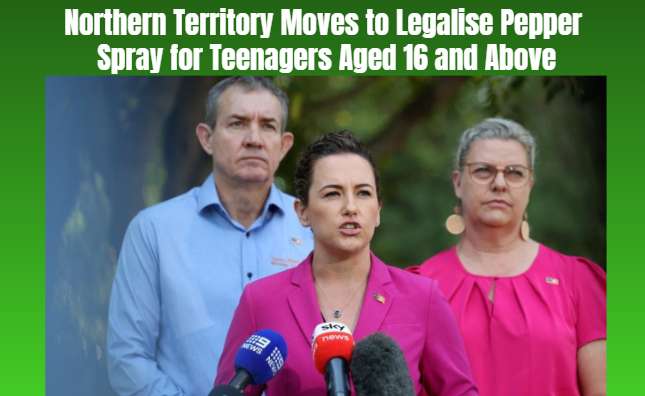
Northern Territory Moves to Legalise Pepper Spray for Teenagers Aged 16 and Above - Darwin, NT
Smart summary
The Northern Territory government plans to make pepper spray permanently legal for self-defence and extend eligibility to 16- and 17-year-olds, subject to conditions and parental or guardian consent.
The Northern Territory government has announced plans to permanently legalise oleoresin capsicum (OC) spray, commonly known as pepper spray, for self-defence and expand access to people aged 16 and 17. Chief Minister Lia Finocchiaro said the proposed changes followed a 12-month trial that began in September 2025. The trial allowed eligible adults to purchase OC spray from 11 approved firearms dealers across the Territory under specific conditions.
Under the proposed reforms, teenagers aged 16 and above would be eligible to buy the spray if they meet the required conditions and purchase it with a parent or guardian present and consenting. Buyers would still need to satisfy eligibility requirements, including declarations concerning relevant criminal history and existing police or court orders.
Finocchiaro said the government believed the changes would give more people a means of defending themselves in dangerous situations. She cited the responsibilities already given to many 16-year-olds, including employment and driving, as part of the rationale for extending access.
The proposed legislation would also change how OC spray can be used in certain workplaces and homes. Under the current trial, lawful use at licensed premises was limited to security officers. The planned reform would extend the self-defence provision to other people working at licensed venues.
Another proposed change would allow eligible members of a household to use spray purchased by another person in the home, provided they meet the required criteria and use it within the permitted circumstances. The government said the trial had been successful. Finocchiaro reported a 99 per cent success rate based on the number of canisters legally purchased during the trial period. Northern Territory Police Commissioner Martin Dole said more than 3,700 Territorians had legally purchased OC spray and more than 5,000 canisters had been sold.
Police also cited an incident in Alice Springs in which legally purchased OC spray was reportedly used to prevent a domestic violence incident. The government views such cases as evidence that the product can help people protect themselves.
However, the proposed expansion has prompted concerns from education representatives. Brian Gray, president of the Australian Education Union’s Northern Territory branch, questioned whether extending access to teenagers had been adequately considered.
Gray warned that students might bring the spray into schools or use it during disputes. He acknowledged that parents may worry about teenagers travelling or working late, but argued that access to a defensive weapon could introduce additional risks.
The government has said schools and teachers would have the authority to confiscate OC spray under the proposed legislation, and that it would not be permitted for use at school. The reforms are expected to pass through Northern Territory Parliament by the end of 2026. Until the proposed changes are enacted, the announcement should not be interpreted as meaning that every new eligibility provision is already in force.
The decision has opened a wider debate about personal safety, young people’s access to defensive weapons and the balance between protecting potential victims and preventing misuse.
SprayWouldProposedTerritoryAccess
The Northern Territory government has announced plans to permanently legalise oleoresin capsicum (OC) spray, commonly known as pepper spray, for self-defence and expand access to people aged 16 and 17. Chief Minister Lia Finocchiaro said the proposed changes followed a 12-month trial that began in September 2025. The trial allowed eligible adults to purchase OC spray from 11 approved firearms dealers across the Territory under specific conditions.
Under the proposed reforms, teenagers aged 16 and above would be eligible to buy the spray if they meet the required conditions and purchase it with a parent or guardian present and consenting. Buyers would still need to satisfy eligibility requirements, including declarations concerning relevant criminal history and existing police or court orders.
Finocchiaro said the government believed the changes would give more people a means of defending themselves in dangerous situations. She cited the responsibilities already given to many 16-year-olds, including employment and driving, as part of the rationale for extending access.
The proposed legislation would also change how OC spray can be used in certain workplaces and homes. Under the current trial, lawful use at licensed premises was limited to security officers. The planned reform would extend the self-defence provision to other people working at licensed venues.
Another proposed change would allow eligible members of a household to use spray purchased by another person in the home, provided they meet the required criteria and use it within the permitted circumstances. The government said the trial had been successful. Finocchiaro reported a 99 per cent success rate based on the number of canisters legally purchased during the trial period. Northern Territory Police Commissioner Martin Dole said more than 3,700 Territorians had legally purchased OC spray and more than 5,000 canisters had been sold.
Police also cited an incident in Alice Springs in which legally purchased OC spray was reportedly used to prevent a domestic violence incident. The government views such cases as evidence that the product can help people protect themselves.
However, the proposed expansion has prompted concerns from education representatives. Brian Gray, president of the Australian Education Union’s Northern Territory branch, questioned whether extending access to teenagers had been adequately considered.
Gray warned that students might bring the spray into schools or use it during disputes. He acknowledged that parents may worry about teenagers travelling or working late, but argued that access to a defensive weapon could introduce additional risks.
The government has said schools and teachers would have the authority to confiscate OC spray under the proposed legislation, and that it would not be permitted for use at school. The reforms are expected to pass through Northern Territory Parliament by the end of 2026. Until the proposed changes are enacted, the announcement should not be interpreted as meaning that every new eligibility provision is already in force.
The decision has opened a wider debate about personal safety, young people’s access to defensive weapons and the balance between protecting potential victims and preventing misuse.
Australia’s Foreign Minister has criticised the postponement of Palestinian elections, warning that continued delays could undermine democratic accounta...
One Nation’s Victorian deputy leader Colleen Harkin has rejected claims that an AI-generated campaign video was racist after criticism of its depiction...
The New South Wales government says 100 new public preschools will be ready by the first day of Term 1 in 2027, but questions remain about how many will...
Nicolette Di Lernia steps down as a parliamentary inquiry examines governance, volunteer disputes and the management of South Australia's historic herit...
A new report warns that rising rents, electricity bills, transport costs and food prices are placing severe pressure on households across the Northern T...
Residents of Darwin’s largest short-stay accommodation facility are facing relocation to Batchelor, around 100 kilometres away, amid concerns about acce...
Darwin City Council plans to lead a business delegation to China and Vietnam in December, with approximately $18,000 in ratepayer funding drawing critic...
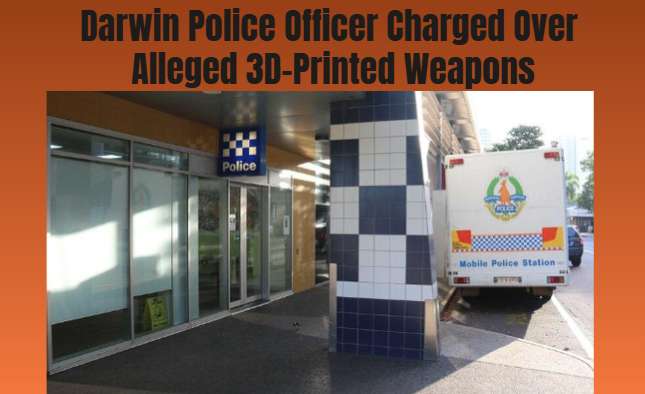
A probationary Northern Territory police constable has been charged with two alleged prohibited-weapon offences after officers reportedly found imitatio...
Authorities have closed four shops in regional Victoria suspected of selling illicit tobacco, marking the first such closures outside Melbourne and Geel...
A Brisbane magistrate has approved the transfer of Ashley Paul Griffith from Queensland to New South Wales, where he faces 202 additional charges relati...
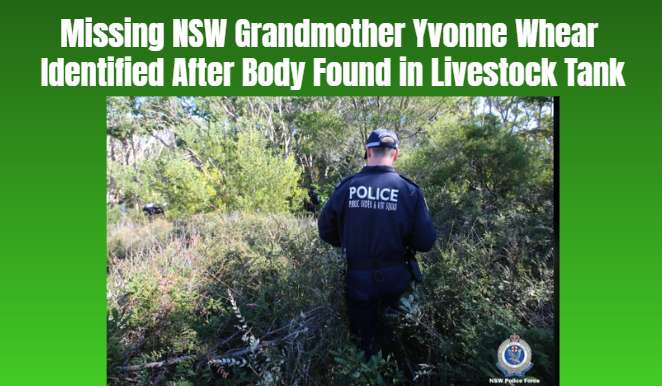
Police have identified the remains found in a disused livestock dip near Terragon as 73-year-old Yvonne Whear, who had been missing since February. Inve...
Queensland’s Court of Appeal has overturned a man’s previous acquittal in a 2009 alleged murder case, allowing a retrial after prosecutors presented fre...