Safety note: Admin approval is an initial review, not a guarantee that every detail is correct. Check important or urgent claims with official sources and report anything inaccurate or unsafe.
Source and credit: Contributor's own report
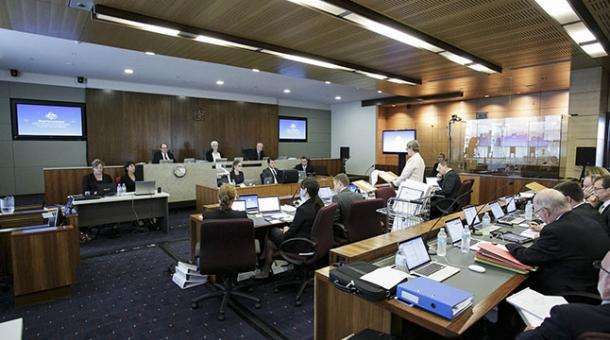
Social media companies criticised for refusing to engage with Bondi Royal Commission - Sydney, NSW
Smart summary
The Royal Commission into Antisemitism and Social Cohesion has criticised major social media platforms for failing to cooperate with its inquiry, warning that online services are playing an increasingly significant ro...
Australia's Royal Commission into Antisemitism and Social Cohesion has sharply criticised several major social media companies for refusing to meaningfully participate in its public hearings, raising concerns about the influence of online platforms in spreading hate speech, misinformation and extremist content. The commission said the lack of cooperation from some technology companies has made it more difficult to understand how online services contribute to rising social tensions.
The inquiry was established following the 2025 Bondi antisemitic terror attack and is examining how antisemitism, online radicalisation and declining social cohesion have affected Australian communities. Over recent weeks, the commission has heard evidence from victims of online abuse, academics, technology experts, media organisations and government agencies about the growing impact of digital platforms on public discourse.
Counsel assisting the commission told hearings that companies including X (formerly Twitter), Telegram and Reddit either declined to appear, provided only limited cooperation or failed to adequately respond to requests for information. Commissioners expressed concern that platforms with millions of Australian users were unwilling to publicly explain how they detect, moderate and remove antisemitic or extremist material.
The commission heard evidence that social media has become one of the primary methods through which hateful material, conspiracy theories and violent extremist content are distributed. Witnesses said recommendation algorithms, anonymous accounts and rapid sharing mechanisms can amplify harmful content far more quickly than traditional media. Experts argued that while most platforms have policies prohibiting hate speech, enforcement remains inconsistent and often lacks transparency.
Particular criticism was directed at X Corp, which was accused of resisting regulatory efforts to remove violent footage connected with the Bondi terror attack. Counsel assisting described some of the company's legal arguments as extraordinary and questioned whether the platform had demonstrated an appropriate level of responsibility toward Australian users.
The commission is also examining the broader role of public institutions and media organisations in maintaining social cohesion. Earlier hearings included evidence from executives at the ABC and SBS, who defended their editorial independence while rejecting claims that their journalism had contributed to antisemitism. Discussions have focused on balancing freedom of expression, responsible reporting and protection against harmful online content.
Commissioner Virginia Bell AC SC said understanding the operation of digital platforms is essential because online communication increasingly shapes public attitudes and community relationships. The inquiry is expected to consider whether stronger regulation, greater transparency requirements or additional obligations should be imposed on technology companies operating in Australia.
The Royal Commission will continue hearing evidence from technology experts, community organisations and government representatives before delivering its final recommendations later this year. Those recommendations may include reforms aimed at improving online safety, strengthening responses to hate speech and enhancing social cohesion across Australian communities.
CommissionSocialOnlineMediaCompanies
Australia's Royal Commission into Antisemitism and Social Cohesion has sharply criticised several major social media companies for refusing to meaningfully participate in its public hearings, raising concerns about the influence of online platforms in spreading hate speech, misinformation and extremist content. The commission said the lack of cooperation from some technology companies has made it more difficult to understand how online services contribute to rising social tensions.
The inquiry was established following the 2025 Bondi antisemitic terror attack and is examining how antisemitism, online radicalisation and declining social cohesion have affected Australian communities. Over recent weeks, the commission has heard evidence from victims of online abuse, academics, technology experts, media organisations and government agencies about the growing impact of digital platforms on public discourse.
Counsel assisting the commission told hearings that companies including X (formerly Twitter), Telegram and Reddit either declined to appear, provided only limited cooperation or failed to adequately respond to requests for information. Commissioners expressed concern that platforms with millions of Australian users were unwilling to publicly explain how they detect, moderate and remove antisemitic or extremist material.
The commission heard evidence that social media has become one of the primary methods through which hateful material, conspiracy theories and violent extremist content are distributed. Witnesses said recommendation algorithms, anonymous accounts and rapid sharing mechanisms can amplify harmful content far more quickly than traditional media. Experts argued that while most platforms have policies prohibiting hate speech, enforcement remains inconsistent and often lacks transparency.
Particular criticism was directed at X Corp, which was accused of resisting regulatory efforts to remove violent footage connected with the Bondi terror attack. Counsel assisting described some of the company's legal arguments as extraordinary and questioned whether the platform had demonstrated an appropriate level of responsibility toward Australian users.
The commission is also examining the broader role of public institutions and media organisations in maintaining social cohesion. Earlier hearings included evidence from executives at the ABC and SBS, who defended their editorial independence while rejecting claims that their journalism had contributed to antisemitism. Discussions have focused on balancing freedom of expression, responsible reporting and protection against harmful online content.
Commissioner Virginia Bell AC SC said understanding the operation of digital platforms is essential because online communication increasingly shapes public attitudes and community relationships. The inquiry is expected to consider whether stronger regulation, greater transparency requirements or additional obligations should be imposed on technology companies operating in Australia.
The Royal Commission will continue hearing evidence from technology experts, community organisations and government representatives before delivering its final recommendations later this year. Those recommendations may include reforms aimed at improving online safety, strengthening responses to hate speech and enhancing social cohesion across Australian communities.
Tesla is preparing to bring its driverless Cybercab to Australia for a preview, giving Australians an early look at the company’s autonomous vehicle tec...
A 15-year-old Pacific Lutheran College student has developed a privacy-first women’s health app and presented her work at a major national cyber event.
Greater Geelong Council wants data-centre operators to contribute to local infrastructure as community concerns grow over energy, water use and developm...
A 36-year-old man has been charged after investigators allegedly found fraudulent identification documents, cloned number plates, cash and drug-manufact...
A Sydney court has heard that a man sent 249 messages to a former partner within 24 hours, with the messages treated as a single alleged breach of an ap...
A high-profile athlete has returned to court and told the hearing that an alleged unwanted kiss by former broadcaster Alan Jones remained difficult to f...
Work on the $150 million Sydney Town Hall Square project has been paused after the NSW Planning Minister referred the development for review by the Inde...
Cairns Regional Council has unanimously voted to seek $400,000 in Queensland Government funding for a program designed to connect local businesses with the region’s growing film...
An automated external defibrillator and memorial plaque have been installed at Ellery Creek Big Hole following the death of disability advocate Ellen Fr...
Queensland firefighters spent several hours monitoring a significant grass fire at Mary Kinross Park in Bargara, near Bundaberg, after the blaze broke out on Wednesday evening....