Safety note: Admin approval is an initial review, not a guarantee that every detail is correct. Check important or urgent claims with official sources and report anything inaccurate or unsafe.
Source and credit: Contributor's own report
A conceptual image representing artificial intelligence and academic writing.
Smart summary
A Sydney-based academic has faced significant criticism after an opinion piece written by generative AI was removed from publication, sparking a debate over the use of technology in higher education.
A controversy involving artificial intelligence, academic integrity and media ethics has emerged after a senior Sydney university academic admitted using generative AI to help write an opinion article that encouraged students not to rely on the technology to "cut corners" in their studies.
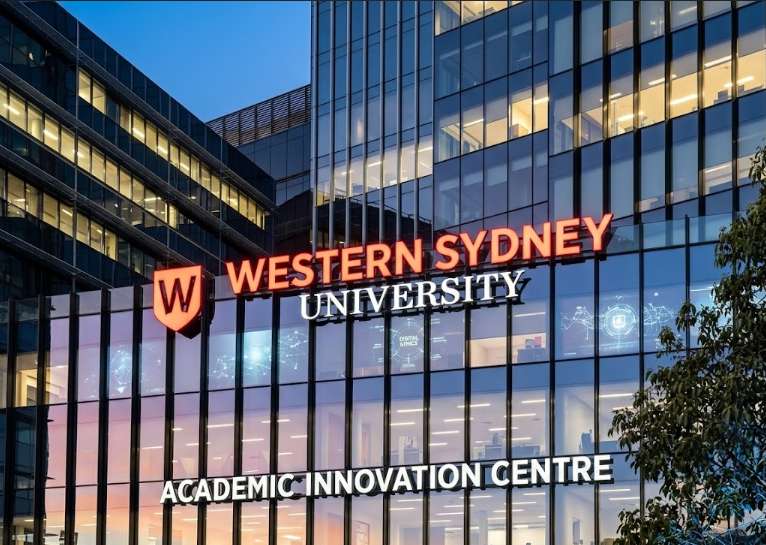
Professor Cath Ellis, Pro Vice-Chancellor for Quality and Integrity at Western Sydney University, authored an opinion piece published by The Sydney Morning Herald in response to concerns about the growing influence of artificial intelligence in higher education.
The article was written as a rebuttal to comments made by Kylie Moore-Gilbert, who had argued that students should think carefully before enrolling in university because AI tools were making it easier to outsource learning and assessment tasks. Ellis countered that university education remained valuable and urged students to engage genuinely with their studies rather than relying on shortcuts.
However, controversy erupted after it was revealed that generative AI had been used during the creation of the article itself. The opinion piece was subsequently removed from the newspaper's website after concerns were raised about whether its production complied with editorial standards.
According to a spokesperson for Western Sydney University, Ellis uploaded approximately 40,000 words of her own previously written material into Microsoft's Copilot large language model. The AI system then summarised her existing work and generated prompts that were used to assist with early drafts of the article.
The university defended the approach, arguing that the AI tool was being used to organise and synthesise the professor's own ideas rather than generate entirely new content. University representatives described the process as a sophisticated use of artificial intelligence that reflected more than a decade of expertise and research accumulated by Ellis in the field of academic integrity and education.
The controversy intensified when AI-detection software reportedly identified the published article as likely AI-generated. Critics argued that readers should have been informed about the role of AI in producing the piece, particularly given that the article's central message encouraged students not to outsource their thinking to technology.
Western Sydney University responded by noting that AI-detection tools cannot reliably determine whether AI use was appropriate or inappropriate. The institution maintained that there is a significant distinction between using AI to replace original thought and using it as a tool to organise and present existing expertise.
The incident has also highlighted growing tensions within journalism regarding the use of artificial intelligence. Editorial policies at Nine Entertainment, which owns The Sydney Morning Herald, reportedly permit AI-assisted research and idea generation but prohibit the use of AI to write stories intended for publication. The newspaper subsequently removed the article after reviewing the circumstances surrounding its production.
The debate reflects broader questions facing universities, media organisations and workplaces worldwide as generative AI becomes increasingly integrated into professional activities. Supporters argue that AI can enhance productivity and assist experts in communicating their ideas more effectively, while critics warn that transparency and disclosure are essential to maintaining public trust.
As educational institutions continue developing policies around AI use, the case has become a prominent example of the challenges involved in balancing technological innovation, ethical standards and expectations of authenticity. The controversy is likely to contribute to ongoing discussions about when and how AI involvement should be disclosed in academic, journalistic and professional writing.
UniversityArticleSydneyAcademicArtificial
A controversy involving artificial intelligence, academic integrity and media ethics has emerged after a senior Sydney university academic admitted using generative AI to help write an opinion article that encouraged students not to rely on the technology to "cut corners" in their studies.
Professor Cath Ellis, Pro Vice-Chancellor for Quality and Integrity at Western Sydney University, authored an opinion piece published by The Sydney Morning Herald in response to concerns about the growing influence of artificial intelligence in higher education.
The article was written as a rebuttal to comments made by Kylie Moore-Gilbert, who had argued that students should think carefully before enrolling in university because AI tools were making it easier to outsource learning and assessment tasks. Ellis countered that university education remained valuable and urged students to engage genuinely with their studies rather than relying on shortcuts.
However, controversy erupted after it was revealed that generative AI had been used during the creation of the article itself. The opinion piece was subsequently removed from the newspaper's website after concerns were raised about whether its production complied with editorial standards.
According to a spokesperson for Western Sydney University, Ellis uploaded approximately 40,000 words of her own previously written material into Microsoft's Copilot large language model. The AI system then summarised her existing work and generated prompts that were used to assist with early drafts of the article.
The university defended the approach, arguing that the AI tool was being used to organise and synthesise the professor's own ideas rather than generate entirely new content. University representatives described the process as a sophisticated use of artificial intelligence that reflected more than a decade of expertise and research accumulated by Ellis in the field of academic integrity and education.
The controversy intensified when AI-detection software reportedly identified the published article as likely AI-generated. Critics argued that readers should have been informed about the role of AI in producing the piece, particularly given that the article's central message encouraged students not to outsource their thinking to technology.
Western Sydney University responded by noting that AI-detection tools cannot reliably determine whether AI use was appropriate or inappropriate. The institution maintained that there is a significant distinction between using AI to replace original thought and using it as a tool to organise and present existing expertise.
The incident has also highlighted growing tensions within journalism regarding the use of artificial intelligence. Editorial policies at Nine Entertainment, which owns The Sydney Morning Herald, reportedly permit AI-assisted research and idea generation but prohibit the use of AI to write stories intended for publication. The newspaper subsequently removed the article after reviewing the circumstances surrounding its production.
The debate reflects broader questions facing universities, media organisations and workplaces worldwide as generative AI becomes increasingly integrated into professional activities. Supporters argue that AI can enhance productivity and assist experts in communicating their ideas more effectively, while critics warn that transparency and disclosure are essential to maintaining public trust.
As educational institutions continue developing policies around AI use, the case has become a prominent example of the challenges involved in balancing technological innovation, ethical standards and expectations of authenticity. The controversy is likely to contribute to ongoing discussions about when and how AI involvement should be disclosed in academic, journalistic and professional writing.
An automated external defibrillator and memorial plaque have been installed at Ellery Creek Big Hole following the death of disability advocate Ellen Fr...
Bathurst New South Wales · Community News · 17 Sep 2026
Kerry “Pecky” Peck, a long-standing Bathurst radio personality, has been inducted into the Bathurst Business Hall of Fame in recognition of his extensive contribution to the loc...
A new specialist family-violence support model has been introduced in Ballarat, with dedicated workers now embedded alongside Victoria Police to help people experiencing family...
Orange New South Wales · Community News · 17 Sep 2026
Orange City Council has elected a new Deputy Mayor for the next two years, with the decision announced today, 17 September 2026. The council said the election took place during...
A 22-year-old man has been charged after a police pursuit involving an allegedly stolen Toyota utility near Moree in northern New South Wales. NSW Police published the update on...
Sydney New South Wales · General News · 15 Sep 2026
A tragic incident in Auburn, in Sydney’s west, has resulted in the death of a three-year-old girl after she was struck by a car in a residential driveway on Tuesday, September 1...
A 16-year-old boy is due to appear before a children’s court after being charged following an alleged brawl at a train station in Penrith, in Sydney’s west. The incident occurre...
A man in his 40s has been shot dead at the doorway of a home in Merrylands West, western Sydney, prompting a major police investigation. The shooting occurred on Wednesday after...
A 36-year-old man has been charged after investigators allegedly found fraudulent identification documents, cloned number plates, cash and drug-manufact...
A Sydney court has heard that a man sent 249 messages to a former partner within 24 hours, with the messages treated as a single alleged breach of an ap...
A high-profile athlete has returned to court and told the hearing that an alleged unwanted kiss by former broadcaster Alan Jones remained difficult to f...
Work on the $150 million Sydney Town Hall Square project has been paused after the NSW Planning Minister referred the development for review by the Inde...
Cairns Regional Council has unanimously voted to seek $400,000 in Queensland Government funding for a program designed to connect local businesses with the region’s growing film...
An automated external defibrillator and memorial plaque have been installed at Ellery Creek Big Hole following the death of disability advocate Ellen Fr...
Queensland firefighters spent several hours monitoring a significant grass fire at Mary Kinross Park in Bargara, near Bundaberg, after the blaze broke out on Wednesday evening....