Safety note: Admin approval is an initial review, not a guarantee that every detail is correct. Check important or urgent claims with official sources and report anything inaccurate or unsafe.
Source and credit: Contributor's own report
Sydney Council Bans Smart Glasses at Leisure Centres - Sydney, NSW
Smart summary
Canterbury-Bankstown Council has introduced a ban on smart glasses at its five council-operated leisure and aquatic centres over privacy and unauthorised recording concerns.
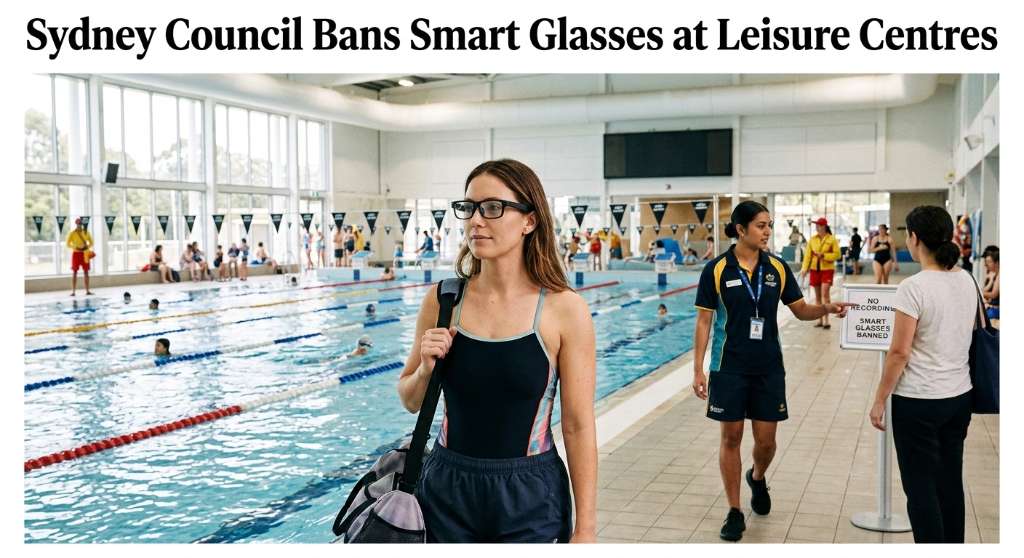
Canterbury-Bankstown Council has voted to ban smart glasses from its five council-operated leisure and aquatic centres, making it the first council in New South Wales to introduce such a measure.
The decision was made at a council meeting this week and applies to AI-enabled smart glasses at facilities including pools and leisure centres across the local government area. The devices will be added to existing signage that prohibits unauthorised photography and recording.
Under the new restrictions, staff will be able to ask people wearing smart glasses to leave the facilities if they do not comply with the rules. The measure is aimed at preventing people from using recording-capable devices without the knowledge or consent of others.
The council's decision follows concerns about the growing availability of glasses that can incorporate cameras and other smart technology. Unlike conventional cameras or mobile phones, smart glasses can be worn while appearing similar to ordinary eyewear, raising questions about how easily people can identify when they may be recording.
Councillors also discussed how the ban would be enforced. One concern raised during the meeting was the difficulty staff could face in distinguishing ordinary prescription or fashion glasses from smart glasses.
Accessibility was another issue considered during the debate. Some people use smart glasses or similar technology as visual aids, and councillors asked that legitimate accessibility requirements be taken into account.
The council said people who require the technology for accessibility purposes can seek permission before entering a facility. Staff are also expected to receive guidance on enforcing the new restrictions.
The move comes as councils around Australia consider how existing recording and privacy rules should apply to newer wearable technologies. Brisbane City Council and Victoria's Yarra Council have also introduced restrictions covering smart glasses in certain public facilities.
Privacy law experts have pointed out that Australia's rules concerning recording can be complicated and differ between states. In NSW, laws relating to surveillance devices can apply depending on the circumstances, particularly where private conversations are involved.
The new Canterbury-Bankstown restrictions do not create a general ban on smart glasses throughout Sydney. Instead, they apply specifically to the council's leisure and aquatic centres.
The decision reflects an ongoing debate about privacy, consent and the use of wearable recording technology in public and semi-public spaces. As smart glasses become more widely available, councils and other organisations are considering whether existing rules are sufficient to address their use.
For visitors to Canterbury-Bankstown's council-operated pools and leisure facilities, the new restrictions mean smart glasses will now be treated as prohibited recording devices unless an accessibility exemption has been approved.
GlassesSmartCouncilRecordingLeisure
Canterbury-Bankstown Council has voted to ban smart glasses from its five council-operated leisure and aquatic centres, making it the first council in New South Wales to introduce such a measure.
The decision was made at a council meeting this week and applies to AI-enabled smart glasses at facilities including pools and leisure centres across the local government area. The devices will be added to existing signage that prohibits unauthorised photography and recording.
Under the new restrictions, staff will be able to ask people wearing smart glasses to leave the facilities if they do not comply with the rules. The measure is aimed at preventing people from using recording-capable devices without the knowledge or consent of others.
The council's decision follows concerns about the growing availability of glasses that can incorporate cameras and other smart technology. Unlike conventional cameras or mobile phones, smart glasses can be worn while appearing similar to ordinary eyewear, raising questions about how easily people can identify when they may be recording.
Councillors also discussed how the ban would be enforced. One concern raised during the meeting was the difficulty staff could face in distinguishing ordinary prescription or fashion glasses from smart glasses.
Accessibility was another issue considered during the debate. Some people use smart glasses or similar technology as visual aids, and councillors asked that legitimate accessibility requirements be taken into account.
The council said people who require the technology for accessibility purposes can seek permission before entering a facility. Staff are also expected to receive guidance on enforcing the new restrictions.
The move comes as councils around Australia consider how existing recording and privacy rules should apply to newer wearable technologies. Brisbane City Council and Victoria's Yarra Council have also introduced restrictions covering smart glasses in certain public facilities.
Privacy law experts have pointed out that Australia's rules concerning recording can be complicated and differ between states. In NSW, laws relating to surveillance devices can apply depending on the circumstances, particularly where private conversations are involved.
The new Canterbury-Bankstown restrictions do not create a general ban on smart glasses throughout Sydney. Instead, they apply specifically to the council's leisure and aquatic centres.
The decision reflects an ongoing debate about privacy, consent and the use of wearable recording technology in public and semi-public spaces. As smart glasses become more widely available, councils and other organisations are considering whether existing rules are sufficient to address their use.
For visitors to Canterbury-Bankstown's council-operated pools and leisure facilities, the new restrictions mean smart glasses will now be treated as prohibited recording devices unless an accessibility exemption has been approved.
Tesla is preparing to bring its driverless Cybercab to Australia for a preview, giving Australians an early look at the company’s autonomous vehicle tec...
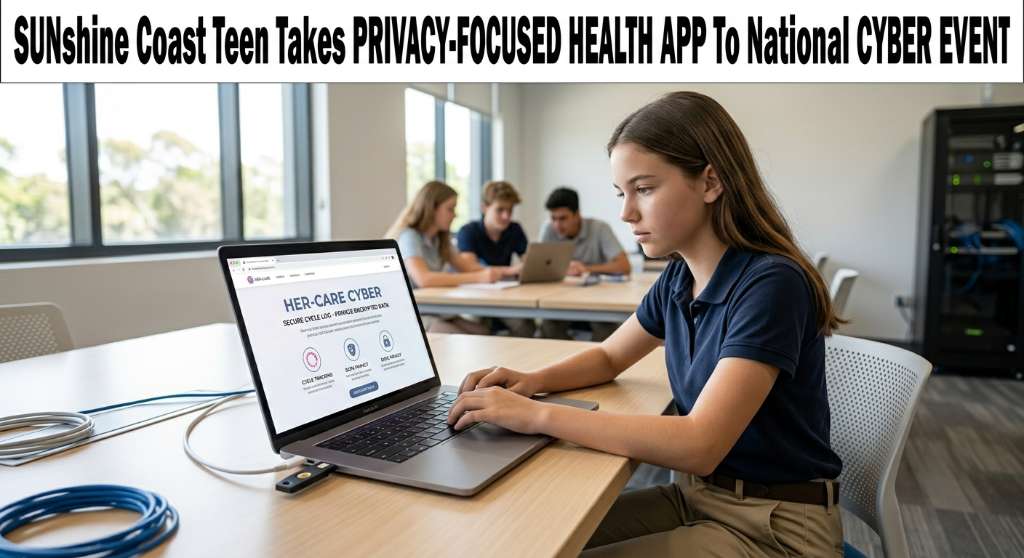
A 15-year-old Pacific Lutheran College student has developed a privacy-first women’s health app and presented her work at a major national cyber event.
Greater Geelong Council wants data-centre operators to contribute to local infrastructure as community concerns grow over energy, water use and developm...
A 36-year-old man has been charged after investigators allegedly found fraudulent identification documents, cloned number plates, cash and drug-manufact...
A Sydney court has heard that a man sent 249 messages to a former partner within 24 hours, with the messages treated as a single alleged breach of an ap...
Bendigo Foodshare is seeking additional volunteers ahead of its annual Spring Book Fair, with multiple shifts still available during the AFL Grand Final long weekend. The local...
A 55-year-old man has been charged after police allegedly seized more than $900,000 worth of drugs, firearms and about $50,000 in cash from a South Bris...