Sydney's $23 Billion Southwest Metro Line Opens After Two Years of Disruption
By Chloe · Published 30 Oct 2026 · Updated 30 Oct 2026
Sydney, NSW · New South Wales News
Safety note: Admin approval is an initial review, not a guarantee that every detail is correct. Check important or urgent claims with official sources and report anything inaccurate or unsafe.
Source and credit: Contributor's own report
Sydney's $23 Billion Southwest Metro Line Opens After Two Years of Disruption - Sydney, NSW
Smart summary
Thousands of commuters celebrated the opening of the new 13-kilometre metro extension, bringing faster train services to Sydney's south-west.
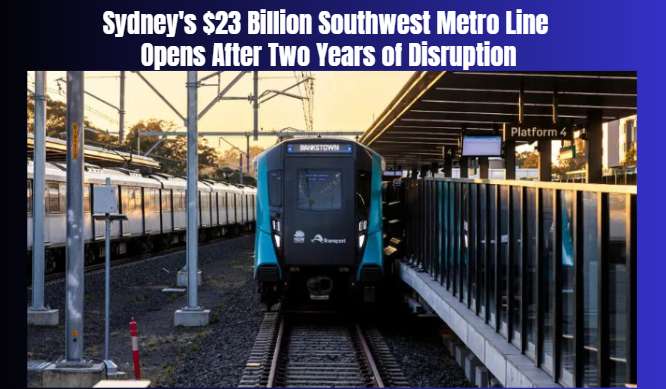
Sydney's long-awaited Southwest Metro line officially opened to passengers on Friday, 30 October 2026, marking a major change to public transport across the city's south-west. The new 13-kilometre section connects Bankstown with Sydenham and forms part of the wider Sydney Metro network.
The opening attracted thousands of commuters, transport enthusiasts, government representatives and local residents who arrived early to experience the first passenger services. The first train travelled from Bankstown to Sydenham at 4:31am, after more than two years of construction and transport disruption.
The project involved converting the former T3 Bankstown heavy rail line into a modern metro service. During the construction period, passengers relied on replacement pink buses while railway infrastructure, stations and tracks were upgraded.
The conversion affected communities along the route, including Bankstown, Campsie, Canterbury, Lakemba, Marrickville and surrounding suburbs. For many regular passengers, the return of rail services represents an important improvement after a lengthy period of alternative transport arrangements.
According to Sydney Metro figures, more than 18,000 passengers boarded trains at the new stations during the first five hours of operation. Across the entire M1 Metro line, approximately 92,000 passengers were recorded during the same morning period.
Bankstown station recorded the highest number of boardings among the new stations, with more than 3,000 passengers using the service. Trains operated every four minutes during the morning peak, allowing large numbers of commuters to travel through the newly upgraded corridor.
The upgraded stations include automatic glass platform doors and improvements to railway tracks and station facilities. The government expects the new metro service to increase passenger capacity by 50 per cent compared with the former T3 railway line.
Journey times are also expected to improve. Passengers travelling from Lakemba to Victoria Cross could save up to 24 minutes, while the journey from Marrickville to Gadigal is expected to take approximately 12 minutes, around half the previous travel time.
Under the planned timetable, trains will operate every four minutes during weekday peak periods and every five minutes outside peak hours. Evening and weekend services are scheduled to run every 10 minutes.
However, some safety arrangements remain in place. Australia's national rail safety regulator required six platform and train doors at stations including Dulwich Hill, Canterbury, Campsie and Marrickville to remain closed while concerns about gaps between trains and curved platforms are examined.
The project has also faced significant cost increases and delays. Its final cost was reported at just under $23 billion, while the extension took more than a year longer than initially forecast.
Despite the challenges, the opening represents a significant milestone for Sydney's transport network. Commuters and local businesses are now hoping that improved connections will make daily travel easier, attract more customers to shopping areas and support economic activity across south-west Sydney.
MetroPassengersMinutesSydneyBankstown
Sydney's long-awaited Southwest Metro line officially opened to passengers on Friday, 30 October 2026, marking a major change to public transport across the city's south-west. The new 13-kilometre section connects Bankstown with Sydenham and forms part of the wider Sydney Metro network.
The opening attracted thousands of commuters, transport enthusiasts, government representatives and local residents who arrived early to experience the first passenger services. The first train travelled from Bankstown to Sydenham at 4:31am, after more than two years of construction and transport disruption.
The project involved converting the former T3 Bankstown heavy rail line into a modern metro service. During the construction period, passengers relied on replacement pink buses while railway infrastructure, stations and tracks were upgraded.
The conversion affected communities along the route, including Bankstown, Campsie, Canterbury, Lakemba, Marrickville and surrounding suburbs. For many regular passengers, the return of rail services represents an important improvement after a lengthy period of alternative transport arrangements.
According to Sydney Metro figures, more than 18,000 passengers boarded trains at the new stations during the first five hours of operation. Across the entire M1 Metro line, approximately 92,000 passengers were recorded during the same morning period.
Bankstown station recorded the highest number of boardings among the new stations, with more than 3,000 passengers using the service. Trains operated every four minutes during the morning peak, allowing large numbers of commuters to travel through the newly upgraded corridor.
The upgraded stations include automatic glass platform doors and improvements to railway tracks and station facilities. The government expects the new metro service to increase passenger capacity by 50 per cent compared with the former T3 railway line.
Journey times are also expected to improve. Passengers travelling from Lakemba to Victoria Cross could save up to 24 minutes, while the journey from Marrickville to Gadigal is expected to take approximately 12 minutes, around half the previous travel time.
Under the planned timetable, trains will operate every four minutes during weekday peak periods and every five minutes outside peak hours. Evening and weekend services are scheduled to run every 10 minutes.
However, some safety arrangements remain in place. Australia's national rail safety regulator required six platform and train doors at stations including Dulwich Hill, Canterbury, Campsie and Marrickville to remain closed while concerns about gaps between trains and curved platforms are examined.
The project has also faced significant cost increases and delays. Its final cost was reported at just under $23 billion, while the extension took more than a year longer than initially forecast.
Despite the challenges, the opening represents a significant milestone for Sydney's transport network. Commuters and local businesses are now hoping that improved connections will make daily travel easier, attract more customers to shopping areas and support economic activity across south-west Sydney.
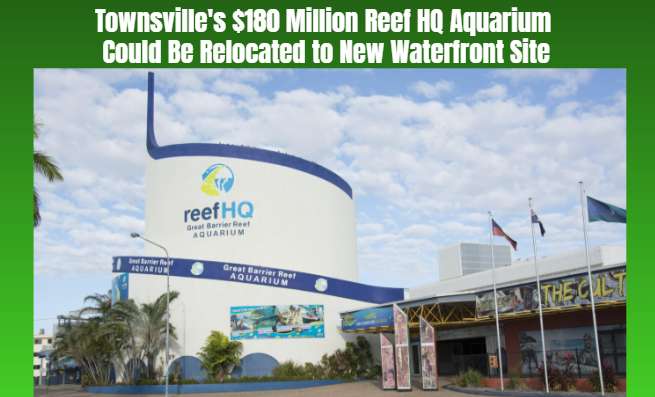
The Australian Government is considering moving the major Great Barrier Reef aquarium to Townsville's Strand after an engineering report raised concerns...
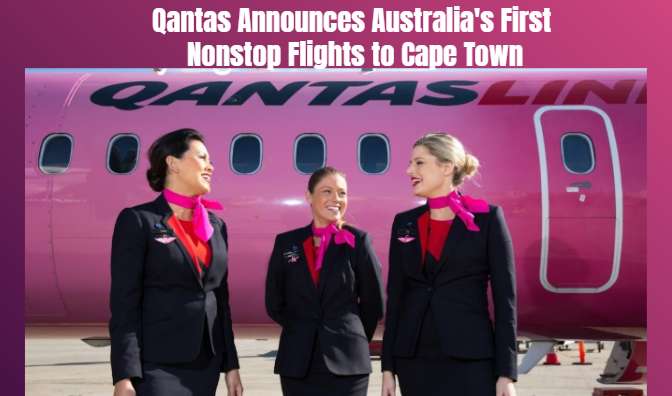
Qantas will introduce direct flights between Sydney and Cape Town from October 2027, creating a new international travel connection between Australia an...
Australia's aviation safety investigators have found that a light aircraft experienced repeated engine-start difficulties before crashing near Logan, ki...
New government figures show a decline in the country's illicit tobacco market following record seizures and increased enforcement by Australian Border F...
A major Microsoft service disruption affected millions of users worldwide, interrupting email, workplace communication, healthcare administration and bu...
New battery-powered trailer technology is attracting attention in Australia's transport industry, with the potential to reduce fuel consumption, operati...
More than 200 Australian Defence Force Academy participants took part in a 42-hour remembrance march, recognising fallen service members and supporting...
A digital examination platform failure disrupted final assessments in Melbourne, leaving hundreds of students unable to access their exams and forcing u...
Australia fell three points short at Murrayfield after a late comeback attempt, with Scotland holding on to secure an important home victory in the inte...
Prime Minister Anthony Albanese is meeting Philippine President Ferdinand Marcos Jr in Manila following a new defence cooperation agreement focused on m...