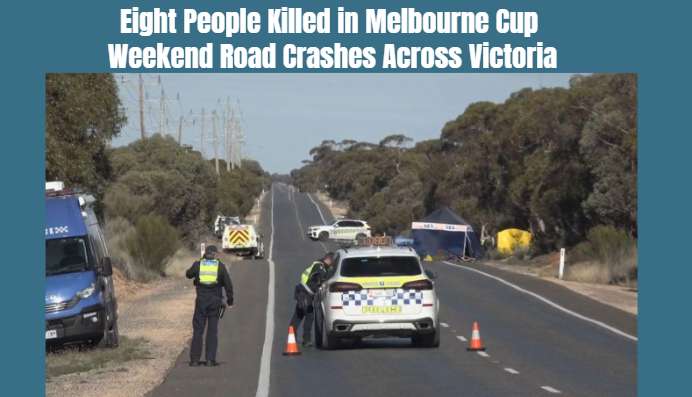
Australia’s Road Death Toll Rises Despite Decades of Safety Improvements
By Chloe · Published 28 Oct 2026 · Updated 28 Oct 2026
National, ACT
Safety note: Admin approval is an initial review, not a guarantee that every detail is correct. Check important or urgent claims with official sources and report anything inaccurate or unsafe.
Source and credit: Contributor's own report
Smart summary
Road deaths are increasing despite safer vehicles and significant infrastructure investment, prompting experts to call for stronger enforcement and evidence-based road safety policies.
Australia is facing a renewed road safety challenge as the number of people killed in traffic crashes continues to rise, reversing a decades-long trend towards safer roads. Experts have warned that the country risks recording its highest annual road death toll in 15 years, despite improvements in vehicle safety and substantial investment in road infrastructure.
For much of the late twentieth century, Australia's road toll declined following the introduction of seatbelt requirements, drink-driving laws and other safety measures. Improvements in vehicle design, crash protection and emergency response also helped reduce fatalities. However, the downward trend changed in 2020, and deaths have risen in the years since.
The increase has raised concerns among road safety researchers and motoring organisations because modern vehicles offer more safety features than ever before. Technologies such as automatic emergency braking, lane-departure warnings and improved crash protection can reduce certain risks, but they cannot eliminate the consequences of dangerous driving or excessive speed.
Australian Automobile Association managing director Michael Bradley has called for better research into the behaviours contributing to the increase. He has argued that policymakers need reliable evidence to determine which interventions are most effective, rather than relying on assumptions about why crashes occur.
Population growth accounts for part of the increase in the total number of deaths. However, researchers say the trend still deserves attention, particularly because some comparable countries have continued to improve their road safety performance.
University of Melbourne associate professor Milad Haghani has identified vulnerable road users, including pedestrians, cyclists and motorcyclists, as an important concern. These groups have less physical protection in a collision and can suffer severe injuries even when vehicles are travelling at relatively moderate speeds.
Drug-driving has also emerged as a significant risk factor. Researchers say drugs are now detected in nearly 17 per cent of people involved in fatal crashes, reflecting a shift from earlier decades when alcohol was a more prominent contributing factor. Detecting and preventing impairment remains an important challenge for enforcement agencies.
The growing size and weight of passenger vehicles is another issue under examination. Larger vehicles may offer occupants additional protection in certain collisions, but their height and weight can increase the severity of injuries to pedestrians. Researchers have called for policies that encourage safer vehicle choices and reduce risks to people outside cars.
Speed limits are also part of the debate. Road safety specialists have pointed to countries that have reduced urban speed limits, strengthened enforcement and invested in alternatives to driving. They argue that Australia may need to reconsider some established policies if it wants to achieve its national target of halving road deaths by 2030 and moving towards zero deaths by 2050.
Regional and remote roads present additional challenges. Although many fatal crashes occur in urban areas, collisions outside major cities are more likely to be fatal because of higher travel speeds, longer emergency response times and the distances involved in reaching medical care.
Experts have also highlighted gaps in national data, particularly the time required to compile reliable information about serious injuries. Without timely and consistent statistics, it can be difficult to determine whether road spending and safety measures are producing the intended results.
The rise in fatalities has renewed calls for coordinated action by governments, police, transport agencies and vehicle manufacturers. Researchers say safer roads will require a combination of enforcement, infrastructure improvements, responsible driving, appropriate speed limits and continued improvements in vehicle technology.
The challenge for Australia is to turn decades of road safety progress into renewed reductions in deaths and serious injuries, while ensuring that future policies are guided by evidence about the causes of crashes.
RoadSafetyCrashesDeathsImprovements
Australia is facing a renewed road safety challenge as the number of people killed in traffic crashes continues to rise, reversing a decades-long trend towards safer roads. Experts have warned that the country risks recording its highest annual road death toll in 15 years, despite improvements in vehicle safety and substantial investment in road infrastructure.
For much of the late twentieth century, Australia's road toll declined following the introduction of seatbelt requirements, drink-driving laws and other safety measures. Improvements in vehicle design, crash protection and emergency response also helped reduce fatalities. However, the downward trend changed in 2020, and deaths have risen in the years since.
The increase has raised concerns among road safety researchers and motoring organisations because modern vehicles offer more safety features than ever before. Technologies such as automatic emergency braking, lane-departure warnings and improved crash protection can reduce certain risks, but they cannot eliminate the consequences of dangerous driving or excessive speed.
Australian Automobile Association managing director Michael Bradley has called for better research into the behaviours contributing to the increase. He has argued that policymakers need reliable evidence to determine which interventions are most effective, rather than relying on assumptions about why crashes occur.
Population growth accounts for part of the increase in the total number of deaths. However, researchers say the trend still deserves attention, particularly because some comparable countries have continued to improve their road safety performance.
University of Melbourne associate professor Milad Haghani has identified vulnerable road users, including pedestrians, cyclists and motorcyclists, as an important concern. These groups have less physical protection in a collision and can suffer severe injuries even when vehicles are travelling at relatively moderate speeds.
Drug-driving has also emerged as a significant risk factor. Researchers say drugs are now detected in nearly 17 per cent of people involved in fatal crashes, reflecting a shift from earlier decades when alcohol was a more prominent contributing factor. Detecting and preventing impairment remains an important challenge for enforcement agencies.
The growing size and weight of passenger vehicles is another issue under examination. Larger vehicles may offer occupants additional protection in certain collisions, but their height and weight can increase the severity of injuries to pedestrians. Researchers have called for policies that encourage safer vehicle choices and reduce risks to people outside cars.
Speed limits are also part of the debate. Road safety specialists have pointed to countries that have reduced urban speed limits, strengthened enforcement and invested in alternatives to driving. They argue that Australia may need to reconsider some established policies if it wants to achieve its national target of halving road deaths by 2030 and moving towards zero deaths by 2050.
Regional and remote roads present additional challenges. Although many fatal crashes occur in urban areas, collisions outside major cities are more likely to be fatal because of higher travel speeds, longer emergency response times and the distances involved in reaching medical care.
Experts have also highlighted gaps in national data, particularly the time required to compile reliable information about serious injuries. Without timely and consistent statistics, it can be difficult to determine whether road spending and safety measures are producing the intended results.
The rise in fatalities has renewed calls for coordinated action by governments, police, transport agencies and vehicle manufacturers. Researchers say safer roads will require a combination of enforcement, infrastructure improvements, responsible driving, appropriate speed limits and continued improvements in vehicle technology.
The challenge for Australia is to turn decades of road safety progress into renewed reductions in deaths and serious injuries, while ensuring that future policies are guided by evidence about the causes of crashes.
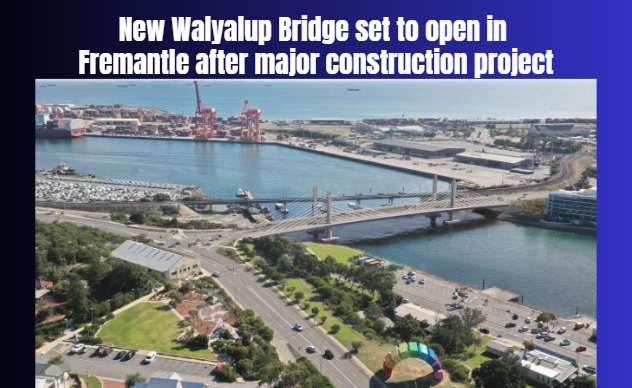
Fremantle's new bridge will open to the public on Sunday, 1 November, replacing the ageing crossing and providing wider shared paths for pedestrians and...
Two next-generation Spirit of Tasmania vessels begin their first passenger journeys between Victoria and Tasmania, bringing increased passenger capacity...
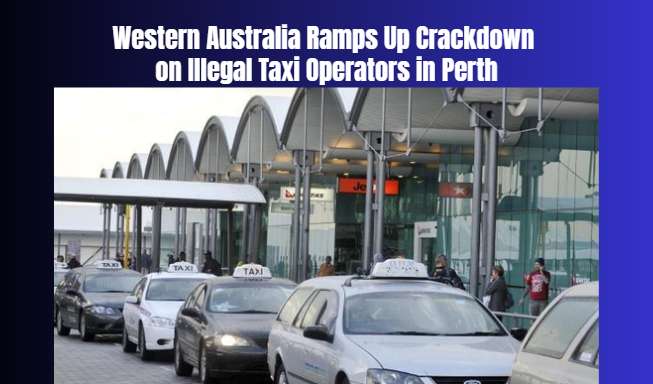
Authorities are increasing undercover compliance checks around Perth Airport and the Crown Casino precinct after investigations found drivers operating...
A fisherman escaped unharmed after a large crocodile climbed onto his boat while he was fishing alone on the Mary River, prompting renewed safety warnin...
A filmmaker from Bourke in western New South Wales has taken over leadership of an Indigenous film festival in Paris, creating an opportunity to bring A...
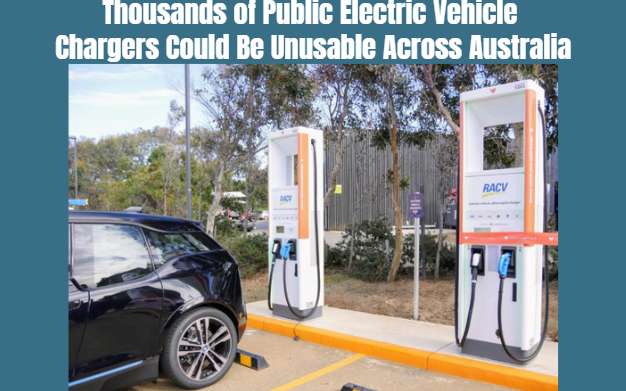
Concerns are growing over the reliability and availability of Australia's public electric vehicle charging network, with thousands of charging points po...
Indigenous women are using traditional weaving and craft-making to strengthen cultural connections, preserve knowledge passed down through generations a...
A freedom of information request has revealed that Gold Coast Council does not hold a copy of the invoice for Mayor Tom Tate's three-day stay at Donald...
Eight people have died in separate road crashes across Victoria during the Melbourne Cup long weekend, with four of the fatal incidents involving motorc...
A fisherman escaped unharmed after a large crocodile climbed onto his boat while he was fishing alone on the Mary River, prompting renewed safety warnin...