Sydney’s Long-Awaited Southwest Metro Line to Open on 30 October
By Chloe · Published 22 Oct 2026 · Updated 22 Oct 2026
Sydney, NSW · New South Wales News
Safety note: Admin approval is an initial review, not a guarantee that every detail is correct. Check important or urgent claims with official sources and report anything inaccurate or unsafe.
Source and credit: Contributor's own report
Sydney’s Long-Awaited Southwest Metro Line to Open on 30 October - Sydney, NSW
Smart summary
The new driverless metro service will connect Bankstown and Sydney’s south-western suburbs directly with the CBD and the north-west, ending more than two years of replacement-bus travel.
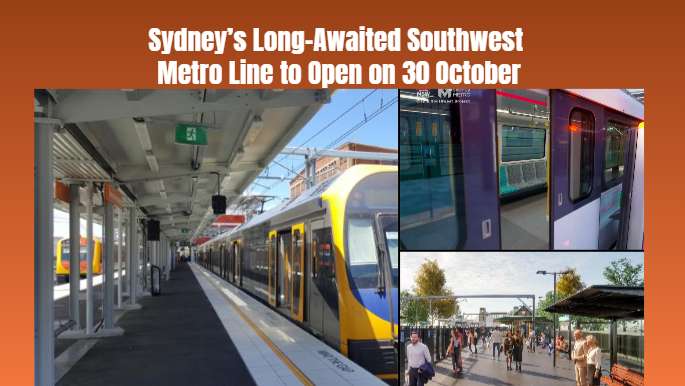
Sydney’s long-awaited Southwest Metro extension is scheduled to open to passengers at 4:31 am on Friday, 30 October 2026, the New South Wales Government announced on 22 October. The opening will restore rail-based metro connections for communities along the former T3 Bankstown Line, which closed in September 2024 to undergo a major conversion into a modern, driverless metro railway.
The new service will connect Bankstown, Punchbowl, Wiley Park, Lakemba, Belmore, Campsie, Canterbury, Hurlstone Park, Dulwich Hill and Marrickville with Sydney’s central business district and the wider metro network. Once operational, the extension will form part of a continuous 66-kilometre Metro M1 line running from Bankstown through central Sydney to Tallawong in the north-west. Faster journeys for commuters The government expects the new metro to reduce travel times on several routes. A journey from Bankstown to Central is expected to take approximately 28 minutes, saving six minutes compared with the previous rail journey. Travelling from Lakemba to Victoria Cross is expected to take 37 minutes, a saving of 24 minutes. The journey from Campsie to Macquarie University is expected to take 44 minutes, around 17 minutes faster than before.
During weekday peak periods, trains are scheduled to operate every four minutes. Services will run approximately every five minutes during the day and every ten minutes during evenings and weekends. On the first weekend of operation, 31 October and 1 November, services are expected to run every seven minutes to accommodate additional passenger demand.
The upgraded line is expected to provide 50 per cent more passenger capacity than the former T3 service it replaces. The government estimates that around 48,000 trips could be made across the metro line during a typical weekday morning peak between 8 am and 9 am. Why the project took longer than expected The former heavy-rail line between Sydenham and Bankstown closed in September 2024 to allow the conversion to take place. The work was originally expected to take about 12 months, but the project encountered delays because of the complexity of upgrading an older railway and industrial action.
Converting the 130-year-old railway required substantial changes to stations, signalling and track infrastructure. Curved platforms at some historic stations also created challenges in ensuring safe gaps between trains and platforms.
The project has undergone extensive testing, including approximately 30,000 kilometres of testing and more than 6,000 scheduled test runs. The government confirmed that the opening date followed final safety approval from the independent Office of the National Rail Safety Regulator.
Improved accessibility and station facilities The upgrade includes platform screen doors, improved passenger information systems, security technology and station improvements. New lifts at Wiley Park, Dulwich Hill, Hurlstone Park, Punchbowl and Canterbury will provide step-free access at those stations for the first time.
The government says additional staff will be available at stations and on trains during the initial operating period to help passengers become familiar with the service. Six of the 360 train doors will remain temporarily closed as an additional safety precaution while information about platform-gap equipment is collected.
Replacement Southwest Link buses will continue operating on opening day and during the first weekend while passengers adjust to the new arrangements. The government has also planned opening celebrations at Bankstown and Dulwich Hill stations on 1 November. Significance for Sydney The Southwest Metro extension represents a major change to public transport in Sydney’s south-west. Residents will gain direct connections to employment centres, universities, shopping areas and other parts of the metropolitan network. More frequent services and upgraded accessibility may also make public transport a more practical option for commuters who currently rely on cars or buses.
The opening marks the completion of a lengthy conversion project that disrupted daily travel for thousands of passengers. Although some minor operational issues may arise during the early days, the new service is expected to provide greater capacity and more frequent connections across Sydney’s expanding metro network.
MetroMinutesWillExpectedDuring
Sydney’s long-awaited Southwest Metro extension is scheduled to open to passengers at 4:31 am on Friday, 30 October 2026, the New South Wales Government announced on 22 October. The opening will restore rail-based metro connections for communities along the former T3 Bankstown Line, which closed in September 2024 to undergo a major conversion into a modern, driverless metro railway.
The new service will connect Bankstown, Punchbowl, Wiley Park, Lakemba, Belmore, Campsie, Canterbury, Hurlstone Park, Dulwich Hill and Marrickville with Sydney’s central business district and the wider metro network. Once operational, the extension will form part of a continuous 66-kilometre Metro M1 line running from Bankstown through central Sydney to Tallawong in the north-west. Faster journeys for commuters The government expects the new metro to reduce travel times on several routes. A journey from Bankstown to Central is expected to take approximately 28 minutes, saving six minutes compared with the previous rail journey. Travelling from Lakemba to Victoria Cross is expected to take 37 minutes, a saving of 24 minutes. The journey from Campsie to Macquarie University is expected to take 44 minutes, around 17 minutes faster than before.
During weekday peak periods, trains are scheduled to operate every four minutes. Services will run approximately every five minutes during the day and every ten minutes during evenings and weekends. On the first weekend of operation, 31 October and 1 November, services are expected to run every seven minutes to accommodate additional passenger demand.
The upgraded line is expected to provide 50 per cent more passenger capacity than the former T3 service it replaces. The government estimates that around 48,000 trips could be made across the metro line during a typical weekday morning peak between 8 am and 9 am. Why the project took longer than expected The former heavy-rail line between Sydenham and Bankstown closed in September 2024 to allow the conversion to take place. The work was originally expected to take about 12 months, but the project encountered delays because of the complexity of upgrading an older railway and industrial action.
Converting the 130-year-old railway required substantial changes to stations, signalling and track infrastructure. Curved platforms at some historic stations also created challenges in ensuring safe gaps between trains and platforms.
The project has undergone extensive testing, including approximately 30,000 kilometres of testing and more than 6,000 scheduled test runs. The government confirmed that the opening date followed final safety approval from the independent Office of the National Rail Safety Regulator.
Improved accessibility and station facilities The upgrade includes platform screen doors, improved passenger information systems, security technology and station improvements. New lifts at Wiley Park, Dulwich Hill, Hurlstone Park, Punchbowl and Canterbury will provide step-free access at those stations for the first time.
The government says additional staff will be available at stations and on trains during the initial operating period to help passengers become familiar with the service. Six of the 360 train doors will remain temporarily closed as an additional safety precaution while information about platform-gap equipment is collected.
Replacement Southwest Link buses will continue operating on opening day and during the first weekend while passengers adjust to the new arrangements. The government has also planned opening celebrations at Bankstown and Dulwich Hill stations on 1 November. Significance for Sydney The Southwest Metro extension represents a major change to public transport in Sydney’s south-west. Residents will gain direct connections to employment centres, universities, shopping areas and other parts of the metropolitan network. More frequent services and upgraded accessibility may also make public transport a more practical option for commuters who currently rely on cars or buses.
The opening marks the completion of a lengthy conversion project that disrupted daily travel for thousands of passengers. Although some minor operational issues may arise during the early days, the new service is expected to provide greater capacity and more frequent connections across Sydney’s expanding metro network.
A 79-year-old woman from Busselton is recovering in a Bali hospital after falling down a restaurant stairwell, with her family facing substantial medica...
A 19-year-old man from the Bendigo area died after the car he was driving struck a tree on Inglewood–Powlett Road near Fiery Flat. Police are investigat...
A passenger aircraft passed just above a van near the runway during its approach to Townsville Airport. Investigators are examining how the vehicle ente...
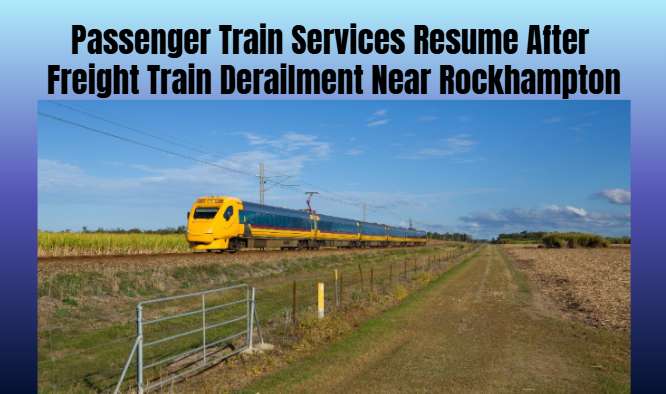
Queensland Rail reopened the affected tracks early Monday after a freight train derailed near Marlborough, while rail safety investigators examine the c...
The ASX is maintaining a lower dividend payout and increasing spending on technology as it works to strengthen the reliability of Australia's financial...
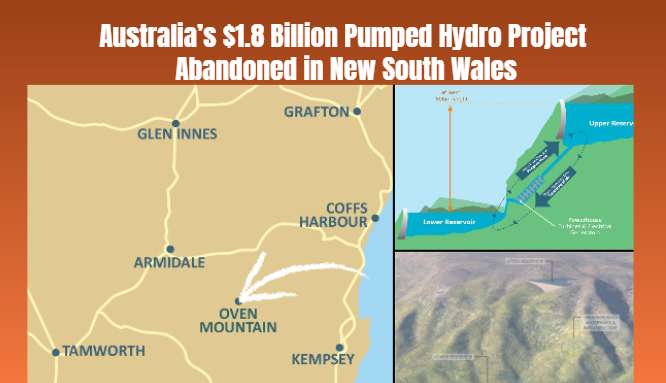
Alinta Energy has withdrawn plans for a major renewable energy storage project, citing financial pressures, construction challenges and transmission-lin...
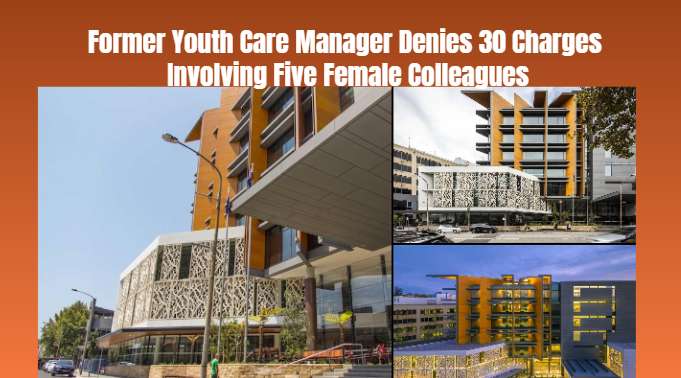
A former out-of-home care manager has pleaded not guilty to 30 charges, including alleged sexual assaults and choking offences involving five women over...
A 21-year-old man is in serious condition after NSW Police shot him during a domestic violence-related incident in Glen Alpine, south-west Sydney. Polic...
The Victorian government says the proposed restriction aims to protect student privacy, reduce classroom distractions and help students focus on learning.
Wet weather is expected to add uncertainty to the Supercars championship street race, with leading drivers preparing for difficult track conditions on Q...
A partnership is helping aged care employees access women’s health information in their preferred languages, with reported improvements in confidence ar...