Australia’s $1.8 Billion Pumped Hydro Project Abandoned in New South Wales
By Chloe · Published 22 Oct 2026 · Updated 22 Oct 2026
Armidale, NSW · New South Wales News
Safety note: Admin approval is an initial review, not a guarantee that every detail is correct. Check important or urgent claims with official sources and report anything inaccurate or unsafe.
Source and credit: Contributor's own report
Australia’s $1.8 Billion Pumped Hydro Project Abandoned in New South Wales - Armidale, NSW
Smart summary
Alinta Energy has withdrawn plans for a major renewable energy storage project, citing financial pressures, construction challenges and transmission-line delays.
A major renewable energy project planned for northern New South Wales has been abandoned after its developer, Alinta Energy, concluded that the project was no longer economically viable. The proposed Oven Mountain Pumped Hydro Energy Storage scheme was valued at approximately $1.8 billion and was expected to play a significant role in storing electricity for the state’s energy network. The decision was reported by ABC News on 22 October 2026.
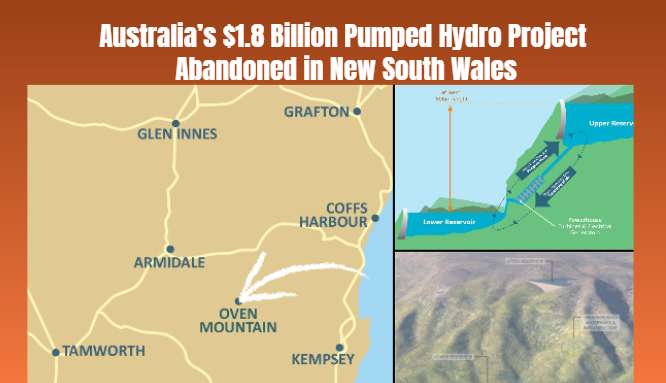
The project was designed to provide up to 900 megawatts of electricity storage capacity. It was planned for a remote, mountainous area near Georges Junction at Carrai, approximately 60 kilometres south-east of Armidale and 75 kilometres north-west of Kempsey. The location’s steep terrain made it suitable for pumped hydro technology, which stores energy by moving water between reservoirs at different elevations.
Under the proposed system, electricity would be used to pump water uphill when energy was available. When demand increased, the stored water would flow downhill through turbines to generate electricity. This approach can help balance supply and demand, particularly when electricity generation from solar and wind farms fluctuates with weather conditions.
Reasons behind the cancellation Alinta Energy said economic and scheduling difficulties involving key project components, including a critical transmission line, had made the scheme unviable. The announcement followed years of technical studies, planning, engagement with stakeholders and development work.
The project had been progressing through the NSW planning assessment process and was regarded as an important potential component of the Armidale Renewable Energy Zone. Its cancellation therefore represents a setback for regional energy infrastructure and the wider transition towards renewable electricity.
Energy-market analysts have also highlighted the changing economics of electricity storage. Battery storage costs have fallen rapidly, while major civil engineering projects such as pumped hydro have become more expensive to construct. According to energy consultant Tristan Edis, building pumped hydro can cost roughly $5,000–$6,000 per kilowatt of output, compared with about $1,400 per kilowatt for a four-hour battery installation. These figures illustrate why developers increasingly compare long-duration storage projects against battery alternatives before committing substantial investment.
Impact on regional communities The decision has disappointed some local representatives who expected the project to create employment and stimulate regional investment. Construction would have required engineering, transport, equipment, earthworks and other specialist services. The project was also expected to support jobs beyond its initial construction period.
Armidale Regional Council representatives expressed surprise at the withdrawal, while local political representatives described the decision as a loss for the community. The remote location presents logistical challenges, including transporting machinery and connecting the site to high-voltage electricity infrastructure.
The area is also part of the traditional country of the Thunggutti people, meaning project development involved engagement with Traditional Owners and other local stakeholders.
Wider implications for Australia’s energy transition The cancellation highlights the difficulties involved in building large-scale renewable energy infrastructure. Australia needs reliable ways to store electricity so that power generated during sunny or windy periods can be used when generation falls or demand rises.
Pumped hydro can offer longer-duration storage than many conventional battery installations, but it often requires substantial upfront investment, suitable geography, lengthy planning and expensive transmission connections. Batteries can be installed more quickly in some circumstances and have become increasingly competitive as prices decline.
The Oven Mountain decision does not mean pumped hydro is no longer useful. Instead, it demonstrates that each project must compete on cost, timing, location and expected demand. The cancellation also raises questions about how energy developers, governments and regional communities can coordinate transmission infrastructure and planning decisions to reduce uncertainty.
For northern New South Wales, the immediate consequence is that a proposed major investment and its anticipated employment opportunities will not proceed as planned. For Australia’s energy sector, it is another reminder that achieving a reliable, lower-emissions electricity system will depend not only on renewable generation, but also on practical and financially sustainable storage solutions.
EnergyElectricityProjectHydroPumped
A major renewable energy project planned for northern New South Wales has been abandoned after its developer, Alinta Energy, concluded that the project was no longer economically viable. The proposed Oven Mountain Pumped Hydro Energy Storage scheme was valued at approximately $1.8 billion and was expected to play a significant role in storing electricity for the state’s energy network. The decision was reported by ABC News on 22 October 2026.
The project was designed to provide up to 900 megawatts of electricity storage capacity. It was planned for a remote, mountainous area near Georges Junction at Carrai, approximately 60 kilometres south-east of Armidale and 75 kilometres north-west of Kempsey. The location’s steep terrain made it suitable for pumped hydro technology, which stores energy by moving water between reservoirs at different elevations.
Under the proposed system, electricity would be used to pump water uphill when energy was available. When demand increased, the stored water would flow downhill through turbines to generate electricity. This approach can help balance supply and demand, particularly when electricity generation from solar and wind farms fluctuates with weather conditions.
Reasons behind the cancellation Alinta Energy said economic and scheduling difficulties involving key project components, including a critical transmission line, had made the scheme unviable. The announcement followed years of technical studies, planning, engagement with stakeholders and development work.
The project had been progressing through the NSW planning assessment process and was regarded as an important potential component of the Armidale Renewable Energy Zone. Its cancellation therefore represents a setback for regional energy infrastructure and the wider transition towards renewable electricity.
Energy-market analysts have also highlighted the changing economics of electricity storage. Battery storage costs have fallen rapidly, while major civil engineering projects such as pumped hydro have become more expensive to construct. According to energy consultant Tristan Edis, building pumped hydro can cost roughly $5,000–$6,000 per kilowatt of output, compared with about $1,400 per kilowatt for a four-hour battery installation. These figures illustrate why developers increasingly compare long-duration storage projects against battery alternatives before committing substantial investment.
Impact on regional communities The decision has disappointed some local representatives who expected the project to create employment and stimulate regional investment. Construction would have required engineering, transport, equipment, earthworks and other specialist services. The project was also expected to support jobs beyond its initial construction period.
Armidale Regional Council representatives expressed surprise at the withdrawal, while local political representatives described the decision as a loss for the community. The remote location presents logistical challenges, including transporting machinery and connecting the site to high-voltage electricity infrastructure.
The area is also part of the traditional country of the Thunggutti people, meaning project development involved engagement with Traditional Owners and other local stakeholders.
Wider implications for Australia’s energy transition The cancellation highlights the difficulties involved in building large-scale renewable energy infrastructure. Australia needs reliable ways to store electricity so that power generated during sunny or windy periods can be used when generation falls or demand rises.
Pumped hydro can offer longer-duration storage than many conventional battery installations, but it often requires substantial upfront investment, suitable geography, lengthy planning and expensive transmission connections. Batteries can be installed more quickly in some circumstances and have become increasingly competitive as prices decline.
The Oven Mountain decision does not mean pumped hydro is no longer useful. Instead, it demonstrates that each project must compete on cost, timing, location and expected demand. The cancellation also raises questions about how energy developers, governments and regional communities can coordinate transmission infrastructure and planning decisions to reduce uncertainty.
For northern New South Wales, the immediate consequence is that a proposed major investment and its anticipated employment opportunities will not proceed as planned. For Australia’s energy sector, it is another reminder that achieving a reliable, lower-emissions electricity system will depend not only on renewable generation, but also on practical and financially sustainable storage solutions.
The ASX is maintaining a lower dividend payout and increasing spending on technology as it works to strengthen the reliability of Australia's financial...
The final bottles have come off the production line in Launceston, marking the end of local production at one of Tasmania’s best-known breweries. The cl...
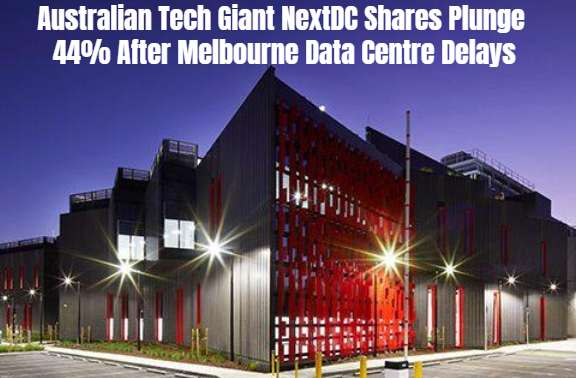
Australian data centre operator Next DC has suffered a major share-price collapse after electricity network upgrade delays forced the company to cut its...
Reserve Bank deputy governor Andrew Hauser says inflation is proving difficult to control, increasing concerns that Australians could face another inter...
The ASX is maintaining a lower dividend payout and increasing spending on technology as it works to strengthen the reliability of Australia's financial...
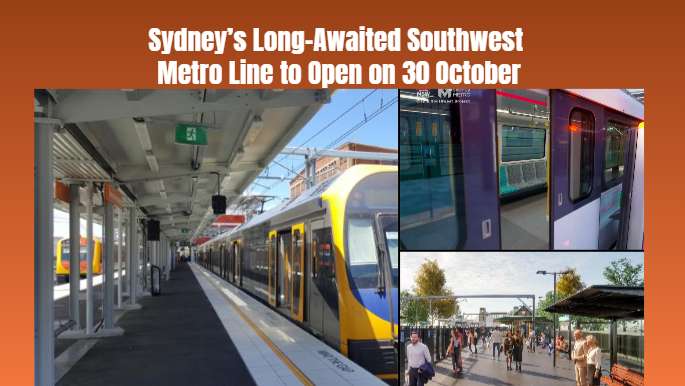
The new driverless metro service will connect Bankstown and Sydney’s south-western suburbs directly with the CBD and the north-west, ending more than tw...
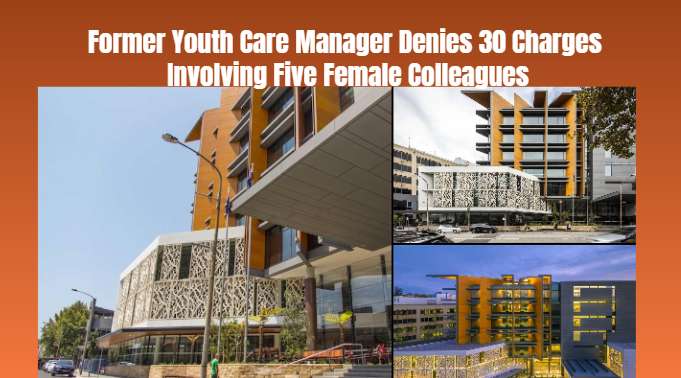
A former out-of-home care manager has pleaded not guilty to 30 charges, including alleged sexual assaults and choking offences involving five women over...
A 21-year-old man is in serious condition after NSW Police shot him during a domestic violence-related incident in Glen Alpine, south-west Sydney. Polic...
The Victorian government says the proposed restriction aims to protect student privacy, reduce classroom distractions and help students focus on learning.
Wet weather is expected to add uncertainty to the Supercars championship street race, with leading drivers preparing for difficult track conditions on Q...
A partnership is helping aged care employees access women’s health information in their preferred languages, with reported improvements in confidence ar...