Australian Securities Exchange Says It Has Reached a Turning Point After Trading Disruptions
By Chloe · Published 22 Oct 2026 · Updated 22 Oct 2026
Sydney, NSW · New South Wales News
Safety note: Admin approval is an initial review, not a guarantee that every detail is correct. Check important or urgent claims with official sources and report anything inaccurate or unsafe.
Source and credit: Contributor's own report
Australian Securities Exchange Says It Has Reached a Turning Point After Trading Disruptions - Sydney, NSW
Smart summary
The ASX is maintaining a lower dividend payout and increasing spending on technology as it works to strengthen the reliability of Australia's financial markets.
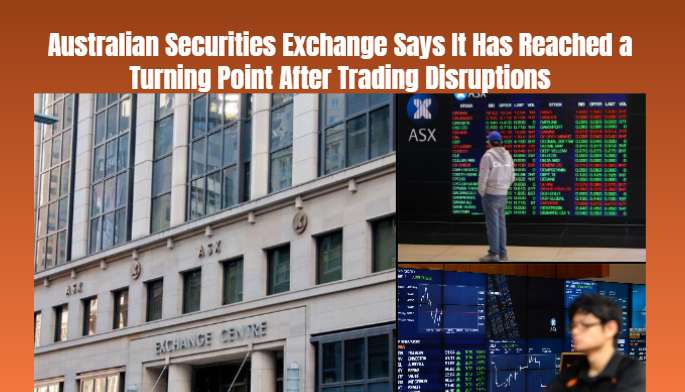
The Australian Securities Exchange (ASX) has announced that it has reached an important turning point in its efforts to address operational problems and rebuild confidence in its financial market infrastructure. At its annual meeting on 22 October 2026, ASX chair David Clarke said the organisation had been working through several years of difficult issues and making changes to improve its systems and financial resilience. The announcement comes after a series of trading outages and settlement delays affected the exchange over the past three years.
The ASX plays a central role in Australia's economy. It provides the marketplace where investors buy and sell shares in listed companies and supports the processes used to settle transactions. Reliable trading systems are important for investors, financial institutions, businesses and superannuation funds that depend on the market to manage investments. Background to the problems The exchange experienced repeated technical disruptions following a failed technology overhaul. These problems prompted scrutiny from Australia's financial regulator, the Australian Securities and Investments Commission (ASIC).
In December 2025, ASIC ordered the ASX to hold an additional A$150 million in capital and renew its infrastructure. The order placed greater pressure on the exchange to demonstrate that it could manage operational risks while maintaining the systems required to support the country's financial markets.
Trading outages can prevent market participants from placing or updating orders as expected. Settlement delays can also affect the process through which shares and funds are transferred after a trade. Even when disruptions are temporary, they can create uncertainty and raise questions about whether the exchange's technology is sufficiently reliable.
The ASX has been undertaking further work to address these concerns, with technology renewal and operational improvements forming a major part of its strategy.
Dividend policy and financial investment The exchange has decided to maintain its reduced dividend payout ratio at 75 per cent of underlying net profit, at least for the interim dividend period in the current financial year. The ratio was previously 85 per cent.
A dividend payout ratio represents the proportion of a company's underlying profit distributed to shareholders. By retaining a larger share of earnings, the ASX can preserve more capital to strengthen its finances and invest in essential infrastructure.
Some investors had called for the payout ratio to increase because the exchange was progressing ahead of schedule in meeting its additional capital requirements. However, the board has prioritised a balance between shareholder returns, financial resilience and investment in the systems it operates.
New chief executive Anthony Attia also indicated that operating expenses are expected to grow by 18 to 21 per cent during the current financial year. Capital expenditure is forecast to reach between A$180 million and A$200 million. Both forecasts had been raised earlier in the year to support the ongoing technology overhaul.
Market reaction and investor confidence On Thursday, ASX shares were trading 0.3 per cent higher, while the broader S&P/ASX 200 index was down 0.35 per cent at the time of the Reuters report. These movements reflected trading at that particular point in the day and should not be interpreted as a measure of the exchange's long-term recovery.
Investors will continue to assess whether the ASX can deliver reliable operations while controlling costs and meeting regulatory expectations. The exchange must also demonstrate that its technology investment can reduce the likelihood and impact of future disruptions. Significance for Australia's financial system The ASX's recovery matters beyond its own shareholders. Businesses use capital markets to raise money, investors rely on them to trade assets, and retirement savings are exposed to the performance of listed investments.
Improved infrastructure could help reduce operational risk and strengthen confidence in Australia's financial system. However, the chair's statement represents the exchange's assessment of its progress, rather than proof that every technical problem has been resolved.
The next phase will depend on whether the ASX can turn its commitments into sustained improvements in system reliability, regulatory compliance and service delivery. Its technology spending, operating costs and future performance will remain important indicators of whether the exchange can restore lasting confidence in its operations.
ExchangeFinancialTechnologyTradingCapital
The Australian Securities Exchange (ASX) has announced that it has reached an important turning point in its efforts to address operational problems and rebuild confidence in its financial market infrastructure. At its annual meeting on 22 October 2026, ASX chair David Clarke said the organisation had been working through several years of difficult issues and making changes to improve its systems and financial resilience. The announcement comes after a series of trading outages and settlement delays affected the exchange over the past three years.
The ASX plays a central role in Australia's economy. It provides the marketplace where investors buy and sell shares in listed companies and supports the processes used to settle transactions. Reliable trading systems are important for investors, financial institutions, businesses and superannuation funds that depend on the market to manage investments. Background to the problems The exchange experienced repeated technical disruptions following a failed technology overhaul. These problems prompted scrutiny from Australia's financial regulator, the Australian Securities and Investments Commission (ASIC).
In December 2025, ASIC ordered the ASX to hold an additional A$150 million in capital and renew its infrastructure. The order placed greater pressure on the exchange to demonstrate that it could manage operational risks while maintaining the systems required to support the country's financial markets.
Trading outages can prevent market participants from placing or updating orders as expected. Settlement delays can also affect the process through which shares and funds are transferred after a trade. Even when disruptions are temporary, they can create uncertainty and raise questions about whether the exchange's technology is sufficiently reliable.
The ASX has been undertaking further work to address these concerns, with technology renewal and operational improvements forming a major part of its strategy.
Dividend policy and financial investment The exchange has decided to maintain its reduced dividend payout ratio at 75 per cent of underlying net profit, at least for the interim dividend period in the current financial year. The ratio was previously 85 per cent.
A dividend payout ratio represents the proportion of a company's underlying profit distributed to shareholders. By retaining a larger share of earnings, the ASX can preserve more capital to strengthen its finances and invest in essential infrastructure.
Some investors had called for the payout ratio to increase because the exchange was progressing ahead of schedule in meeting its additional capital requirements. However, the board has prioritised a balance between shareholder returns, financial resilience and investment in the systems it operates.
New chief executive Anthony Attia also indicated that operating expenses are expected to grow by 18 to 21 per cent during the current financial year. Capital expenditure is forecast to reach between A$180 million and A$200 million. Both forecasts had been raised earlier in the year to support the ongoing technology overhaul.
Market reaction and investor confidence On Thursday, ASX shares were trading 0.3 per cent higher, while the broader S&P/ASX 200 index was down 0.35 per cent at the time of the Reuters report. These movements reflected trading at that particular point in the day and should not be interpreted as a measure of the exchange's long-term recovery.
Investors will continue to assess whether the ASX can deliver reliable operations while controlling costs and meeting regulatory expectations. The exchange must also demonstrate that its technology investment can reduce the likelihood and impact of future disruptions. Significance for Australia's financial system The ASX's recovery matters beyond its own shareholders. Businesses use capital markets to raise money, investors rely on them to trade assets, and retirement savings are exposed to the performance of listed investments.
Improved infrastructure could help reduce operational risk and strengthen confidence in Australia's financial system. However, the chair's statement represents the exchange's assessment of its progress, rather than proof that every technical problem has been resolved.
The next phase will depend on whether the ASX can turn its commitments into sustained improvements in system reliability, regulatory compliance and service delivery. Its technology spending, operating costs and future performance will remain important indicators of whether the exchange can restore lasting confidence in its operations.
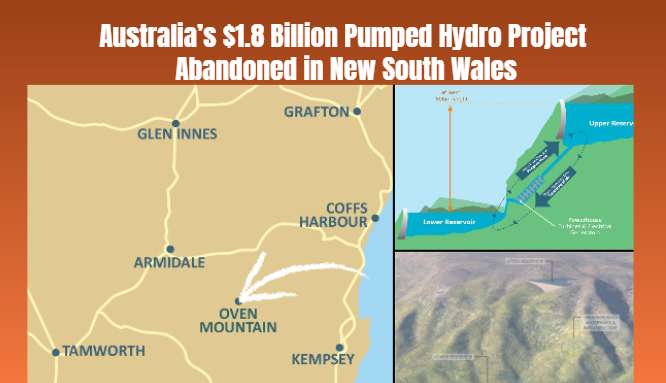
Alinta Energy has withdrawn plans for a major renewable energy storage project, citing financial pressures, construction challenges and transmission-lin...
The final bottles have come off the production line in Launceston, marking the end of local production at one of Tasmania’s best-known breweries. The cl...
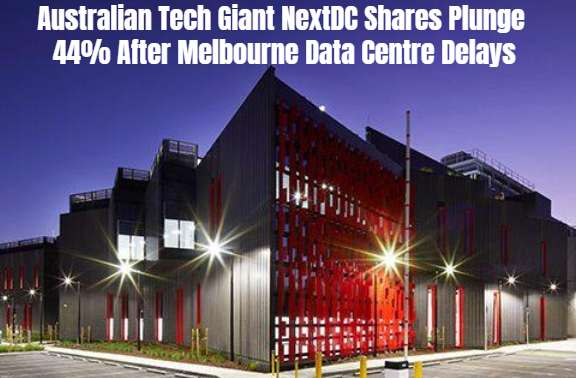
Australian data centre operator Next DC has suffered a major share-price collapse after electricity network upgrade delays forced the company to cut its...
Reserve Bank deputy governor Andrew Hauser says inflation is proving difficult to control, increasing concerns that Australians could face another inter...
The new driverless metro service will connect Bankstown and Sydney’s south-western suburbs directly with the CBD and the north-west, ending more than tw...
Alinta Energy has withdrawn plans for a major renewable energy storage project, citing financial pressures, construction challenges and transmission-lin...
A former out-of-home care manager has pleaded not guilty to 30 charges, including alleged sexual assaults and choking offences involving five women over...
A 21-year-old man is in serious condition after NSW Police shot him during a domestic violence-related incident in Glen Alpine, south-west Sydney. Polic...
The Victorian government says the proposed restriction aims to protect student privacy, reduce classroom distractions and help students focus on learning.
Wet weather is expected to add uncertainty to the Supercars championship street race, with leading drivers preparing for difficult track conditions on Q...
A partnership is helping aged care employees access women’s health information in their preferred languages, with reported improvements in confidence ar...