Safety note: Admin approval is an initial review, not a guarantee that every detail is correct. Check important or urgent claims with official sources and report anything inaccurate or unsafe.
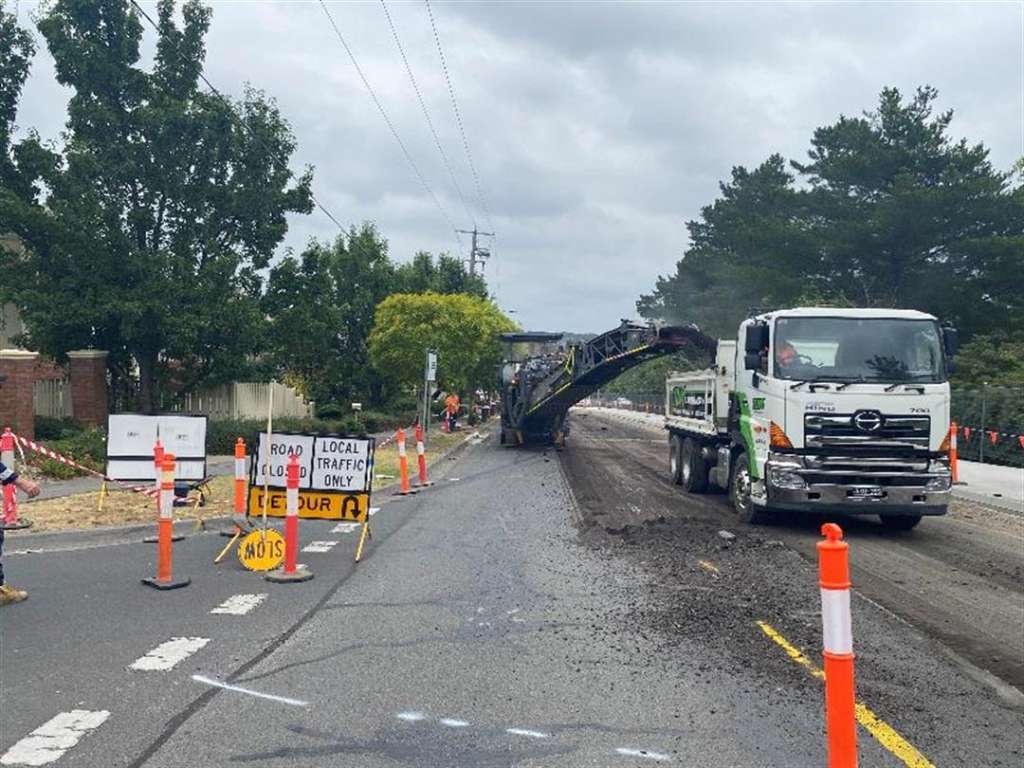
A recently repaired pothole on Thompson Road has sparked debate about whether the solution will provide a lasting improvement or become another temporary patch.
A pothole repair on Thompson Road has become the centre of a wider discussion about road maintenance standards, after Geelong deputy mayor Eddy Kontelj raised concerns about the condition of the road.
The issue gained attention after Kontelj publicly criticised the state of Thompson Road, highlighting concerns about deteriorating road surfaces and the impact poor conditions can have on drivers, vehicles and the broader community.
Following the criticism, one of the reported potholes on the road was filled. While the repair was welcomed as a positive step, questions remain about whether the work represents a long-term solution or simply another temporary patch that may fail under continued traffic and weather conditions.
Road repairs, particularly pothole fixes, often attract public attention because they directly affect everyday commuters. Damaged roads can create safety concerns for motorists, cyclists and pedestrians while also increasing vehicle maintenance costs for residents.
Local communities frequently call for stronger investment in road upgrades, arguing that reactive repairs are not always enough to address underlying problems. They say roads require regular inspections, preventative maintenance and proper resurfacing when damage becomes widespread.
The Thompson Road issue reflects a broader conversation taking place across many Australian communities about infrastructure priorities. Residents often want local authorities to balance immediate repairs with long-term planning to ensure public money is spent effectively.
Deputy mayor Eddy Kontelj’s comments highlighted frustration among some community members who believe ongoing road problems need more than quick fixes. He questioned whether repairs are being carried out to a standard that ensures durability and improves road quality over time.
Local governments face challenges managing extensive road networks, with limited budgets needing to cover maintenance, upgrades, drainage improvements and major infrastructure projects. Weather conditions, heavy vehicles and increasing traffic volumes can also accelerate road deterioration.
The repaired pothole will now be closely watched by residents who want to see whether it remains in good condition or requires further attention in the future.
Community members say they appreciate when concerns lead to action but believe transparency around repair methods and timelines is important. They argue that residents should have confidence that repairs are designed to last rather than only provide short-term relief.
The discussion around Thompson Road is part of a larger issue affecting many regional and urban areas where ageing infrastructure requires ongoing investment.
While filling the pothole represents progress, many residents believe the real test will be whether the repair survives over time and whether broader improvements are made to prevent similar problems from appearing elsewhere.
For motorists using Thompson Road, the hope is that the recent work marks the beginning of improved road conditions rather than another cycle of temporary repairs followed by renewed complaints.
RoadRepairsThompsonPotholeRepair
A pothole repair on Thompson Road has become the centre of a wider discussion about road maintenance standards, after Geelong deputy mayor Eddy Kontelj raised concerns about the condition of the road.
The issue gained attention after Kontelj publicly criticised the state of Thompson Road, highlighting concerns about deteriorating road surfaces and the impact poor conditions can have on drivers, vehicles and the broader community.
Following the criticism, one of the reported potholes on the road was filled. While the repair was welcomed as a positive step, questions remain about whether the work represents a long-term solution or simply another temporary patch that may fail under continued traffic and weather conditions.
Road repairs, particularly pothole fixes, often attract public attention because they directly affect everyday commuters. Damaged roads can create safety concerns for motorists, cyclists and pedestrians while also increasing vehicle maintenance costs for residents.
Local communities frequently call for stronger investment in road upgrades, arguing that reactive repairs are not always enough to address underlying problems. They say roads require regular inspections, preventative maintenance and proper resurfacing when damage becomes widespread.
The Thompson Road issue reflects a broader conversation taking place across many Australian communities about infrastructure priorities. Residents often want local authorities to balance immediate repairs with long-term planning to ensure public money is spent effectively.
Deputy mayor Eddy Kontelj’s comments highlighted frustration among some community members who believe ongoing road problems need more than quick fixes. He questioned whether repairs are being carried out to a standard that ensures durability and improves road quality over time.
Local governments face challenges managing extensive road networks, with limited budgets needing to cover maintenance, upgrades, drainage improvements and major infrastructure projects. Weather conditions, heavy vehicles and increasing traffic volumes can also accelerate road deterioration.
The repaired pothole will now be closely watched by residents who want to see whether it remains in good condition or requires further attention in the future.
Community members say they appreciate when concerns lead to action but believe transparency around repair methods and timelines is important. They argue that residents should have confidence that repairs are designed to last rather than only provide short-term relief.
The discussion around Thompson Road is part of a larger issue affecting many regional and urban areas where ageing infrastructure requires ongoing investment.
While filling the pothole represents progress, many residents believe the real test will be whether the repair survives over time and whether broader improvements are made to prevent similar problems from appearing elsewhere.
For motorists using Thompson Road, the hope is that the recent work marks the beginning of improved road conditions rather than another cycle of temporary repairs followed by renewed complaints.
A vehicle has crashed into a house in Albury, prompting police attendance at a residential property near the intersection of Mate and North streets. The incident was reported to...
A high-profile athlete has returned to court and told the hearing that an alleged unwanted kiss by former broadcaster Alan Jones remained difficult to f...
Work on the $150 million Sydney Town Hall Square project has been paused after the NSW Planning Minister referred the development for review by the Inde...
New workplace data shows staff absenteeism jumped sharply during the historic MCG NFL event, while Melbourne businesses also benefited from a major spen...
Cairns Regional Council has unanimously voted to seek $400,000 in Queensland Government funding for a program designed to connect local businesses with the region’s growing film...
An automated external defibrillator and memorial plaque have been installed at Ellery Creek Big Hole following the death of disability advocate Ellen Fr...
Queensland firefighters spent several hours monitoring a significant grass fire at Mary Kinross Park in Bargara, near Bundaberg, after the blaze broke out on Wednesday evening....