Safety note: Admin approval is an initial review, not a guarantee that every detail is correct. Check important or urgent claims with official sources and report anything inaccurate or unsafe.
Source and credit: Contributor's own report
Veterinary students left out of Commonwealth Prac Payment expansion despite long unpaid placements - Canberra, ACT
Smart summary
Veterinary students and industry groups have criticised the federal government’s decision to expand paid placement support to more health courses while continuing to exclude veterinary science students from the scheme.
Veterinary students across Australia have expressed frustration after being excluded from the latest expansion of the Commonwealth Prac Payment (CPP), a federal support program designed to help students during mandatory unpaid practical placements.
The Australian Government recently announced an expansion of the Commonwealth Prac Payment to include students studying ten additional frontline health professions, including physiotherapy, pharmacy, paramedicine, occupational therapy, speech pathology, radiography, clinical psychology, rehabilitation therapies, audiology and podiatry. The expanded support will begin from 1 July 2027 for eligible students undertaking required placements.
However, veterinary science students were not included in the expansion, prompting criticism from the Australian Veterinary Association (AVA). The organisation argues that veterinary students face similar, and in some cases greater, financial challenges because of the length and intensity of their compulsory placements.
Veterinary degrees require students to complete extensive practical training before qualification. Many students undertake around 52 weeks of unpaid placement experience, often requiring travel away from home, additional accommodation costs and reduced ability to maintain paid employment while studying.
The AVA says the financial pressure created by unpaid placements can discourage students from lower-income backgrounds from pursuing veterinary careers. The organisation has argued that supporting veterinary students would help strengthen Australia’s future veterinary workforce, particularly in rural and regional communities where shortages are already affecting access to animal healthcare.
Veterinarians also play an important role beyond treating pets. They contribute to Australia’s agricultural industries, animal welfare systems and national biosecurity efforts. The veterinary sector has recently been involved in responses to animal disease threats, including high pathogenic avian influenza concerns.
The Commonwealth Prac Payment currently provides eligible students with financial support of up to $338.60 per week while completing approved mandatory placements. The payment was initially introduced for students studying teaching, nursing, midwifery and social work before the government announced further expansion into additional allied health fields.
Government representatives have said the expansion is focused on addressing national workforce shortages and supporting students entering areas where Australia needs more trained professionals.
Critics argue that veterinary science should also be considered a priority profession because of ongoing workforce pressures, especially in regional areas. They say financial barriers during training may make it harder to attract students who want to work outside major cities.
The debate over paid placements highlights a broader issue affecting many university students who must complete compulsory professional training without receiving wages. Students in medicine, veterinary science and other fields have also raised concerns about the cost of accommodation, transport and living expenses while completing placements.
Veterinary groups are now calling on the federal government to reconsider the exclusion and extend the Commonwealth Prac Payment to veterinary students.
They argue that including veterinary science would not only provide immediate financial relief for students but could also support Australia’s future animal health workforce and strengthen services in regional communities.
StudentsVeterinaryPlacementsExpansionPayment
Veterinary students across Australia have expressed frustration after being excluded from the latest expansion of the Commonwealth Prac Payment (CPP), a federal support program designed to help students during mandatory unpaid practical placements.
The Australian Government recently announced an expansion of the Commonwealth Prac Payment to include students studying ten additional frontline health professions, including physiotherapy, pharmacy, paramedicine, occupational therapy, speech pathology, radiography, clinical psychology, rehabilitation therapies, audiology and podiatry. The expanded support will begin from 1 July 2027 for eligible students undertaking required placements.
However, veterinary science students were not included in the expansion, prompting criticism from the Australian Veterinary Association (AVA). The organisation argues that veterinary students face similar, and in some cases greater, financial challenges because of the length and intensity of their compulsory placements.
Veterinary degrees require students to complete extensive practical training before qualification. Many students undertake around 52 weeks of unpaid placement experience, often requiring travel away from home, additional accommodation costs and reduced ability to maintain paid employment while studying.
The AVA says the financial pressure created by unpaid placements can discourage students from lower-income backgrounds from pursuing veterinary careers. The organisation has argued that supporting veterinary students would help strengthen Australia’s future veterinary workforce, particularly in rural and regional communities where shortages are already affecting access to animal healthcare.
Veterinarians also play an important role beyond treating pets. They contribute to Australia’s agricultural industries, animal welfare systems and national biosecurity efforts. The veterinary sector has recently been involved in responses to animal disease threats, including high pathogenic avian influenza concerns.
The Commonwealth Prac Payment currently provides eligible students with financial support of up to $338.60 per week while completing approved mandatory placements. The payment was initially introduced for students studying teaching, nursing, midwifery and social work before the government announced further expansion into additional allied health fields.
Government representatives have said the expansion is focused on addressing national workforce shortages and supporting students entering areas where Australia needs more trained professionals.
Critics argue that veterinary science should also be considered a priority profession because of ongoing workforce pressures, especially in regional areas. They say financial barriers during training may make it harder to attract students who want to work outside major cities.
The debate over paid placements highlights a broader issue affecting many university students who must complete compulsory professional training without receiving wages. Students in medicine, veterinary science and other fields have also raised concerns about the cost of accommodation, transport and living expenses while completing placements.
Veterinary groups are now calling on the federal government to reconsider the exclusion and extend the Commonwealth Prac Payment to veterinary students.
They argue that including veterinary science would not only provide immediate financial relief for students but could also support Australia’s future animal health workforce and strengthen services in regional communities.
New funding from local charity Wishlist is improving communication support for patients at Bundaberg Hospital, with resources designed to help people communicate more effectivel...
New figures have renewed concerns about emergency department delays at Royal Hobart Hospital, with the health system facing questions over patient waiti...
Central Coast New South Wales · Health News · 10 Sep 2026
The design for new Key Health Worker Accommodation at Wyong has been released today, with the project aimed at helping address the need for suitable accommodation for healthcare...
The Federal Government is preparing new measures targeting temporary visas, visa overstayers, international students and visa-hopping, while maintaining...
One Nation’s proposed major reduction in migration has triggered warnings that a sharp cut to population growth could weaken Australia’s economy and cre...
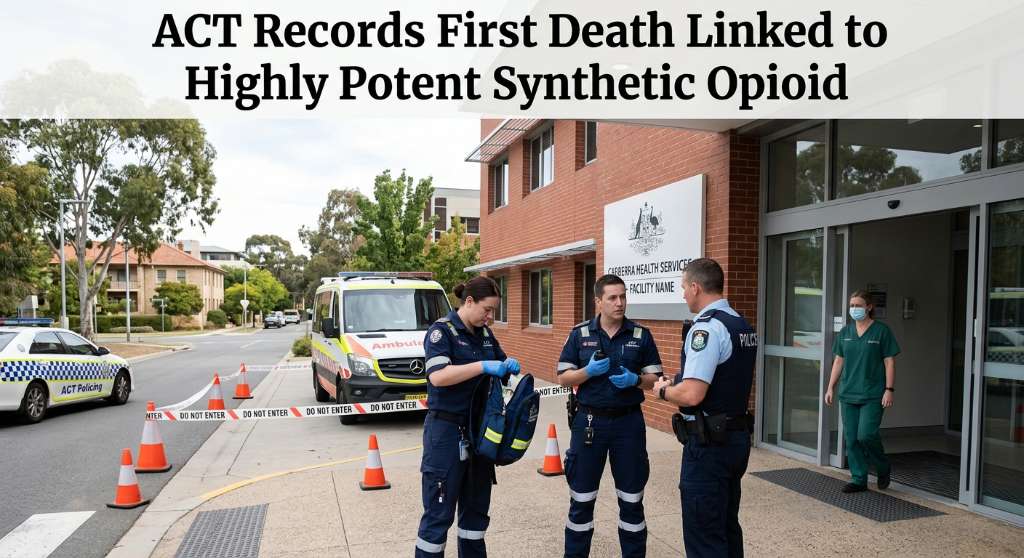
A Canberra woman has become the first person in the ACT whose death has been linked to a highly potent synthetic opioid, prompting renewed concern about...
Canberra’s Commonwealth Park has welcomed visitors for the annual Floriade festival, bringing flowers, entertainment and spring activities to the city.
Cairns Regional Council has unanimously voted to seek $400,000 in Queensland Government funding for a program designed to connect local businesses with the region’s growing film...
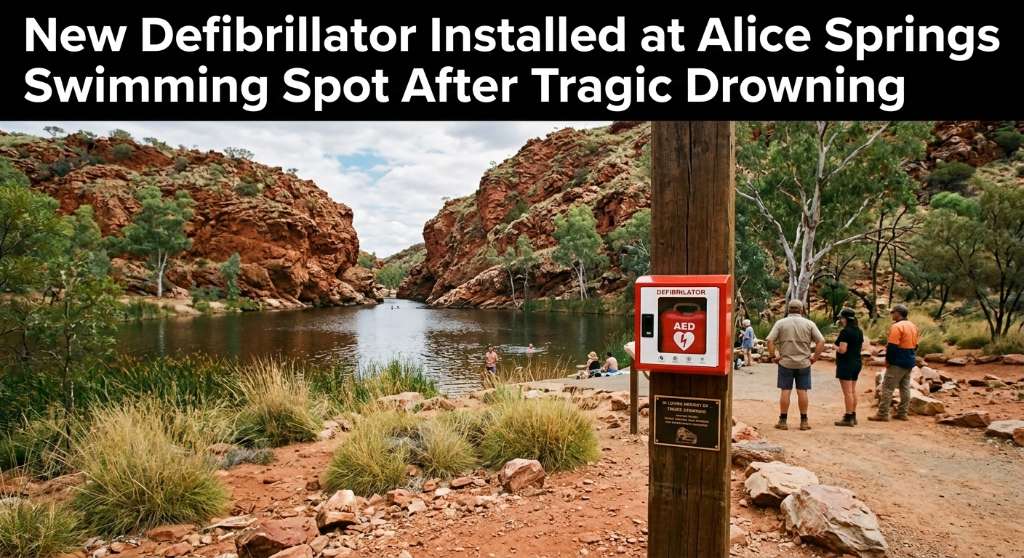
An automated external defibrillator and memorial plaque have been installed at Ellery Creek Big Hole following the death of disability advocate Ellen Fr...
Queensland firefighters spent several hours monitoring a significant grass fire at Mary Kinross Park in Bargara, near Bundaberg, after the blaze broke out on Wednesday evening....