Safety note: Admin approval is an initial review, not a guarantee that every detail is correct. Check important or urgent claims with official sources and report anything inaccurate or unsafe.
Source and credit: Contributor's own report
Brisbane Opens New Critical Metals Research Hub - Brisbane, QLD
Smart summary
A new Cooperative Research Centre based at the University of Queensland's Brisbane city campus will bring researchers, industry and government together to develop and commercialise critical-metals technologies.
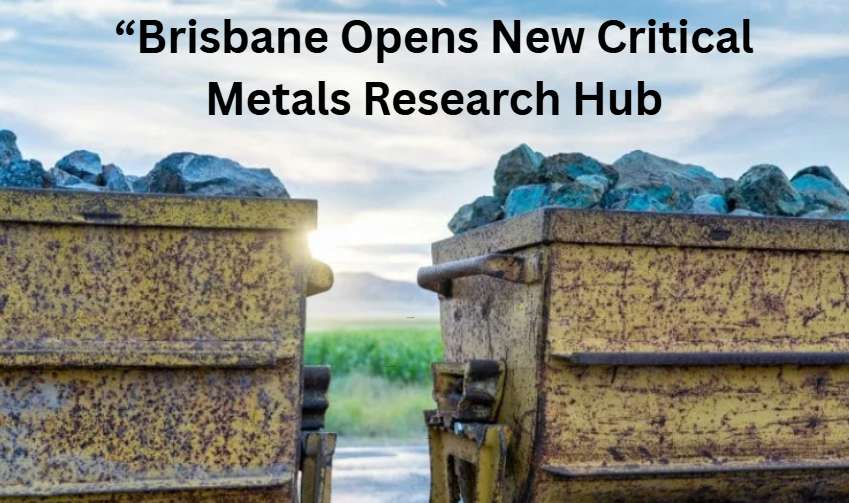
Brisbane has become the home of a new national research hub focused on critical metals, with the Critical Metals for Critical Industries Cooperative Research Centre being established at the University of Queensland's Brisbane city campus.
The centre is designed to connect researchers, manufacturers, investors and industry with the aim of accelerating the development and commercialisation of technologies involving critical metals. The initiative was announced on 23 September 2026 as Queensland continues efforts to expand its role in Australia's critical-minerals industry.
Critical metals are important for a range of modern industries, including advanced manufacturing, renewable-energy technologies, electronics and other high-technology applications. Australia has significant mineral resources, but developing processing and refining capabilities can allow more value to be captured domestically rather than relying primarily on exporting raw materials.
The new Brisbane-based research centre is intended to help address that challenge by bringing together organisations involved at different stages of the critical-metals supply chain. Researchers can work with companies and investors to develop technologies, while manufacturers can potentially use the research to create new products and processing methods.
The centre's chief executive, Neville Plint, said the Brisbane hub would extend the organisation's national reach and connect Queensland researchers and industry with national and international partners. The stated focus is on moving promising ideas from laboratory research toward practical industrial applications.
The initiative follows Queensland's recently released Delivering Queensland's Critical Minerals Future 2026–30 strategy. That strategy identifies processing and refining as important parts of developing the state's critical-minerals sector and building domestic capability.
For Brisbane, the new centre adds another research and innovation activity to the city's growing knowledge and technology sector. Locating the hub at the University of Queensland's Brisbane city campus also places researchers close to businesses, investors and other organisations that may become involved in future projects.
The development is also connected to the broader national effort to establish more resilient supply chains for minerals considered strategically important. Global demand for technologies such as batteries, renewable-energy equipment and advanced electronics has increased attention on the availability and processing of critical minerals.
Queensland has substantial mineral resources and a large regional mining industry, but extracting resources is only one part of the supply chain. Processing, refining, manufacturing and developing specialised technologies can create additional economic activity and employment.
The research centre's stated objective is therefore not simply to discover new mineral resources. Instead, it aims to help develop technologies that can improve processing and refining and support industries that use critical metals. This could involve collaboration between universities, private companies, manufacturers, investors and government organisations.
The centre is expected to work across the critical-metals value chain, with research intended to progress from early-stage ideas toward commercial applications. Support for this type of collaboration can provide businesses with access to scientific expertise while giving researchers opportunities to test technologies against practical industry requirements.
Queensland's government says establishing the centre in Brisbane will strengthen the state's critical-minerals ecosystem and support efforts to expand the value chain. The government also says developing more processing and manufacturing capability could create jobs and economic opportunities in regional Queensland.
The Brisbane hub therefore represents another step in Australia's broader effort to develop domestic capabilities around critical minerals. Its long-term impact will depend on whether research projects can successfully move from development into commercial use, but the centre now provides a dedicated platform for collaboration between research and industry.
ResearchCriticalCentreQueenslandBrisbane
Brisbane has become the home of a new national research hub focused on critical metals, with the Critical Metals for Critical Industries Cooperative Research Centre being established at the University of Queensland's Brisbane city campus.
The centre is designed to connect researchers, manufacturers, investors and industry with the aim of accelerating the development and commercialisation of technologies involving critical metals. The initiative was announced on 23 September 2026 as Queensland continues efforts to expand its role in Australia's critical-minerals industry.
Critical metals are important for a range of modern industries, including advanced manufacturing, renewable-energy technologies, electronics and other high-technology applications. Australia has significant mineral resources, but developing processing and refining capabilities can allow more value to be captured domestically rather than relying primarily on exporting raw materials.
The new Brisbane-based research centre is intended to help address that challenge by bringing together organisations involved at different stages of the critical-metals supply chain. Researchers can work with companies and investors to develop technologies, while manufacturers can potentially use the research to create new products and processing methods.
The centre's chief executive, Neville Plint, said the Brisbane hub would extend the organisation's national reach and connect Queensland researchers and industry with national and international partners. The stated focus is on moving promising ideas from laboratory research toward practical industrial applications.
The initiative follows Queensland's recently released Delivering Queensland's Critical Minerals Future 2026–30 strategy. That strategy identifies processing and refining as important parts of developing the state's critical-minerals sector and building domestic capability.
For Brisbane, the new centre adds another research and innovation activity to the city's growing knowledge and technology sector. Locating the hub at the University of Queensland's Brisbane city campus also places researchers close to businesses, investors and other organisations that may become involved in future projects.
The development is also connected to the broader national effort to establish more resilient supply chains for minerals considered strategically important. Global demand for technologies such as batteries, renewable-energy equipment and advanced electronics has increased attention on the availability and processing of critical minerals.
Queensland has substantial mineral resources and a large regional mining industry, but extracting resources is only one part of the supply chain. Processing, refining, manufacturing and developing specialised technologies can create additional economic activity and employment.
The research centre's stated objective is therefore not simply to discover new mineral resources. Instead, it aims to help develop technologies that can improve processing and refining and support industries that use critical metals. This could involve collaboration between universities, private companies, manufacturers, investors and government organisations.
The centre is expected to work across the critical-metals value chain, with research intended to progress from early-stage ideas toward commercial applications. Support for this type of collaboration can provide businesses with access to scientific expertise while giving researchers opportunities to test technologies against practical industry requirements.
Queensland's government says establishing the centre in Brisbane will strengthen the state's critical-minerals ecosystem and support efforts to expand the value chain. The government also says developing more processing and manufacturing capability could create jobs and economic opportunities in regional Queensland.
The Brisbane hub therefore represents another step in Australia's broader effort to develop domestic capabilities around critical minerals. Its long-term impact will depend on whether research projects can successfully move from development into commercial use, but the centre now provides a dedicated platform for collaboration between research and industry.
Residents in Gisborne South can now access improved mobile phone coverage after a new Telstra tower was installed at I R Robertson Reserve following yea...
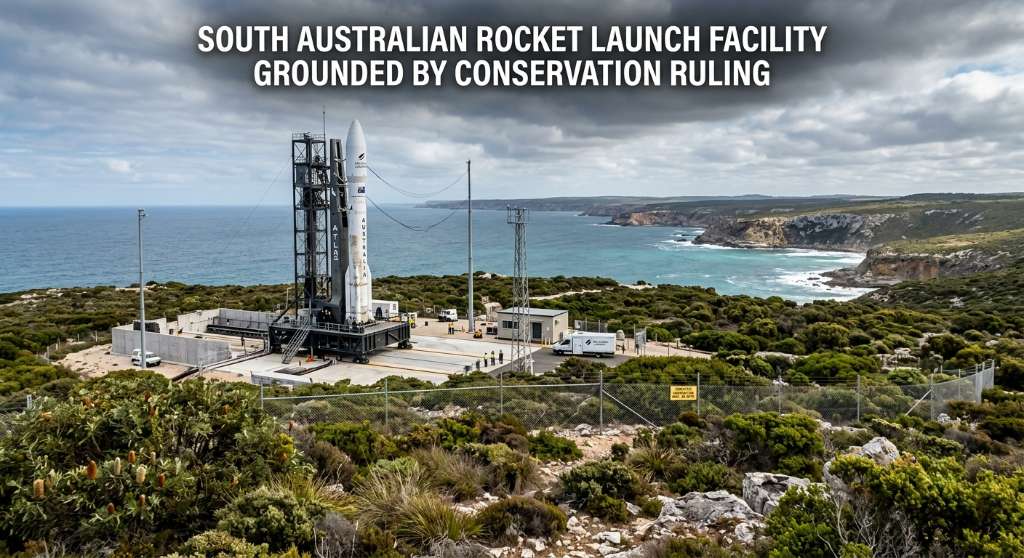
A proposed rocket launch facility near Port Lincoln has been put on hold after South Australia's Native Vegetation Council rejected an application to al...
Security testing has found that some low-cost AI smart glasses sold in Australia can potentially be accessed by nearby attackers, exposing stored photos...
Brisbane-based Sky Sight has secured approximately $1.35 million in UK funding to develop advanced weather forecasting and flight-planning technology for...
A 13-year-old Queensland rider has been invited to compete at two youth world bull-riding finals in the United States, with the Mount Isa Rodeo providin...
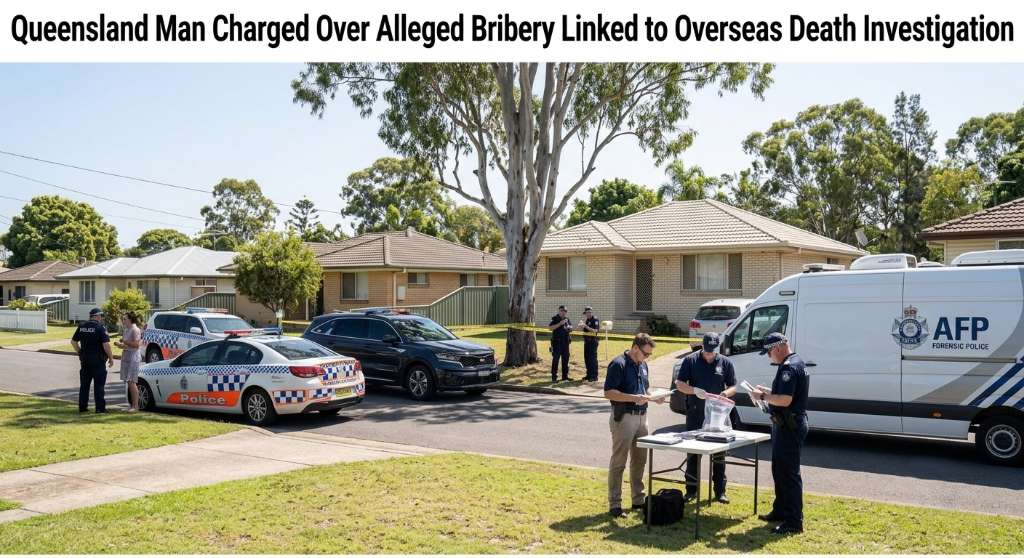
A Queensland man has been charged with allegedly bribing a foreign public official while Australian and Bangladeshi authorities continue investigating t...
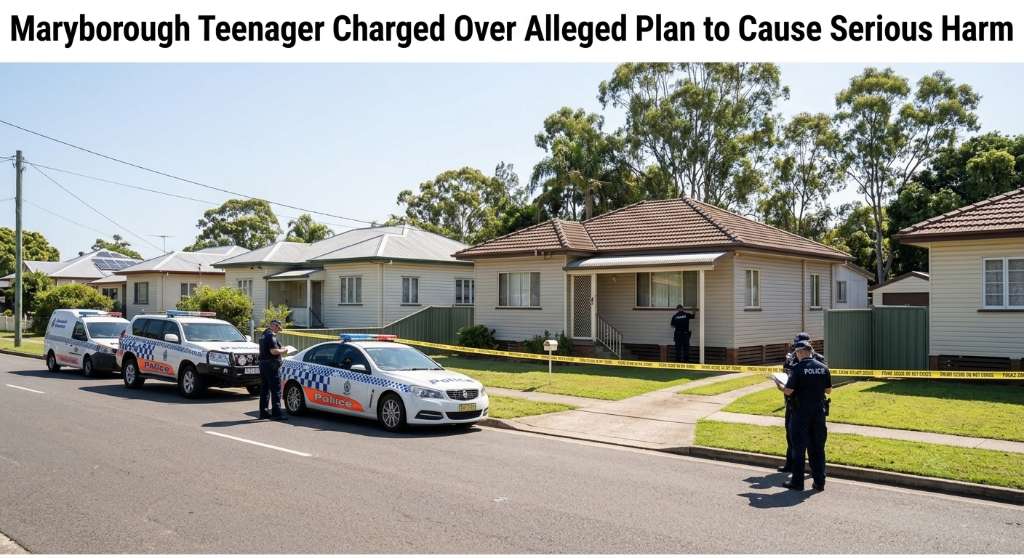
A 14-year-old boy from Maryborough has been charged after Queensland police alleged he was preparing to cause death or grievous bodily harm and possesse...
Rose Tattoo frontman Gary “Angry” Anderson has died at 79 after a five-decade career spanning Australian rock music, television, film and youth advocacy.
A Chinese private processor has purchased 68,000 tonnes of new-season Australian canola for shipment in March, marking the first known private-sector pu...
A British traveller was left behind at a remote South Australian roadside stop after her Greyhound bus departed during a scheduled overnight break near...
A Victorian man has pleaded guilty to multiple driving offences after crashing through a power pole and into a Merbein home, causing more than $180,000...