Safety note: Admin approval is an initial review, not a guarantee that every detail is correct. Check important or urgent claims with official sources and report anything inaccurate or unsafe.
Source and credit: Contributor's own report
Griffith townhouse development near CBD delayed again as court dispute continues - Griffith, NSW
Smart summary
A proposed affordable townhouse development in Griffith has been delayed once more after further legal action, extending uncertainty for the developer, nearby businesses and prospective residents.
A long-running legal dispute over a proposed townhouse development near Griffith's central business district has resulted in another delay, with proceedings in the NSW Land and Environment Court continuing to hold up construction.
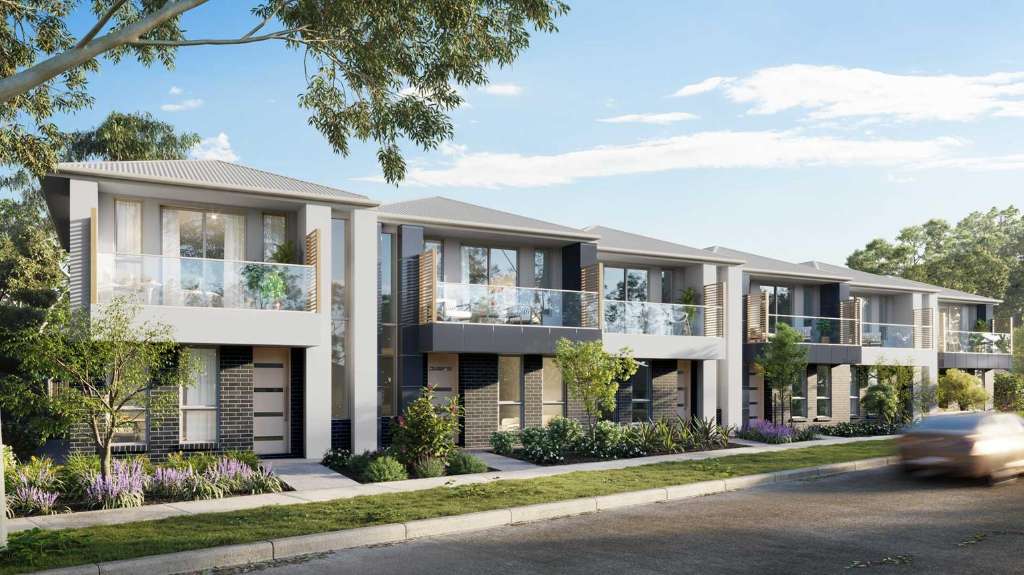
The development, proposed by Zalt Real Estate Pty Ltd, involves a $2.7 million project at 10–12 Harris Road comprising 10 two-bedroom townhouses and 17 parking spaces. The project was approved by Griffith City Council in late 2025 after a closely divided council vote, reflecting both the urgent demand for affordable housing and concerns raised by neighbouring businesses.
The proposal was designed to provide accommodation for workers moving to Griffith, where rental shortages have been affecting businesses, essential services and population growth. Supporters argue that additional medium-density housing is essential to address the city's low vacancy rates and improve housing affordability.
However, nearby agricultural businesses Collier & Miller and ICI Industries (Irribiz) challenged the approval through the NSW Land and Environment Court. Their legal action focuses primarily on planning issues, including whether appropriate investigations into possible land contamination were completed before the development application was approved.
Earlier court proceedings resulted in construction being paused while environmental investigations were undertaken. The latest legal action has extended the delay further, meaning the project cannot proceed until the outstanding court matters are resolved.
The ongoing dispute has highlighted the tension between Griffith's need for additional housing and the concerns of long-established industrial businesses operating in the Harris Road precinct. Opponents argue that residential development beside industrial operations could create future conflicts involving heavy vehicle traffic, industrial noise, safety and business expansion.
The developer maintains that the site is appropriately zoned for mixed-use development and says the project would provide much-needed housing close to Griffith's shopping precinct and employment areas. The proposed townhouses are intended primarily for workers and smaller households seeking accommodation within walking distance of the CBD.
The delay has financial consequences for the developer while also postponing additional housing supply for a community experiencing sustained rental pressure. Housing advocates have argued that every delay prolongs shortages affecting local businesses trying to recruit employees and families looking for affordable accommodation.
The court will continue considering the planning issues before determining whether the development approval remains valid or requires further action. Until a final decision is reached, construction of the townhouse complex will remain on hold.
The case has become one of Griffith's most closely watched planning disputes, illustrating the challenges of balancing housing growth with existing industrial activities and planning requirements.
HousingDevelopmentGriffithCourtBusinesses
A long-running legal dispute over a proposed townhouse development near Griffith's central business district has resulted in another delay, with proceedings in the NSW Land and Environment Court continuing to hold up construction.
The development, proposed by Zalt Real Estate Pty Ltd, involves a $2.7 million project at 10–12 Harris Road comprising 10 two-bedroom townhouses and 17 parking spaces. The project was approved by Griffith City Council in late 2025 after a closely divided council vote, reflecting both the urgent demand for affordable housing and concerns raised by neighbouring businesses.
The proposal was designed to provide accommodation for workers moving to Griffith, where rental shortages have been affecting businesses, essential services and population growth. Supporters argue that additional medium-density housing is essential to address the city's low vacancy rates and improve housing affordability.
However, nearby agricultural businesses Collier & Miller and ICI Industries (Irribiz) challenged the approval through the NSW Land and Environment Court. Their legal action focuses primarily on planning issues, including whether appropriate investigations into possible land contamination were completed before the development application was approved.
Earlier court proceedings resulted in construction being paused while environmental investigations were undertaken. The latest legal action has extended the delay further, meaning the project cannot proceed until the outstanding court matters are resolved.
The ongoing dispute has highlighted the tension between Griffith's need for additional housing and the concerns of long-established industrial businesses operating in the Harris Road precinct. Opponents argue that residential development beside industrial operations could create future conflicts involving heavy vehicle traffic, industrial noise, safety and business expansion.
The developer maintains that the site is appropriately zoned for mixed-use development and says the project would provide much-needed housing close to Griffith's shopping precinct and employment areas. The proposed townhouses are intended primarily for workers and smaller households seeking accommodation within walking distance of the CBD.
The delay has financial consequences for the developer while also postponing additional housing supply for a community experiencing sustained rental pressure. Housing advocates have argued that every delay prolongs shortages affecting local businesses trying to recruit employees and families looking for affordable accommodation.
The court will continue considering the planning issues before determining whether the development approval remains valid or requires further action. Until a final decision is reached, construction of the townhouse complex will remain on hold.
The case has become one of Griffith's most closely watched planning disputes, illustrating the challenges of balancing housing growth with existing industrial activities and planning requirements.
A vehicle has crashed into a house in Albury, prompting police attendance at a residential property near the intersection of Mate and North streets. The incident was reported to...
A high-profile athlete has returned to court and told the hearing that an alleged unwanted kiss by former broadcaster Alan Jones remained difficult to f...
Work on the $150 million Sydney Town Hall Square project has been paused after the NSW Planning Minister referred the development for review by the Inde...
A 36-year-old man has been charged after investigators allegedly found fraudulent identification documents, cloned number plates, cash and drug-manufact...
A Sydney court has heard that a man sent 249 messages to a former partner within 24 hours, with the messages treated as a single alleged breach of an ap...
A high-profile athlete has returned to court and told the hearing that an alleged unwanted kiss by former broadcaster Alan Jones remained difficult to f...
Work on the $150 million Sydney Town Hall Square project has been paused after the NSW Planning Minister referred the development for review by the Inde...
Cairns Regional Council has unanimously voted to seek $400,000 in Queensland Government funding for a program designed to connect local businesses with the region’s growing film...
An automated external defibrillator and memorial plaque have been installed at Ellery Creek Big Hole following the death of disability advocate Ellen Fr...
Queensland firefighters spent several hours monitoring a significant grass fire at Mary Kinross Park in Bargara, near Bundaberg, after the blaze broke out on Wednesday evening....